


Venture capital has always been about finding companies before they are obvious. The challenge is that most of the signals VC firms rely on — founder networks, pitch decks, reference calls, and accelerator programs — are shared signals. If you hear about a company from those sources, so do your competitors. The edge in venture increasingly lies in seeing traction before a founder is fundraising, before a company has scaled its PR, and before the deal is competitive.
Alternative data — particularly digital demand and engagement signals — is one of the few places where genuine early signal exists for private companies. This post explains how VC firms are applying it in practice.
The information problem in venture
The classic VC workflow is relationship-driven. You know a founder, they know you, they call when they are raising, and you make a decision on limited information. This model works when deal flow is small and your network is differentiated. It works less well at scale, when competition for the best deals is intense, and when founders have many options for capital.
Alternative data creates a parallel channel: instead of waiting for a founder to contact you, you can monitor digital signals that indicate when a company is gaining traction — before they are ready to fundraise or before the deal becomes competitive. That lead time is the edge.
For portfolio companies, alternative data provides a continuous view of traction that does not require waiting for a quarterly update email. It can surface both positive surprises (faster growth than expected) and warning signs (engagement declining, competitive pressure rising) in real time.
What signals matter for private companies
Public company alternative data is straightforward: there is a ticker, the company is known, and you can track its signals against a clear market context. Private companies require a different approach because the data must be mapped without a ticker.
The most useful signals for private companies at different stages:
Early stage (pre-product market fit). App downloads and web traffic are the clearest indicators of whether an early product is gaining adoption. If an app is getting organic traction in downloads before the company has raised a Series A, that is a strong early signal. YouTube and TikTok engagement with product demos or founder content can also indicate whether a product concept is resonating beyond the founder's immediate network.
Growth stage (scaling). Search volume for the company name or product category tells you whether brand awareness is growing. Amazon search data (for e-commerce companies) shows product demand. Reddit and X/Twitter data shows whether the product has organic community engagement or is primarily marketing-driven growth. Web traffic trends show whether the growth is coming from paid acquisition (which slows when spending slows) or organic pull (which is more durable).
Late stage (pre-IPO or secondary market). Multi-source signal trends across search, social, news, and app data serve as a proxy for the health of the business ahead of an IPO roadshow or secondary transaction. Discrepancies between strong digital signals and weak fundamentals (or vice versa) can indicate either an inflection in performance not yet reflected in reported metrics, or a deterioration that has not yet been disclosed.
Deal sourcing: seeing companies before they fundraise
The proactive version of VC alternative data use is systematic monitoring of the private company universe for emerging traction signals, rather than waiting for inbound deal flow.
A few practical approaches:
Category-first monitoring. Define the categories and themes you want to invest in (e.g. AI developer tools, climate tech infrastructure, consumer health). Build a keyword and company watchlist for each category and monitor search, social, and app signals on a weekly basis. When a company or product within a category shows accelerating signals — rising search, growing social engagement, increasing app downloads — it becomes a prospecting target.
Geographic signal watching. Consumer and B2C companies often show adoption signals in one geography before another. Monitoring search and app trends by country can surface companies that are getting traction in Europe or Southeast Asia before they are on US VC radar.
Cohort analysis. Track the digital signal progression of successful companies in your portfolio retrospectively to identify what the early-stage signal pattern looked like. Use those patterns as a template when screening new companies. For example: "companies that showed 8+ weeks of consecutive search growth before their Series A in this category looked like X."
Portfolio monitoring: continuous traction visibility
For portfolio companies, the traditional monitoring model relies on founder reporting: monthly or quarterly updates, board metrics packages, and ad hoc calls. These are useful but slow. A company can be gaining or losing momentum for months before it shows up in a quarterly update.
Alternative data provides continuous monitoring:
Competitive threat detection. If search for a portfolio company's product category is growing but the portfolio company's specific search is flat while a competitor's is rising, that competitive shift is visible weeks or months before it shows up in revenue or churn. Early detection gives time to respond — whether operationally, strategically, or by adjusting reserve allocation.
Growth quality assessment. Sustainable growth shows organic signals growing alongside the company. Paid-acquisition-driven growth often shows app downloads or web traffic rising without corresponding growth in organic search or social engagement. Monitoring the mix of signals — not just the level — helps assess whether growth is durable.
Pre-fundraise preparation. When a portfolio company is approaching its next fundraise, having a clean alternative data story — multi-source signals trending positively, competitive context favorable, geographic expansion visible in the data — can strengthen the fundraise narrative and help the company command a better valuation.
Practical workflow for a VC team
A lightweight implementation for a small VC team:
- Build a category watchlist for each investment thesis, covering relevant keywords, product names, and company names across Google Search, App Downloads, Web Traffic, and TikTok.
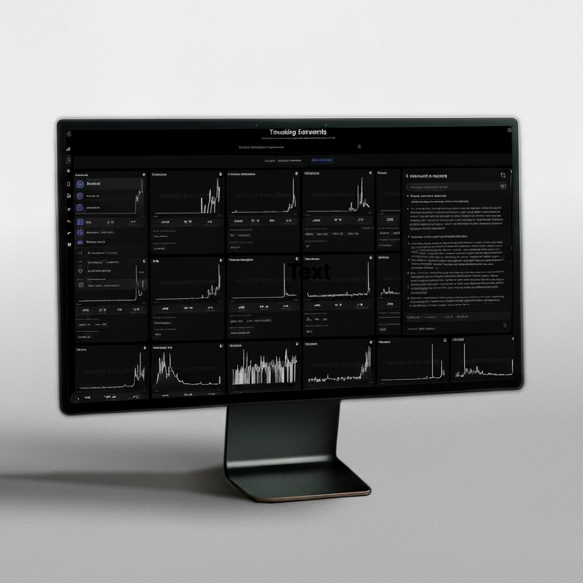
- Monitor weekly using the Paradox Watchlist and Trends tools. Flag any name showing multi-source acceleration for follow-up.
- Conduct a monthly portfolio review using Paradox Inflection for each portfolio company, checking whether signals are broadly positive, mixed, or deteriorating. Escalate deteriorating names for operational review.
- Use the Live Feed for event-driven monitoring around major launches, media moments, or competitive events for portfolio companies.
For more on alternative data use in private markets and due diligence, see Alternative Data for Private Equity and Research.
This post is for institutional investors and research professionals. It is not investment advice.