


Most alternative data signals are noisy in isolation. A spike in search volume for a brand might reflect a viral moment rather than genuine demand shift. A drop in sentiment could be temporary controversy rather than structural deterioration. The edge comes from convergence: when search, social, news, and web data all move in the same direction at the same time for the same company, the probability of a meaningful inflection climbs substantially.
This post explains the logic of multi-signal analysis for inflection point detection, how to structure it systematically, and what to look for in practice.
Why single-signal analysis falls short
Each alternative data source has its own noise profile. Google Search volume reacts to media cycles. TikTok hashtag volume is disproportionately shaped by one or two viral posts. News sentiment can spike on a story that has no lasting demand implication. Individually, each signal generates both true positives and false positives.
When you require multiple independent signals to agree, the false positive rate drops sharply. If three uncorrelated sources — say, Amazon search, Wikipedia page views, and news volume — all show sustained upward movement for the same company over the same four-week window, that configuration is far less likely to be coincidence than any single source moving alone.
This is the core logic behind multi-signal inflection analysis. It is not about more data for its own sake — it is about using the independence of different data sources to filter out noise.
What signals to combine
Not all signal combinations are equally useful. A few principles help:
Mix behavioral and attitudinal signals. Search and e-commerce data (Amazon, Google Shopping) reflect what people are actually doing with their time and money. Social and news data reflect what people are thinking and saying. When both move together, the signal is more durable: demand is rising and narrative is following (or vice versa).
Use sources with different lag structures. Some signals lead (search volume tends to precede purchases), others are concurrent (app usage reflects real-time engagement), and others lag (news coverage often follows behavior). Using a mix across the lag spectrum makes it easier to detect a trend in formation rather than one already well underway.
Map signals to specific revenue drivers. A company's search trend for its brand name tells you something different from search for its flagship product, which tells you something different again from app download trends. The most informative multi-signal analysis maps each source to a specific driver rather than treating all signals as interchangeable proxies for "interest."
Stay up to date on our best ideas
How Paradox Inflection structures this
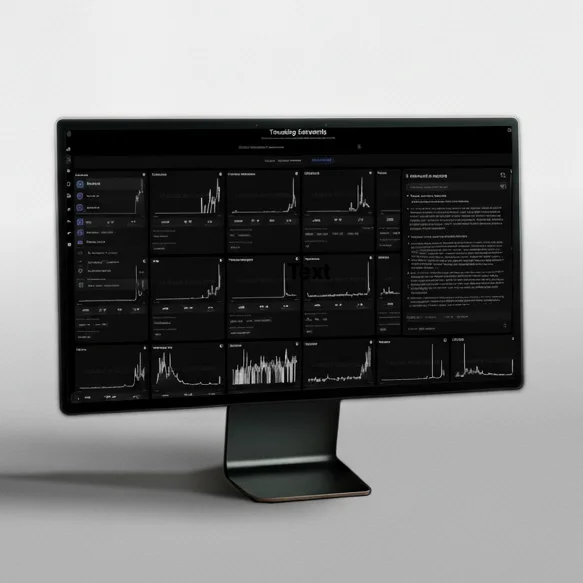
The Paradox Inflection tool is built around this logic. For any company in the coverage universe (50,000+ instruments), it shows the direction and magnitude of movement across all tracked data sources simultaneously: Google Search, YouTube, Amazon, TikTok, Reddit, Wikipedia, News Sentiment, News Volume, Web Traffic, App Downloads, and others.
The key output is a view of how many signals are aligned, in which direction, and for how long. A company with six out of eight signals trending upward over a sustained window looks very different from one with two signals up and two down and four flat. The former is a candidate for deeper work; the latter is noise.
The tool also shows signal history, so you can see whether a multi-signal alignment is new or has been building for weeks. A fresh alignment that just reached multi-source confirmation is typically more interesting than one that has been flagged for months and is already widely tracked.
Practical workflow
A systematic approach to multi-signal inflection analysis usually looks something like this:
-
Screen for multi-signal alignment. Filter for companies where three or more signals are trending in the same direction over a defined window (e.g. four to eight weeks). This is the first pass; it is designed to be broad.
-
Check signal independence. Verify that the aligned signals are not all driven by the same underlying event (e.g. a product launch that boosted search, social, and news simultaneously but is a one-time event). Sustained alignment after an initial spike is more meaningful than the spike itself.
-
Map to the business. For the names that pass the first two screens, ask which revenue drivers the signals correspond to. If Amazon search for a product category is up, which companies in your coverage have meaningful exposure to that category?
-
Assess the fundamental setup. What are consensus estimates? Is the stock pricing in any of the demand improvement? Are there upcoming catalysts (earnings, product launches, analyst events) where the signal could be confirmed or denied?
-
Size the work accordingly. Multi-signal inflection is a starting point, not a conclusion. Use it to decide which names deserve deeper fundamental work, not to decide position sizing directly.
What to watch for
A few patterns are worth knowing:
Early alignment followed by signal dropout. Sometimes a company shows multi-signal alignment that then fades. This can indicate that what looked like an inflection was actually a temporary event. Tracking signal persistence over time is as important as detecting alignment in the first place.
Negative inflection is as useful as positive. Multi-signal deterioration — where several sources are simultaneously declining — can be a useful early warning for longs and a supporting signal for short theses. The same methodology applies in both directions.
Thematic inflection vs. company-specific inflection. Sometimes multi-signal alignment is visible at the sector or theme level before it is visible at the individual company level. A rising tide in a category's search, social, and traffic can be a useful prompt to identify which companies have the most exposure.
For deeper reading on inflection methodology, see Alternative Data Inflection Points and Research.
This post is for institutional investors and research professionals. It is not investment advice.