

Governments are stockpiling fertilizer at a pace not seen since 2022. Planting season pressure, disrupted Gulf shipping lanes, and disrupted LNG supply are converging in a way that has not fully reached consensus commodity analyst models — and the search data shows it.
What Broke
The Strait of Hormuz handles roughly one-third of global urea trade. Since the Iran conflict escalated in late February and early March 2026, shipments through the strait have been severely restricted. Qatar Energy, which operates one of the world's largest urea production complexes, has suspended output following attacks on its LNG facilities. Urea prices have risen 20-40% in recent weeks, depending on origin and specification. Bloomberg reported in late March that nations were racing to secure fertilizer to avert a food crisis.
Approximately 30% of global urea trade has been disrupted by shipping delays and the knock-on effects of elevated LNG prices on production costs. Natural gas is the primary feedstock for nitrogen fertilizer manufacturing — when gas prices spike, so does the cost to produce and ship urea.
What the Search Data Shows
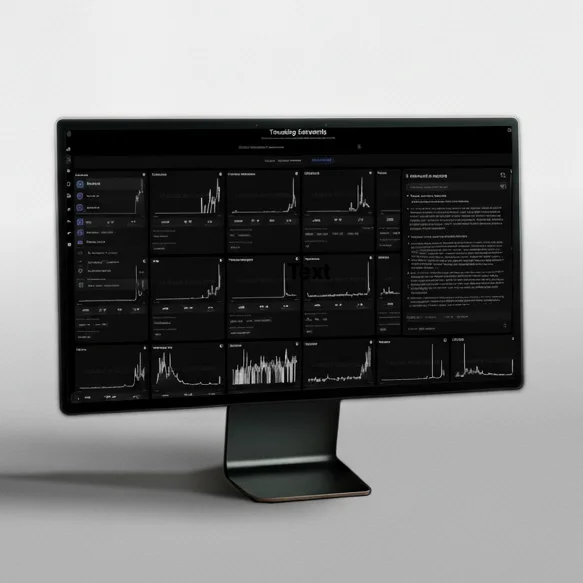
Google Search interest for "fertilizer" reached a normalized score of 94 out of 100 in the week of April 4, up from 44 three months earlier — a 114% increase in search volume (approximately 229,714 weekly searches versus 107,526 in early January). The one-year comparison shows a 42% increase, with April 2025 sitting at a score of 66.
The "urea fertilizer" keyword tells a sharper story. Current score: 47. Three months ago: 26. That is an 81% increase in search volume in three months, reaching approximately 70,500 weekly searches versus 39,000 in January. One-year growth: 147%, from a score of 19 a year ago.
Google News interest for "fertilizer" has also spiked from near-zero at the start of the year to a score of 34 — a signal that this story is entering mainstream news coverage but has not yet fully saturated financial media.
The timing matters. The Northern Hemisphere planting season runs from March through May. Fertilizer application decisions get made now. Demand shocks at this point in the agricultural calendar are not easily deferred.
Why the Market Has Not Fully Priced It
Consensus estimates for CF Industries (NYSE: CF), Nutrien (NYSE: NTR), and Mosaic (NYSE: MOS) were set before the Strait of Hormuz disruptions reached their current severity. Sell-side models typically build fertilizer price forecasts using trailing spot prices and seasonal patterns. A 30% disruption to global urea trade with no near-term resolution path was not in those models three months ago.
CF Industries reports in early May. Nutrien reports May 6. Mosaic reports May 5. That is a six-week window in which the pricing environment has changed materially and has not yet been reflected in reported results.
CF Industries, trading at $129.97 (market cap: $19.97 billion), is a dominant North American nitrogen producer. Its ammonia and urea plants in the US and UK are not directly affected by Gulf shipping disruptions — a structural advantage when Gulf-origin supply is constrained. Every $20 increase in sustained urea prices represents a meaningful tailwind to realized ASPs for the next quarter.
Nutrien, trading at $75.47 (market cap: $36.5 billion), is more diversified across potash and nitrogen. Its upcoming Q1 2026 earnings (May 6) carry consensus estimates of $5.27 billion in revenue and $0.49 EPS — a 345% YoY EPS increase from the weak Q1 2025 base. The bar was already reflecting improvement; the question is whether the magnitude of the pricing environment change has been absorbed.
Mosaic (NYSE: MOS), at $26.18 (market cap: $8.3 billion), focuses on phosphate and potash. Its Q1 2026 consensus estimate calls for $2.89 billion revenue with $0.18 EPS — down 63% YoY on EPS despite 10% revenue growth, suggesting the market expects margin compression. An improving phosphate price environment could break that assumption.
ICL Group (NYSE: ICL), at $5.24 (market cap: $6.76 billion), operates potash and phosphate facilities with significant exposure to Israel — giving it unusual relevance as both a beneficiary of elevated fertilizer prices and a company whose operations have been affected by regional conflict.
The Investable Bridge
The transmission mechanism is direct. CF Industries, Nutrien, and Mosaic all sell nitrogen and phosphate fertilizers at spot and contract prices. When the Gulf supply chain is disrupted, non-Gulf producers face fewer competitive alternatives in export markets. Their realized selling prices move higher. That flows through to gross margins within one to two quarters.
CF Industries is the clearest single-company expression of this thesis. It is predominantly a nitrogen producer, North American based, with large capacity and limited direct Gulf exposure. Its fiscal Q1 2026 earnings (reporting in early May) will capture the full benefit of the March-April pricing surge if it holds.
Risks and Failure Modes
The thesis breaks if Gulf shipping routes reopen quickly. A diplomatic resolution or ceasefire in the Iran conflict that allows Hormuz traffic to normalize would unwind the price support. Fertilizer prices are volatile and have staged sharp reversals before — the 2022 run-up saw prices fall as sharply as they rose once European gas prices normalized.
There is also a demand destruction risk. At 40% higher prices, some farmers defer application or switch to lower-analysis products, which dampens volume even as price per unit rises. This is most visible in subsistence-farming markets with low purchasing power, which are also the markets facing the most acute shortage.
The search data shows demand — it does not directly measure contract tonnage booked or quarterly pricing. Coverage gaps include the actual volume of deferred shipments versus complete cancellations, which are not visible in public data.
What to Monitor
Google Search interest for "fertilizer" and "urea" in April and early May will indicate whether demand is accelerating or plateauing ahead of earnings. A sustained reading above 80 on "fertilizer" through the planting season would signal structural rather than transient demand. Any reports of Hormuz reopening or resumed Qatar LNG production would invalidate the supply-side constraint. CF Industries' Q1 2026 realized nitrogen price per ton will be the cleanest single number to watch when it reports.
This is for informational purposes only and does not constitute investment advice.