


Nike (NKE, NYSE) reports fiscal Q3 2025 earnings after the market close on March 31, 2026. The consensus narrative heading into this report is negative: currency headwinds, DTC execution challenges, tariff exposure on manufacturing costs, and a multi-quarter stretch of sell-side estimate cuts.
The alternative data presents a more differentiated picture. Some signals confirm the weakness consensus has already priced. Others point to pockets of genuine demand momentum that are not in the consensus model. Understanding which is which is the job.
The Thesis and What the Market Is Missing
The market consensus on Nike is that the brand is in a protracted demand correction. The stock has underperformed its footwear peers for six consecutive quarters. The sell-side has consistently cut estimates. Gross margin pressure from manufacturing cost increases and promotional pricing is well-documented.
What the consensus is less precise about is where the weakness is concentrated by product, channel, and geography. Nike is not one brand — it is a portfolio of sub-brands and product families with very different demand trajectories. Jordan, Air Max, Nike SB, and Nike Run Club are distinct signals. The data shows them diverging, not moving in unison.
Evidence: Where Demand Is Weak
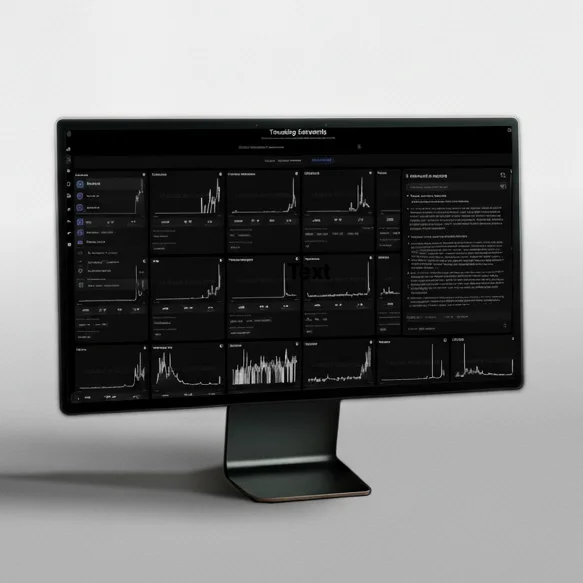
Amazon search demand for "Nike sneakers" fell 27% quarter-over-quarter in the three months ending February 28, 2026 — from a normalized score of 46.3 to 33.8, representing approximately 114,000 fewer weekly searches (Paradox Intelligence data, March 2026). Amazon search is a high-intent signal: it captures consumers in active purchase mode. A 27% decline in quarterly terms is not a rounding error.
This weakness on Amazon is consistent with the company's DTC challenges and the ongoing pressure from Adidas, On Running (ONON), and Hoka (DECK) in performance categories. General Google Search for "NIKE" is flat year-over-year, at a normalized score of 0% change. YouTube engagement for "Nike SB" is down 10% year-over-year. "Converse" search is down 12.8% quarter-over-quarter on Google Search.
These signals — Amazon demand, YouTube engagement for skate sub-brands, Converse — are consistent with the consensus weakness narrative. They are telling the sell-side what it already believes.
Evidence: Where Demand Diverges
Three signals cut in a different direction, and they are not small moves.
"Jordan" on Google News has increased 673% year-over-year and 672% year-over-year in Paradox Intelligence's data (March 2026). Google News search is a professional and informed-observer signal — it represents people researching, not just shopping. A 673% year-over-year increase means Jordan as a brand and cultural property is receiving roughly seven times more informed attention than a year ago. Some of this reflects specific launches, collaborations, or athlete news; but the magnitude suggests a durable shift in the Jordan brand's cultural positioning.
"Air Max" on Google Shopping is up 117% quarter-over-quarter. Shopping search is purchase-intent behavior. A 117% QoQ increase means Air Max has materially more high-intent shoppers in the current quarter than three months ago. Air Max is one of Nike's core franchise lines and a significant revenue contributor.
"NIKE" on Google Shopping is up 27% quarter-over-quarter. Combined with the Amazon weakness, the picture that emerges is a consumer who is more willing to search and compare on Google Shopping than to buy immediately on Amazon — which could indicate comparison shopping behavior that converts to DTC or specialty retail rather than marketplace purchases.
YouTube engagement for "Air Max" is up 11% quarter-over-quarter. Video engagement and shopping search moving in the same direction on the same product line, in the same quarter, reduces the chance this is noise.
The Information Gap
The consensus is not wrong that Nike is under pressure. But the consensus model is largely built on North America DTC metrics, gross margin guidance, and overall unit volume trends. It is not disaggregated by product family.
A quarter where Jordan cultural momentum drives a beat on Jordan-specific revenue — a segment Nike does not separately disclose — would be invisible to most sell-side models until after the fact. Similarly, an Air Max shopping surge that converts to revenue in Q3 wouldn't appear in analyst estimates calibrated to prior-quarter trends.
The information asymmetry here is narrow. This is not an obscure small-cap where alternative data has a large lead time advantage. Nike is one of the most-covered stocks globally. But the specific disaggregation — Jordan versus Nike core versus DTC versus Amazon — is not in most models.
Risks and Failure Modes
The Jordan Google News spike may reflect media coverage of athlete signings, legal disputes, or cultural events rather than purchase-intent behavior. If the Jordan news cycle is not correlated with Jordan revenue in this fiscal quarter, the signal is informative about media attention but not about the next quarterly print.
The Air Max shopping search increase could be driven by promotional activity — a Nike sale pushing consumers into the shopping comparison funnel without converting to full-price purchases. In that scenario, the volume signal would overstate revenue quality.
Foreign exchange headwinds and tariff cost pass-through remain real risks that are orthogonal to the demand data. Nike can have real demand momentum and still miss estimates because of FX or margin compression.
What to Monitor on March 31
Digital and direct revenue in North America. If DTC held or grew despite the broader weakness consensus expects, the Air Max and Jordan shopping signals are informative.
Jordan brand segment performance, if disclosed separately or referenced in management commentary.
Management tone on DTC order trends for Q4. Current-quarter shopping and search signals are positive inputs to Q4 demand if the trend sustains.
Gross margin guidance language. The demand-side picture matters less if input cost pressures are accelerating.
This is for informational purposes only and does not constitute investment advice.