



Sector rotation is one of the most heavily analyzed and difficult to time phenomena in markets. Macro conditions shift, capital flows between sectors, and by the time consensus recognizes the rotation, the trade has often largely played out. Alternative data does not solve the timing problem, but it provides a set of real-time behavioral signals that can lead the traditional indicators: search and demand trends, sentiment, and social attention all respond to shifts in the economy and investor behavior before they show up in flows data, earnings revisions, or sector ETF performance.
Why sector rotation is difficult to time with traditional data
The core problem is that the inputs most investors use are lagging. Earnings revisions reflect what analysts are updating after results have been reported. Economic releases (PMI, employment, housing starts) have reporting lags and are subject to revision. Sector ETF fund flows show you where capital has already moved.
Even market-implied signals like relative sector performance are inherently backward-looking in the sense that they confirm what has happened, not what is beginning to happen.
Alternative data captures behavior in near real time. Consumers and businesses act before they report. They search before they buy, they research before they invest, and they engage with content before it becomes consensus narrative.
What alternative data to watch for sector signals
Search volume by sector and theme. Broad search interest in sector-relevant terms (e.g. "electric vehicle," "industrial automation," "weight loss drugs," "data centers") provides a behavioral proxy for demand and attention before it shows up in revenue. Rising search interest in a theme often leads spending by 4-12 weeks.
For sector rotation specifically, what matters is relative movement: which themes are gaining search share versus losing it? A consistent multi-week shift in relative search volume across sector themes is an early signal of where demand, attention, and potentially capital are moving.
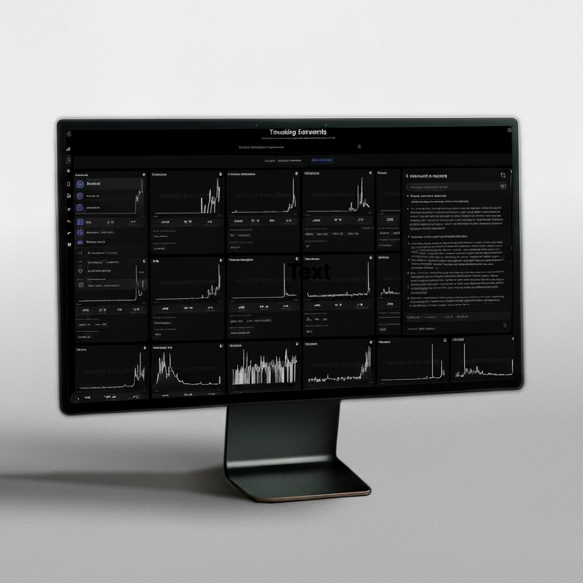
Paradox Intelligence normalizes search data and maps it to listed companies and themes, which allows you to build a sector-level view without manually aggregating raw data.
Consumer spending proxies and e-commerce data. For consumer-facing sectors, changes in Amazon search volume and product category interest are among the most actionable sector signals. Rising Amazon search interest in home improvement tools, fitness equipment, or consumer electronics often precedes sector-level revenue upgrades. Declining interest precedes the opposite.
Social and cultural trend data. Sector rotation is often preceded by narrative shifts. Themes that are gaining traction on social platforms, in news coverage, and in cultural conversations frequently attract investor attention before they attract capital. TikTok trend data, hashtag volume, and YouTube search trends can surface these narrative shifts early.
News sentiment by sector. Consistent improvement in news sentiment for a sector, particularly when it decouples from the broader market tone, can indicate that the fundamental narrative is improving ahead of a formal rerating. Conversely, sentiment deterioration that is sector-specific rather than market-wide often precedes multiple compression.
A framework for using alternative data in sector rotation
The challenge with sector-level analysis is aggregation: you need to move from individual company data points to a sector view. A practical approach:
Build sector-level indices. For each sector you cover, identify a basket of relevant search terms, companies, and themes. Aggregate normalized search and sentiment data across the basket into an index. Track the index weekly. Compare it to the sector's recent performance and earnings revision trend.
Look for divergences. The most interesting signals are divergences: a sector where alternative demand and attention data is improving but equity performance and revisions have not yet moved. This is the classic early-rotation setup.
Use multiple sources. A single data type is insufficient. Confirm moves in search with moves in sentiment, and cross-check with social or e-commerce data where available. Rotation signals supported by multiple independent data streams are more credible than any single indicator.
Track relative, not absolute. In sector rotation, what matters is relative performance across sectors. A sector where alternative data is improving at a faster rate than peers is a rotation candidate, even if absolute levels are not exceptional.
Sector-specific signal considerations
Different sectors have different alternative data signatures. Not all data types are equally relevant across all sectors.
Consumer discretionary and staples. Search volume, Amazon search, social engagement, and app/web traffic are all highly relevant. These sectors have strong behavioral signals because purchase decisions are made by consumers who search, browse, and engage online before buying.
Technology. Search trends for product categories, developer activity signals, and app usage data can provide leading indicators. Enterprise-focused names may have weaker consumer behavioral signals but can be tracked through job posting data, developer community engagement, and relevant search trends.
Healthcare and pharma. Search volume for medical conditions, treatments, and drug names can be informative for specialty pharma and medical device companies. Consumer interest in specific treatments often leads prescription volume data.
Energy and industrials. These sectors tend to have weaker direct consumer behavioral signals. Search and news sentiment are still useful, but the signals are more macro in nature: interest in energy transition, infrastructure spending, or commodity end markets rather than specific product demand.
Financial services. Search for personal finance, mortgage rates, credit cards, and insurance products provides leading indicators for consumer financial services names.
Avoiding false signals
Alternative data in sector rotation analysis generates false positives. Media cycles, short-term viral events, and seasonal patterns can create the appearance of a trend that reverses quickly.
Mitigations: - Require duration. A single-week spike in sector-related search is probably noise. Require a consistent move over 4-8 weeks before treating it as a signal. - Cross-reference macro context. Is the alternative data signal consistent with the macro backdrop? A consumer demand signal in a rising unemployment environment requires more scrutiny. - Normalize to seasonality. Consumer search patterns have strong seasonal components. Always compare to the same period in prior years, not just to the prior week or month. - Watch for crowding. When a rotation is well underway and widely discussed, the alternative data signal may already be fully priced. Early signals are valuable; confirmation of widely known trends is less so.
Building sector rotation signals into your process
The most durable use of alternative data in sector rotation is not as a single trade trigger but as a persistent component of your research process. Weekly review of normalized sector-level signals (search, sentiment, social) alongside traditional indicators (earnings revisions, price momentum, macro data) creates a richer view of where sectors are in their cycle.
Platforms that allow you to compare multiple companies and sectors on a normalized scale in a single workflow, without managing multiple data vendors, significantly reduce the operational burden of maintaining this type of coverage.
For more on specific data types and use cases, see 5 Alternative Data Sources Hedge Funds Use Most in 2026 and Alternative Data for Systematic Strategies. For long-form research and sector-level signal analysis, see Research.
- Find Your Plan
This post is for institutional investors and research professionals. It is not investment advice.