


Most investment teams have some version of a watchlist: a set of names or themes they want to monitor for changes. The challenge with alternative data is that the signal space is large. Tracking 20+ data sources across hundreds of companies manually is not practical. Done poorly, a watchlist becomes a flood of alerts that either gets ignored or creates noise that crowds out the real signals.
Done well, a watchlist is a systematic filter: it narrows the universe to what matters, monitors it efficiently, and surfaces changes that warrant action.
The problem with unstructured monitoring
The instinct when first working with alternative data is to watch everything. Track all the sources for all the names in the portfolio. Set alerts for any move above a threshold. The result is usually alert fatigue: so many notifications that the important ones get missed in the noise.
There are two failure modes. The first is over-sensitivity: alerting on every short-term fluctuation, which creates noise and trains the user to ignore alerts. The second is under-sensitivity: setting thresholds so high that by the time an alert fires, the move is already well underway and the edge is gone.
Structured watchlist design avoids both failure modes by being deliberate about what you are monitoring and why.
Three types of watchlist structures
Position monitoring. For names already in the portfolio, the goal is continuity: maintaining awareness of signal trends so that deteriorating or improving conditions are visible before they appear in the next earnings print. This type of watchlist should cover the key demand drivers (e.g. search for the main product category, app usage for a digital business, news sentiment for event-risk names) and should alert on sustained changes rather than single-session spikes.
Idea pipeline monitoring. For names being researched but not yet in the portfolio, the watchlist serves as a trigger: you have formed a view and are waiting for the data to confirm or deny it. This type should be more selective — define the specific signal or signals that would confirm or invalidate your thesis, and monitor only those. The alert is a prompt to do deeper work, not to act immediately.
Thematic or sector surveillance. For broad coverage of a sector or theme, the watchlist functions as an early warning system: surfacing names within a universe that are showing unusual activity, before fundamental research has been done. This type benefits from breadth — tracking all names in a sector with a consistent signal set — and a review cadence rather than real-time alerts, since the goal is periodic screening rather than continuous monitoring.
Stay up to date on our best ideas
What to include in a watchlist entry
For each name or theme on your watchlist, defining the following in advance makes monitoring more rigorous:
The thesis. What is the hypothesis you are testing or monitoring? "Demand for product X is recovering" is more useful than "company Y is interesting." The thesis determines which signals are relevant and which are noise.
The key signals. Which data sources are most informative for this specific thesis? For a consumer brand, that might be Google Search and Amazon. For a digital platform, it might be App Downloads and Web Traffic. For a macro theme, it might be a basket of search terms across geographies. Narrowing the signal set per thesis reduces noise and increases the signal-to-noise ratio of alerts.
The baseline. What does "normal" look like for this signal and this company? Seasonal patterns, trend baselines, and normal week-to-week volatility should be established before you set alert thresholds. A 10% increase in search volume for a retailer in December is not the same as the same increase in March.
The threshold for action. What change in the signal would prompt deeper work? Define this in advance. A two-standard-deviation move over a four-week window? Three consecutive weeks of deceleration after a sustained rise? Set it before you start monitoring, not after you see a move.
The review cadence. How often do you need to look at this? Real-time for event-driven names; daily for active positions; weekly for the broader surveillance universe. Not everything needs the same cadence.
Building the watchlist in Paradox Intelligence
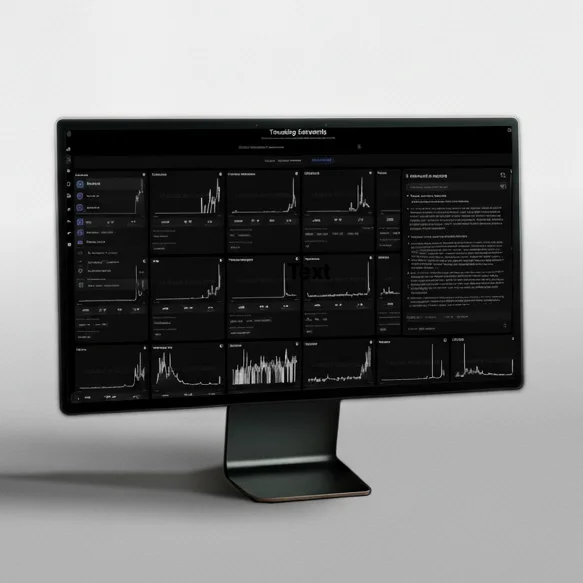
The Paradox Watchlist is designed around these principles. You can save keywords, companies, or themes and monitor their signal trends across all available data sources in one view.
Key features:
- Persistent tracking of saved keywords and companies, with signal history available for each.
- Multi-source comparison so you can see how a saved keyword is performing across Google Search, YouTube, TikTok, Amazon, Reddit, News, and other sources simultaneously.
- Signal trend visualization with historical context, so you can distinguish a new development from a continuation of an existing trend.
- Integration with the Analyze tool for deeper drill-down when a watchlist alert warrants it.
The watchlist is most effective when combined with the Paradox Inflection view, which shows multi-source alignment for any company, and the Live Feed, which surfaces the latest signal movements across the full universe.
Managing alert fatigue
Even with a well-structured watchlist, alert volume can become a problem at scale. A few practices help:
Batch your reviews. Rather than reacting to alerts in real time, set a structured time to review watchlist changes — morning briefing, end of day, or weekly depending on the cadence of your strategy. Real-time monitoring is appropriate for event-driven setups; it is usually counterproductive for fundamental research workflows.
Tier your watchlist. Divide names into tiers by urgency: high-attention (active positions, high-conviction thesis), medium-attention (idea pipeline), and low-attention (thematic surveillance). Apply different review cadences and thresholds to each tier.
Archive rather than delete. When a thesis is resolved (position exited, thesis invalidated), archive the watchlist entry rather than deleting it. Reviewing historical watchlist performance over time is one of the best ways to improve the quality of your signal selection and threshold calibration.
Require multi-source confirmation for alerts. Configure alerts to fire only when more than one signal is moving simultaneously. This alone reduces false positives significantly and keeps the alert list focused on genuine signal changes.
For more on signal monitoring methodology, see Multi-Signal Analysis and Research.
This post is for institutional investors and research professionals. It is not investment advice.