


Hedge fund intelligence is not a product. It is a capability: the ability to form a view on a company, sector, or theme that is better-informed than what the market has already priced in. In practice, building that capability in 2026 requires access to data that most market participants do not have, processed in a way that produces actionable signals before they become consensus.
Alternative data is central to how leading funds build and maintain that edge. What was once the exclusive domain of the largest multi-manager platforms is now a standard part of the research toolkit at funds of all sizes -- because the cost of access has come down, the quality of data has improved, and the competitive pressure to use it has increased.
What hedge fund intelligence actually means
The term is broad but the concept is specific. An investment edge comes from one of three places:
Information edge. You know something the market does not, or you know it sooner. In equity markets, legal information edges come from alternative data: behavioral signals, demand proxies, and leading indicators that are technically public but practically inaccessible to most participants.
Analytical edge. You interpret the same information differently or more rigorously than others. Alternative data creates analytical edge opportunities because most of the market is still reading the same earnings reports and analyst notes -- funds that integrate behavioral signals into their models are asking different questions from different data.
Behavioral edge. You act on information more consistently and with less bias than others. Systematic funds in particular use alternative data to reduce the human decision-making layer, replacing qualitative judgment with quantifiable signals.
Most funds that use alternative data effectively are competing on all three dimensions simultaneously.
The data sources leading funds use most
Search and intent data
Search volume from Google, Amazon, YouTube, and other platforms captures consumer demand in near-real time. For equity analysts, branded search trends are among the most reliable leading indicators of revenue performance, particularly for consumer-facing companies. When branded search accelerates in a category while consensus estimates remain flat, there is often an information gap worth exploiting.
Amazon search is particularly direct: a consumer searching for a product on Amazon is expressing intent to buy, not just interest. Tracking Amazon search share across competing brands within a category gives a continuous competitive ranking that no quarterly filing can provide.
Social and engagement signals
Data from TikTok, Reddit, Instagram, and similar platforms captures awareness, cultural relevance, and the early stages of consumer adoption. Social signals are noisier than search but often earlier -- they can capture a product or brand going viral before it shows up in search volume, web traffic, or sales.
For consumer, gaming, and entertainment companies especially, social data has become a standard pre-earnings input. A brand gaining disproportionate TikTok engagement in a quarter is likely to show consumer acquisition metrics that surprise to the upside.
Web and app traffic
Website traffic and mobile app usage data are behavioral proxies for demand and engagement. For digital-first businesses -- fintech, e-commerce, SaaS, streaming, gaming -- these signals are often the closest available approximation of what revenue is doing between quarters. Declining app daily active users, rising uninstall rates, or falling web traffic in a core market are all leading indicators that can inform position sizing or hedging decisions well before earnings.
News and text sentiment
Structured sentiment analysis of news coverage, earnings call transcripts, regulatory filings, and analyst commentary. Sentiment data captures how the narrative around a company or sector is changing, independent of price. A company where negative sentiment is rising steadily while the stock is holding up is a pattern worth monitoring. The reverse -- positive sentiment building while the stock lags -- is a different pattern with different implications.
Transaction and card data
Aggregated consumer spending data derived from card transactions or receipts. This is often considered the most direct alternative data input for retail, restaurant, and consumer discretionary names because it is the closest proxy to actual reported same-store sales or revenue. It is also typically the most expensive and most restricted data type, which limits its use to funds with larger data budgets.
Wikipedia and reference signals
Wikipedia page view trends for companies, products, or themes. Counterintuitively, Wikipedia traffic is one of the most academically validated alternative data signals: studies have found that spikes in Wikipedia views for a company predict earnings surprises with statistically significant accuracy. It is also free, historically deep, and easy to integrate -- which makes it underused relative to its signal quality.
Stay up to date on our best ideas
How leading funds structure their intelligence process
The funds that use alternative data most effectively do not treat it as a separate research track. They integrate it into the same workflow as fundamental analysis.
A typical pre-earnings process at a fund with a mature data operation looks like this:
-
Four to six weeks before the quarter ends, the research team pulls the most relevant alternative data signals for the positions under review: search trends, app data, web traffic, social volume, sentiment.
-
Each signal is reviewed in the context of the prior four quarters and the current consensus estimate. The question is not "what is the signal doing?" but "is the signal doing something the market has not priced?"
-
Signals that are consistent across multiple data sources -- rising search AND rising app engagement AND improving sentiment -- are weighted more heavily than single-source signals.
-
The intelligence is used to adjust conviction, not necessarily to trigger trades. A fund might hold a position with higher concentration if the data supports the thesis, or reduce exposure if the signals are conflicting.
-
After earnings, the fund reviews the outcome and updates its internal calibration of how predictive each signal was for that company type and time period.
This feedback loop -- using post-earnings outcomes to improve signal weighting -- is what separates funds that use alternative data well from those that use it as a checkbox.
The competitive dynamics in 2026
Alternative data adoption among hedge funds has reached a point where not using it is a disadvantage in covered sectors. The information gap between a fund running search, social, and app data against a fund relying solely on sell-side research has become measurable.
At the same time, the edge from any single widely-used dataset narrows over time as more participants use the same signal. The funds maintaining the strongest intelligence advantage in 2026 are those that:
- Combine multiple sources rather than relying on any single dataset
- Process signals systematically rather than reviewing them manually
- Build proprietary views on how to weight and combine signals for specific company types
- Access data through platforms that provide consistent methodology and entity mapping, rather than assembling raw feeds and building normalisation infrastructure in-house
The last point matters for operational reasons. Building and maintaining data pipelines for six or eight alternative data sources is a significant engineering burden. Platforms that provide multiple sources in a normalised, consistently updated format allow smaller funds and lean research teams to compete with the data infrastructure of much larger operations.
Building hedge fund intelligence at scale
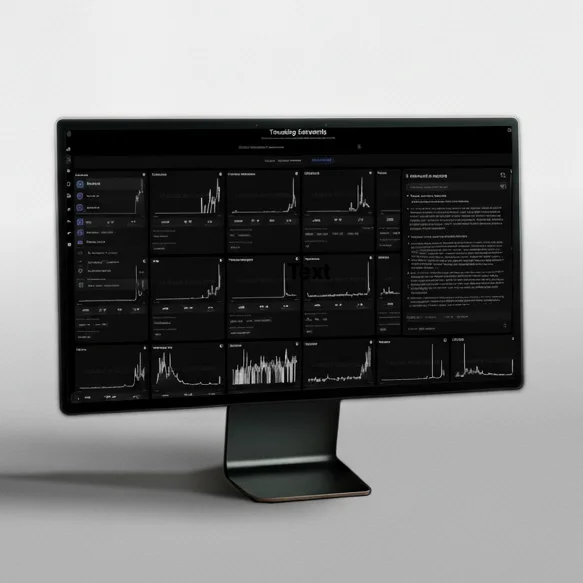
Paradox Intelligence provides the core data sources that institutional funds use for pre-earnings analysis and ongoing competitive monitoring: Google search, Amazon search, YouTube, TikTok, Reddit, web traffic, Wikipedia, and news sentiment, all normalised and mapped to 50,000+ listed companies and investable themes.
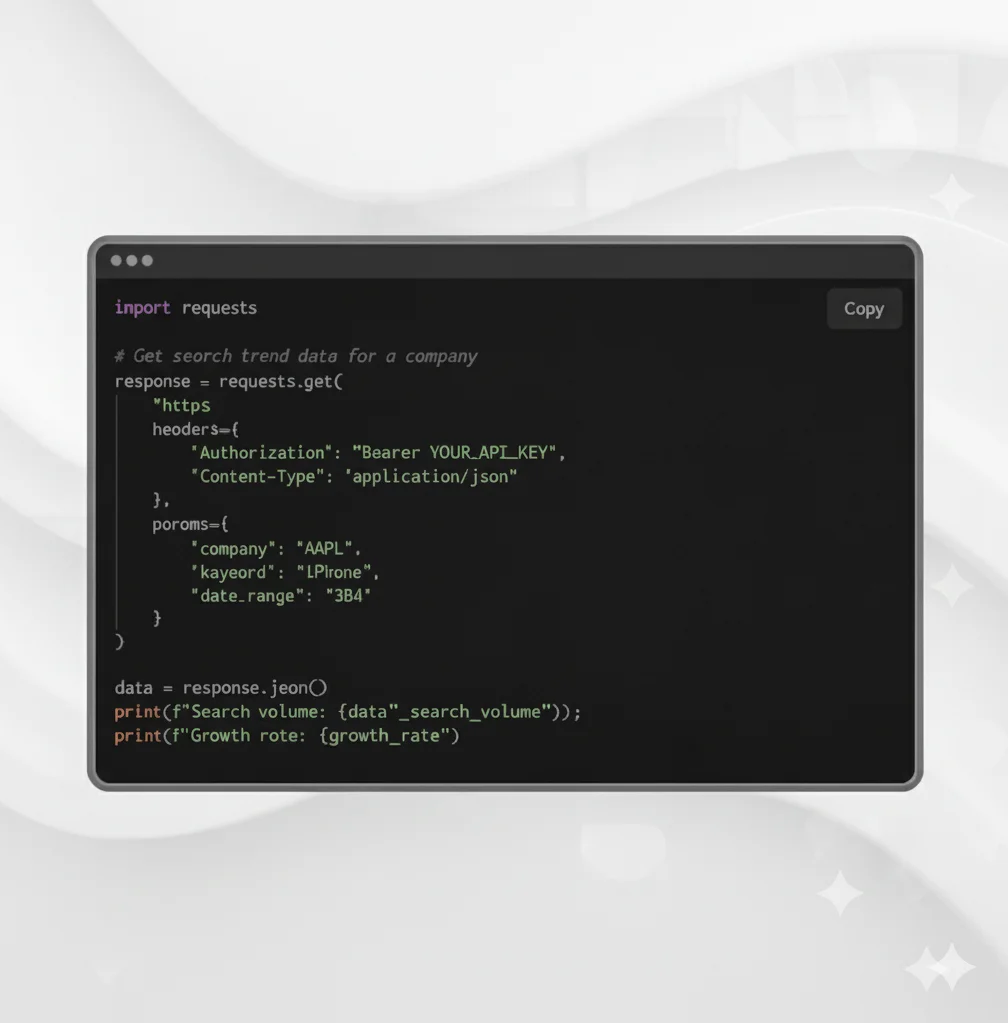
Data is available via platform for research workflows, REST API for quantitative integration, and MCP server for AI-assisted analysis. For the full dataset catalog, see Datasets. For institutional pricing and access, see Platform.
Related resources
- 5 Alternative Data Sources Hedge Funds Use Most
- Alternative Data for Hedge Funds
- Amazon Search Intelligence for Investors
- App Intelligence Data for Investors
- What Is Alternative Data?
- Find Your Plan
This post is for institutional investors and research professionals. It is not investment advice.