
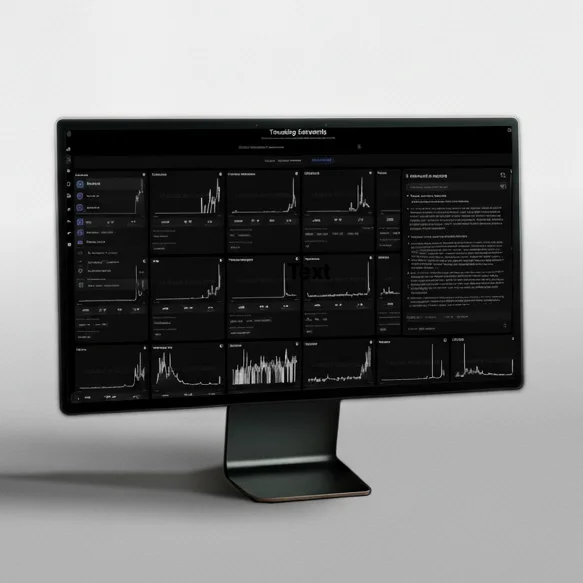



App intelligence data refers to estimates of mobile application performance: how many times an app is downloaded, how many users open it daily or monthly, how long they spend inside it, and how those numbers change over time. For investors, it is one of the clearest behavioral signals available for any company that distributes products or services through a mobile application.
The signal matters because app metrics often move before financial results do. A sustained decline in daily active users, a drop in session length, or a loss of download share to a competitor can precede a revenue miss by one or more quarters. Conversely, accelerating downloads or engagement in a new geography or product category can confirm a growth thesis before it appears in any filing.
What app intelligence data actually measures
The main metrics that institutional investors use from app intelligence providers fall into a few categories:
Downloads and install velocity
New installs per day, week, or month, broken down by platform (iOS vs Android), geography, and sometimes acquisition channel. Download velocity is the most widely watched metric because it reflects demand for a product in real time. A company launching in a new country, releasing a major product update, or running a marketing campaign will typically show a measurable response in downloads within days.
Download data is estimated rather than directly reported. Providers use panel data, SDK integrations, app store data, and statistical modelling to build their estimates. Methodology varies, and different providers produce different absolute numbers, which is why consistent comparison over time within a single provider matters more than the absolute value.
Daily and monthly active users
DAU and MAU estimates indicate how many people are actually using the app regularly, not just how many have installed it. The DAU/MAU ratio -- often called the stickiness ratio -- tells you what proportion of monthly users engage on a daily basis. A high ratio (above 20-25%) typically indicates a habit-forming product. A ratio that is declining over time is a warning signal even if absolute user numbers are stable.
For subscription businesses, DAU/MAU trends are one of the best proxies for retention risk ahead of churn reporting.
Session length and engagement depth
How long the average user spends per session and how many sessions they open per day. For ad-supported businesses, session length directly affects monetisation capacity. For e-commerce apps, it often correlates with conversion rates. For fintech apps, engagement depth can predict transaction volumes.
Retention and uninstall rates
Day-1, Day-7, and Day-30 retention rates measure what percentage of new users are still active after one day, one week, and one month respectively. These are standard product health metrics in the industry and are increasingly available from alternative data providers. Rising uninstall rates, when visible, are among the most direct leading indicators of churn.
Category and competitive share
Downloads and active users in context -- how a specific app is growing or shrinking relative to its direct competitors within the same category. Share of downloads is often more informative than absolute growth because it controls for category-level tailwinds or headwinds.
How institutional investors use app intelligence data
Pre-earnings research on digital-first companies
For companies where the mobile app is the primary product or distribution channel -- consumer fintech, gaming, e-commerce, food delivery, streaming, ride-hailing -- app metrics are among the first signals analysts review in the weeks before an earnings report. A quarter where DAU trends were flat or declining is likely to show in engagement-driven revenue metrics. A quarter where download share accelerated in a key geography often confirms management commentary about expansion.
The advantage is timing. App store data is updated continuously. An investor tracking weekly download trends for a consumer app company has a continuous view of demand that quarterly earnings can only summarise.
Gaming and entertainment
Mobile gaming is one of the highest-signal use cases for app intelligence data. New game launches, live events, seasonal content drops, and competitor releases all produce measurable spikes or drops in downloads and session counts within days. Analysts covering gaming companies use this data to track which titles are retaining players, which are declining, and whether a new release is tracking above or below internal comparisons.
Fintech and neobanks
For digital-first financial services businesses, app downloads and active user metrics are proxies for customer acquisition and engagement that are not reported publicly between earnings. A neobank growing its DAU base faster than its public peers, in a market where the incumbents show flat or declining engagement, is a thesis that app data can surface and sustain before it is visible in any filing.
Competitive intelligence within a sector
App intelligence is particularly useful for comparing multiple companies within the same category: who is gaining download share, whose stickiness is improving, whose session length is growing. This competitive view is difficult to construct from financial filings alone, where companies report different metrics on different schedules. App data provides a common, high-frequency benchmark.
Confirming or challenging thesis work
When a fund has a view on a company -- long or short -- app data provides a continuous check on whether the underlying behavioral evidence supports that view. A long thesis on a food delivery company that is losing download share to a competitor is worth revisiting. A short thesis on a gaming company that is showing surprising engagement stability is also worth revisiting.
Stay up to date on our best ideas
Limitations to keep in mind
App data is estimated, not reported. The gap between estimated and actual figures can be meaningful, particularly for smaller apps, newer markets, and platforms where panel coverage is thin. Investors use it as a directional and relative signal, not as a precise forecast of a reported metric.
App metrics also do not translate uniformly to financial results. A company with strong DAU growth but weak monetisation will not show proportional revenue improvement. App data is most valuable when combined with other signals -- search data, web traffic, news sentiment, transaction data -- that together describe both demand and execution.
Cross-platform dynamics add complexity. A decline in iOS downloads in one region may reflect a shift to Android or a web-based experience rather than actual demand loss. Interpreting app data well requires understanding the company's product structure.
Where app intelligence data fits in a multi-signal workflow
Most investment processes that use app data do not use it alone. The typical workflow combines app metrics with:
- Search data to confirm whether consumer interest in the app or product category is growing at the query level, not just at the install level
- Web traffic to understand whether mobile growth is coming at the expense of or alongside desktop/web engagement
- News and sentiment to flag whether the app trend is connected to a product event, marketing push, or reputational issue
- Social data to assess whether app engagement correlates with brand buzz or earned media
Platforms that provide these data sources in one place, with consistent entity mapping and update schedules, reduce the integration overhead significantly. Paradox Intelligence provides normalised mobile app intelligence data alongside search, social, web traffic, news sentiment, and Wikipedia signals, all mapped to listed companies and investable themes.
Related datasets and resources
- Mobile App Data -- download trends, active user estimates, engagement metrics
- TikTok Trends Data -- social engagement signals that often lead app download trends
- Web Traffic Data -- complements app data for multi-platform businesses
- What Is Alternative Data? -- broader context on alternative data types
- 5 Alternative Data Sources Hedge Funds Use Most -- how app data fits alongside other source categories
Explore the data
This post is for institutional investors and research professionals. It is not investment advice.