


A thread on r/hedgefund asking "Paradox Intelligence, RavenPack, or Quiver Quantitative for alternative data?" consistently surfaces when quants and analysts compare tools. The three serve different primary use cases, operate at different price points, and draw on different underlying signal categories. This post breaks down how they compare.
Quick overview
RavenPack is one of the oldest and most widely used institutional news and text analytics providers. It processes news, filings, earnings transcripts, and other textual content from tens of thousands of sources in multiple languages and delivers structured sentiment, event, and entity data. The core product is an NLP pipeline that turns unstructured text into machine-readable signals. Clients are typically large hedge funds, investment banks, and asset managers. Pricing reflects the institutional tier.
Quiver Quantitative aggregates alternative datasets sourced from public records and filings: congressional trading disclosures, insider transactions, lobbying data, government contracts, patent filings, and social media activity. Pricing is accessible relative to most institutional data vendors, making it popular with smaller funds and quantitative retail traders.
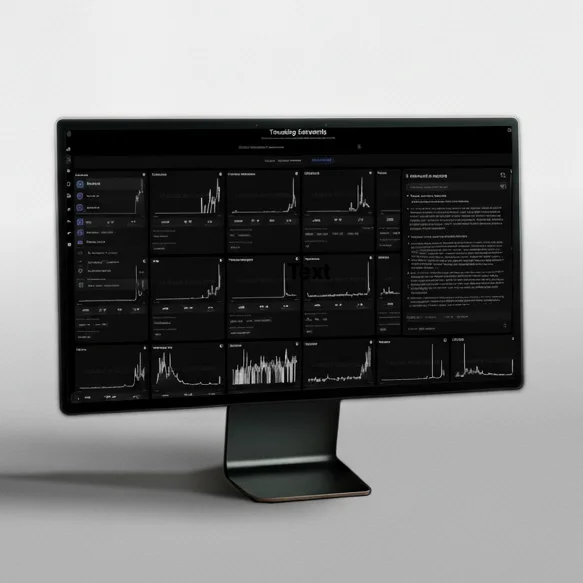
Paradox Intelligence provides normalized, multi-source behavioral alternative data mapped to listed companies. The focus is on capturing where consumer attention and demand are moving across digital channels, surfaced as investment-grade time series at the company or keyword level. Access is via platform, API, and MCP server.
Signal categories: how they differ
The three tools occupy different positions across the alternative data landscape. Looking at signal categories makes the distinction clear.
| Signal category | Paradox Intelligence | RavenPack | Quiver Quantitative |
|---|---|---|---|
| Search trends | Yes | No | No |
| Social media trends | Yes | Partial | Yes |
| Consumer interest & shopping signals | Yes | No | No |
| News sentiment | Yes | Yes (primary focus) | Limited |
| Text & document intelligence | No | Yes | No |
| Public disclosure signals | No | No | Yes (primary focus) |
| Multi-source normalization | Yes | No | No |
| Ticker mapping | Yes | Yes | Yes |
None of them is a substitute for the others: they are largely additive, which is why funds often use more than one.
Stay up to date on our best ideas
Signal focus: behavioral demand vs text vs public disclosures
Paradox Intelligence focuses on behavioral signals: what people are actually doing across digital platforms. Search trends, social engagement, shopping interest, and news consumption are captured and normalized across sources. The premise is that shifts in consumer behavior show up in these channels before they show up in earnings.
RavenPack focuses on text and narrative signals: how companies, sectors, and markets are being written and talked about. It processes the textual output of news and financial documents and extracts structured sentiment scores, event tags, and entity relationships. The signal is about what is being said, not what people are doing. It is especially useful for event-driven strategies, earnings research, and risk monitoring.
Quiver Quantitative focuses on disclosure and public record signals: what insiders, politicians, lobbyists, and government contractors are actually doing as revealed in public filings. Congressional trades, for example, are legally required disclosures that provide a window into informed buying and selling activity. These signals are orthogonal to both search behavior and news text.
Institutional suitability and compliance
RavenPack is built for and used by the largest institutional investors globally. It has strong documentation, compliance frameworks, and client support appropriate for systematic funds, macro shops, and quantitative equity teams at major institutions. Pricing and onboarding reflect that tier.
Paradox Intelligence is designed for institutional use: hedge funds, asset managers, and research organizations. Data is normalized and mapped to tickers for use in systematic and discretionary workflows. Platform, API, and MCP access are available for institutional teams. See datasets and APIs for details.
Quiver Quantitative sits at an interesting mid-point. Its data is drawn from public disclosures, so compliance risk on the data itself is generally lower. Pricing is more accessible, making it popular with emerging managers and quantitative retail traders, though it is also used by professional teams looking for specific signals like congressional trading or government contracts.
Workflow and integration
RavenPack delivers data via API and data feeds, with structured output that plugs into quant pipelines. Setup requires data engineering, but the output is well-suited for systematic strategies.
Quiver Quantitative provides data via a web platform and dashboard. The interface is accessible for teams without dedicated data engineering, and data can be exported for further analysis.
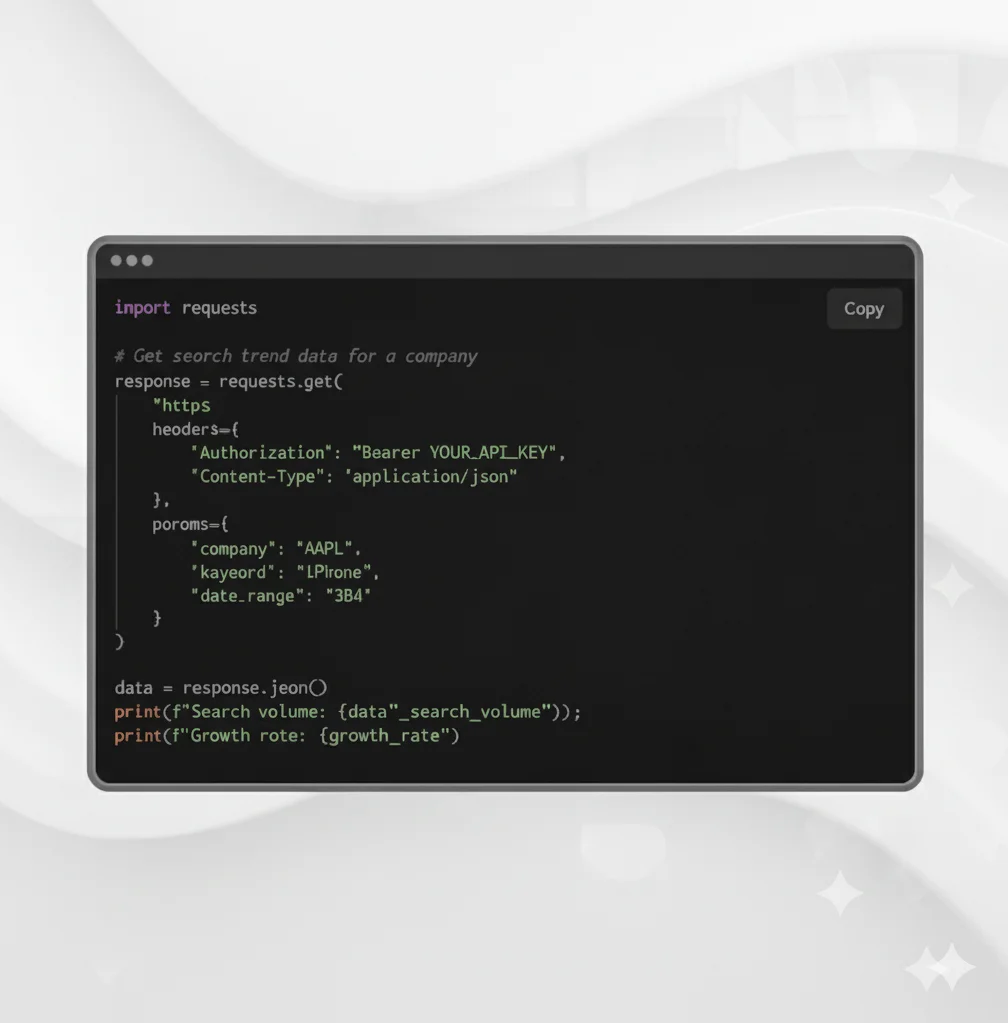
Paradox Intelligence provides a desktop platform, REST API, and an MCP server. The MCP integration is useful for teams using AI assistants or agent frameworks (e.g. Claude, Cursor), allowing them to query behavioral trend data directly without building a separate integration. For more on MCP, see MCP Servers for Alternative Data.
Best fit by use case
Use RavenPack if: - Your strategy is driven by news, events, or earnings-call language - You need sentiment across many languages for global macro or multi-market coverage - You are a systematic fund that needs NLP-structured text signals at scale - You have the data engineering capacity to work with high-frequency news data
Use Quiver Quantitative if: - You want exposure to congressional trading or insider activity signals - You are tracking government contract awards or lobbying patterns for specific sectors - You are an emerging manager or small fund looking for accessible pricing - You want a quick overlay on what financially-informed actors are doing in specific names
Use Paradox Intelligence if: - You want to track demand and consumer behavior through behavioral signals across digital channels - You need signals mapped to tickers with a normalized multi-source view - You are building or running a research process around what people are actually doing, not just what is being said about a company - You want API or MCP access for integration with AI workflows and quant pipelines
Most institutional teams that use RavenPack or Quiver add behavioral search and social data from a provider like Paradox because the signal categories are complementary, not substitutes.
How they compare in practice
Consider a consumer stock in focus before earnings. A useful pre-earnings data check might include:
- Search and social trend for the company's core product category (Paradox Intelligence)
- News sentiment over the past 30 days relative to baseline (RavenPack or Paradox)
- Whether any congressional trades were made in the stock in the past quarter (Quiver Quantitative)
Each provides a different slice of information. Together, they form a more complete picture than any one alone.
For a broader look at how platforms compare, see Best Alternative Data Platforms 2026. For methodology and long-form research, see Research.
- Find Your Plan
This post is for institutional investors and research professionals. It is not investment advice. Product details are subject to change; verify with providers directly.