

The Strait of Hormuz is trending across five distinct data sources simultaneously. That kind of cross-platform convergence rarely happens for a geopolitical topic without a concrete catalyst forcing it into public consciousness.
The Change
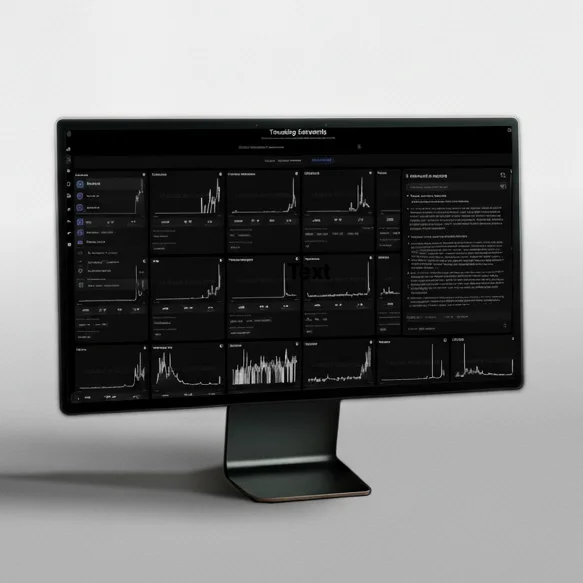
On March 23-24, 2026, behavioral data from Paradox Intelligence shows the Strait of Hormuz reaching peak trending status on TikTok (the number-one hashtag cluster by volume), Wikipedia (top viewed pages), Reddit World News (multiple top-ranked posts), and Google News. Simultaneously, U.S. news outlets are reporting a Trump administration ultimatum directed at Iran, Iran's denial of those terms, and discussion of closing the Strait as a retaliatory option. The signal is not a slow build - it spiked sharply within a 24-hour window.
Why the Market Has Not Fully Priced It
Consensus is treating this as another in a series of Iran tension episodes that have historically resolved without physical disruption to the Strait. That assumption is embedded in current crude tanker valuations: spot day rates remain well below the peaks seen during prior Middle East escalation cycles, and the tanker equities are not pricing in a meaningful probability of a multi-week Strait closure.
The part the market is underweighting is timing. Iran has directly stated it is considering closing the Strait as leverage in nuclear talks. The Trump administration's posture - as of March 23 reporting - is described as a direct ultimatum rather than the graduated diplomatic signaling seen in prior cycles. If the current round of talks collapses, the escalation path is faster and less predictable than previous episodes.
Evidence
1. Cross-platform search and social spike. Strait of Hormuz is simultaneously trending on TikTok (volume rank #1 in the hashtag data as of March 23), Wikipedia top-viewed pages, Reddit World News (posts referencing Iran and Strait closure in the top 10), and Google News. Historically, Strait of Hormuz topics see one-platform spikes. Cross-platform convergence of this magnitude corresponds to elevated near-term risk premium periods, not routine diplomatic friction.
2. Wikipedia pageview surge as a crisis proxy. Wikipedia trend data for "Strait of Hormuz" is running at a reading consistent with major geopolitical escalation events, not background news coverage. Wikipedia pageview spikes for chokepoint topics have historically preceded short-term commodity volatility by 24-96 hours as retail and institutional participants begin researching scenarios.
3. Crude tanker news volume elevated. The news volume data for March 23 shows "Crude oil tankers," "Crude Tankers," and "Tanker Shipping" all registering in the top-ranked news volume keywords. This is an unusual clustering - these terms do not typically co-trend unless a supply route risk story is running across multiple outlets simultaneously.
4. Iranian threat language is explicit. Reddit World News posts ranked in the top five include direct citations of Iranian officials discussing Strait closure and "irreversibly destroying" capacity. While official statements in prior cycles used vaguer language, the current framing is more operational - a shift in rhetoric that historically precedes higher-volatility outcomes even when physical action does not follow.
5. Oil price signal. The Google News data shows "Oil Falls Trump" as a trending topic, indicating the market is currently running a de-escalation base case. That creates an asymmetric setup: the behavioral signals point to an escalation scenario gaining traction in public attention, while oil prices and tanker day rates reflect the opposite assumption.
The Investable Bridge
The primary equity exposure is in crude tanker operators. If the Strait is disrupted, approximately 20-21 million barrels per day (roughly 20% of global oil trade) that currently transits the waterway would need to reroute or halt. Spot day rates for VLCCs, Suezmaxes, and Aframaxes all spike materially during Strait disruption scenarios - as they did following the 2019 tanker attacks and the Houthi Red Sea disruption in late 2023 to 2024.
DHT Holdings (DHT, NYSE) - Pure-play VLCC operator. DHT's fleet consists entirely of very large crude carriers, giving it the highest direct leverage to a spot rate spike from Middle East supply disruption. Day rate sensitivity is significant: each $10,000/day increase in VLCC spot rates translates to approximately $0.50 in annualized earnings per share at current fleet size.
International Seaways (INSW, NYSE) - Diversified crude and product tanker fleet. INSW appeared directly in the news volume signal data for this session. It operates VLCCs, Suezmaxes, and Aframaxes, covering the full range of vessel classes that would be rerouted in a Strait closure.
Nordic American Tankers (NAT, NYSE) - Suezmax-focused fleet. NAT has historically traded with a higher beta to geopolitical crude disruption events due to its concentrated Suezmax exposure and high dividend payout structure. Retail and income-oriented investors often move into NAT on Iran risk headlines, which can amplify short-term price moves beyond what spot rate fundamentals justify.
Korea Shipbuilding and Offshore Engineering (009540.KS, KRX) and Samsung Heavy Industries (010140.KS, KRX) - Sustained elevated tanker demand from rerouting would pull forward new build orders. Korean shipyards are the primary beneficiaries of any extended tanker construction cycle, given their dominance in large crude carrier production.
Lineage (LINE, Nasdaq) and Americold (COLD, NYSE) - Cold chain operators carry secondary exposure if food and agricultural commodity flows are disrupted alongside crude, but the transmission mechanism is slower and less direct than for crude tanker operators.
The crude tanker names are the clearest near-term trade. The shipbuilding names are a medium-term thesis contingent on sustained route disruption rather than a short-term spike.
Risks and Failure Modes
The thesis fails if Iran and the U.S. reach a framework agreement before the current ultimatum deadline, which would reset behavioral signals toward de-escalation within 48-72 hours. Spot tanker day rates would correct sharply in that scenario, given the current low base.
It also fails if the escalation remains rhetorical. Iran has threatened Strait closure multiple times over the past 15 years without acting. The behavioral signal spike could resolve as pure noise - a social media amplification cycle without geopolitical follow-through.
Tanker equities are already partially positioned for Middle East risk following the Houthi Red Sea disruption of 2024. Some rate premium may already be embedded in current valuations, reducing the upside on a modest escalation scenario.
Seasonality is a minor factor: second-quarter crude demand is typically softer than fourth-quarter, which limits the spot rate ceiling even in a disruption scenario.
What to Monitor Next
-
VLCC spot rates for the Persian Gulf-to-China route. A move above $40,000/day from current levels within the next 5-7 trading sessions would confirm the market is beginning to price Strait risk, rather than treating this as background noise.
-
Iranian foreign ministry statements. Any shift from "considering closure" language to setting a timeline or condition for closure would escalate the probability distribution materially. Monitor official IRNA reporting and Reuters/AP translations.
-
The next round of Trump-Iran communications. The current behavioral signal spike was triggered by an ultimatum report. The response to that ultimatum - either direct engagement or a breakdown in communication - will be the cleaner signal for whether this escalation cycle has legs or resolves into the prior pattern.