

Helium is not optional in semiconductor manufacturing. It is used in every major process step at advanced nodes: as a carrier gas in chemical vapor deposition, as a coolant for MRI machines used in fab quality control, to purge reaction chambers between deposition cycles, and to detect leaks in vacuum systems with precision that no other gas can match. At 2nm and below, the physical properties of helium — specifically its thermal conductivity, non-reactivity, and small atomic radius — are not engineering preferences. They are manufacturing requirements.
The New York Times reported on March 27, 2026, that an invisible bottleneck is forming: the US-led conflict with Iran has disrupted LNG tanker traffic through the Strait of Hormuz, and as a byproduct, helium extraction operations tied to Qatari natural gas processing facilities have been affected. Qatar is one of the world's top three helium exporters, alongside the United States and Russia. A simultaneous constraint across multiple supply sources is not a theoretical scenario — it is the current status.
What the Search Data Shows
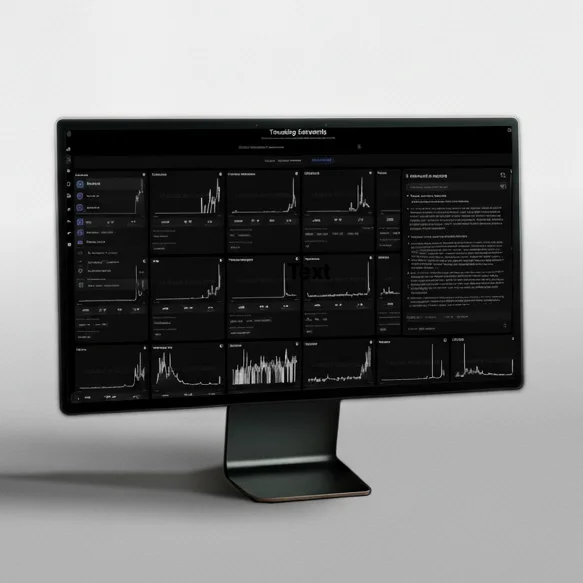
Paradox Intelligence Google Search data for the query "helium shortage" shows a current normalized value of 69 as of the week ending March 21, 2026. One year ago, the same query registered 11. That is a 527% year-over-year increase. Six months ago it was 15. Three months ago it was 17. The acceleration is recent and sharp — the majority of the gain compressed into the first quarter of 2026 as the Hormuz situation deteriorated.
Google News data for the keyword "helium" moved from zero to a normalized value of 86 over the same period, with no signal in the prior year, prior six months, or prior three months. This is a topic that went from absent in news coverage to near-peak coverage in a single quarter.
Search interest in "semiconductor manufacturing helium" registered a normalized value of 57 as of March 21, also starting from zero a year ago. The search behavior is consistent across broad helium supply queries and specific semiconductor-application queries, which is the pattern of a genuine supply concern spreading across professional and research audiences rather than a surface-level news story.
Why This Is Structural, Not Just a Headline
Three features make this more than a temporary disruption story.
First, helium is non-substitutable at advanced nodes. Unlike some industrial gases where a process chemistry adjustment can allow substitution, helium's role in semiconductor manufacturing is driven by physical properties — thermal conductivity, atomic size, inertness — that no available gas replicates at equivalent cost and process stability. TSMC, Samsung, and Intel have all invested in leak-detection and process optimization around helium as a fixed input, not as a flexible variable.
Second, new helium supply is extremely slow to develop. The gas is a byproduct of natural gas extraction from specific geological formations that are rare. The largest incremental production expansions underway are in Tanzania and the US (Wyoming and Kansas), but both are multi-year development timelines from announcement to meaningful commercial output. There is no near-term supply response that matches the pace of the current disruption.
Third, demand is rising, not falling. The AI infrastructure buildout has driven semiconductor fab utilization to elevated levels. TSMC's management referenced reaching capacity limits on advanced nodes in early 2026 reporting. Higher fab utilization means higher per-unit helium consumption, precisely when supply is becoming less reliable.
The Equity Exposure Map
Direct beneficiaries:
Linde plc (LINDE, NYSE) and Air Products and Chemicals (APD, NYSE) are the two largest industrial gas distributors globally and the primary commercial intermediaries for helium supply to semiconductor fabs. A tighter helium market raises contract prices and improves the pricing power of the gas distribution business. Linde in particular holds long-term contracts with major producers and customers, and it operates in a structure where supply scarcity improves its negotiating position with both producers and buyers. Air Products has similar exposure.
Companies at risk:
TSMC (TSM, NYSE) is the most directly exposed in absolute terms. TSMC's 2nm and 3nm fabs in Taiwan are the highest-volume consumers of helium in advanced semiconductor manufacturing globally. Any sustained elevation in helium prices increases per-wafer production cost. TSMC's pricing power on leading-edge wafers has historically been strong enough to pass input cost increases through, but the pass-through timeline creates a margin compression window.
Intel (INTC, NASDAQ) and Samsung (005930, KRX) face similar exposure on their leading-edge processes, though at lower absolute volumes than TSMC. Applied Materials (AMAT, NASDAQ) and other equipment makers face indirect exposure through customer demand: if helium supply constraints slow wafer starts, equipment orders for capacity expansion slow alongside them.
Super Micro Computer (SMCI, NASDAQ) and server assemblers that depend on available GPU and AI chip supply have second-order exposure — helium constraints that slow leading-edge fab output would extend the timeline on which AI hardware supply can scale to meet demand.
What Could Change the Thesis
A ceasefire or de-escalation in the US-Iran conflict is the most direct path to resolving the Qatari supply disruption. A rapid resolution would reduce the urgency of the helium supply concern. Separately, if the Wyoming and Kansas domestic helium expansion projects accelerate beyond current timelines, that would relieve pressure from the eastern hemisphere side of the balance.
The one caveat: search interest in helium shortage is now elevated, which means this thesis has begun entering mainstream investment consciousness. The edge lies in understanding the specific exposure transmission — which companies, through which mechanisms — rather than in simply knowing the headline.
Monitoring Signals
Four data points to track: Linde and Air Products pricing commentary on industrial gas contracts in Q1 2026 earnings calls, specifically any language around helium contract tightening. TSMC's next quarterly update for any commentary on input cost trends. Spot market price reports for crude helium, which are published by the US Bureau of Land Management. And Google Search volume for "helium price" and "helium semiconductor" over the next 4 to 8 weeks — if those queries continue rising, the market is still in the discovery phase of processing this constraint.
This is for informational purposes only and does not constitute investment advice.