


Defense is one of the hardest sectors to research with traditional data. Procurement cycles run for years. Revenue recognition is tied to contract milestones. Earnings guidance is deliberately vague. And the underlying demand signal — government intent to spend — rarely shows up in financial data until long after the capital allocation decision has been made.
What does show up earlier is behavioral evidence. Search interest in specific weapons systems, news coverage of procurement activity, Wikipedia traffic around named programs, and news volume around shipbuilding or defense industrial topics — these signals move before the sell-side models do. That gap between observable change and consensus recognition is where alternative data earns its value in defense investing.
What Alternative Data Actually Measures in Defense
The challenge with defense is that most alternative data sources are calibrated for consumer behavior. Amazon search for Nike sneakers maps directly to revenue. But "F-35 procurement" on Google doesn't reflect consumer demand — it reflects analyst attention, policy conversation, and sometimes public reporting of decisions already made at classified levels.
The signal-to-company fit test matters more here than in almost any other sector. Before drawing an investable conclusion from a data move, the analyst needs to ask: does this data type actually measure something that drives this company's revenue? For defense primes and shipbuilders, the answer is almost always no for consumer-facing sources like Amazon or TikTok. The useful signals come from a different set of sources.
News volume measures the rate at which journalists and analysts are covering a topic. A sustained increase in news coverage around naval shipbuilding, a named weapons program, or defense procurement is a proxy for the topic entering the mainstream policy conversation — which often precedes budget authorization votes or contract awards.
Google News search captures what analysts, journalists, and informed observers are searching for. A spike in "aircraft carrier" or "naval vessels" on Google News is different from the same spike on general Google Search. The former reflects professional interest; the latter could be a viral news story.
Wikipedia page views for specific platforms, programs, or companies indicate sustained reference activity by researchers and professionals.
News sentiment on defense topics tracks whether coverage is tilting toward positive developments (new contracts, program milestones, budget approvals) or negative ones (program cancellations, cost overruns, competitor wins).
What the Data Shows Right Now
Paradox Intelligence ranked keyword data as of March 2026 shows "aircraft carriers" trending with search volume up 118% quarter-over-quarter and 147% year-over-year (Paradox Intelligence ranked keyword data, March 2026). The normalized score sits at 37 out of 100 — not at peak, but at its highest level in the measured window.
"Naval vessels" shows up in news volume data with a 67% year-over-year growth rate, and "naval ships" carries a 75% year-over-year conviction signal across multiple data sources. The Paradox Alerts early_signals stream has flagged "wartime production" repeatedly over the past week, with Paradox Alerts capturing a Bloomberg source confirming that the Pentagon has announced plans to accelerate precision strike missile production with Lockheed Martin (Paradox Alerts, March 27, 2026).
These signals don't exist in isolation. The Paradox Alerts current_events stream has been flagging "Capacity Shortages" in the defense industrial base, with headlines from multiple sources referencing JPMorgan CEO Jamie Dimon's warning that the US lacks wartime production capacity. That warning, from a mainstream financial voice, suggests the information gap is closing — but the question for investors is whether it has fully closed.
The Defense Search Signal
Google Search trends for "aircraft carriers" have moved from a normalized score of 15 in late 2025 to 37 in the week of March 21, 2026 — a 147% increase year-over-year in absolute search volume terms (approximately 244,000 searches against 99,000 a year prior). This isn't a meme spike. It's sustained professional and media interest tied to the ongoing US-Israel-Iran conflict and its implications for naval force posture in the Persian Gulf.
"Oil tanker" search interest has increased 386% versus six months ago, with roughly 98,000 searches per week against 20,000 in September 2025. That's the Hormuz disruption creating demand awareness across shipping and naval domains simultaneously.
This matters for shipbuilders because order book dynamics in naval construction are driven by congressional authorization, which is itself influenced by the public and professional policy conversation that search data captures in aggregate.
Equity Exposure by Tier
Direct exposure — major naval shipbuilders
Huntington Ingalls Industries (HII, NYSE) is the only company in the US that builds nuclear-powered aircraft carriers and submarines. The company's Newport News shipbuilding division holds multi-year contracts with the Navy that are difficult to accelerate given the physical build constraints and workforce requirements. But a budget environment that authorizes additional Constellation-class frigates, Virginia-class submarines, or a next-generation carrier program would materially change HII's long-term revenue outlook. The news volume and search interest data showing increased attention to naval programs is a leading indicator of that political will.
General Dynamics (GD, NYSE), through Bath Iron Works, builds destroyers for the US Navy and holds significant submarine work through its Electric Boat division. A shift toward accelerated naval procurement would flow through to both segments.
Second-order exposure — defense aerospace and weapons systems
Lockheed Martin (LMT, NYSE) is the primary beneficiary of accelerated precision strike production. The Pentagon's announcement of accelerated JASSM and ATACMS production — captured in Paradox Alerts on March 27 — directly affects Lockheed's Missiles and Fire Control segment. This is not speculative: it is a named program with a named contractor and a publicly stated acceleration.
RTX Corporation (RTX, NYSE) manufactures the Tomahawk cruise missile and Patriot air defense systems, both of which are in sustained high-demand environments given the Iran conflict and European rearmament. News sentiment for "aircraft parts" shows 67% year-over-year growth conviction across multiple sources (Paradox Intelligence ranked keyword data, March 2026).
International shipbuilding beneficiaries
Korea Shipbuilding and Offshore Engineering (009540.KS) and Samsung Heavy Industries (010140.KS) are capturing commercial tanker orders driven by Hormuz routing disruptions. As commercial routes shift, tanker demand — and build orders — will follow. These names sit outside the US defense budget cycle but benefit from the same underlying supply shock driving US naval interest.
BAE Systems (BA.L, LSE) is the primary beneficiary of UK and European naval rearmament, with order books extending into the early 2030s. News volume for "naval vessels" is trending internationally, not just in the US market.
What Alternative Data Cannot Tell You Here
This is worth stating directly. Alternative data can identify that attention to naval topics and defense procurement is accelerating. It cannot tell you when a specific contract will be awarded, how large it will be, or whether a given defense prime will win it over a competitor. It cannot capture classified procurement discussions. And it cannot distinguish between media attention driven by genuine policy change and media attention driven by geopolitical drama that doesn't translate into capital allocation.
The data here is most useful as a monitor of the political environment that precedes budget decisions, not as a precise predictor of contract timing. A sophisticated investor using this data would watch whether news volume for naval topics sustains or peaks — a peaking signal means the political conversation has probably priced in to consensus, while a sustaining signal means the investment case still has room to develop.
What to Monitor
Search interest for "aircraft carriers" and "naval vessels" on Google News and Wikipedia in the coming weeks. A sustained score above 30 (normalized) for "aircraft carriers" on Google Search would indicate the topic has entered durable professional awareness rather than episodic media coverage.
Paradox Alerts for "wartime production" and "multi-year backlog" in the defense industrial context. These signals, once they appear across multiple independent Paradox Alerts in the same week, indicate the market is beginning to recognize the supply constraint as structural.
Congressional budget authorization news. The data signals the political will. The budget process converts that will into contracts.
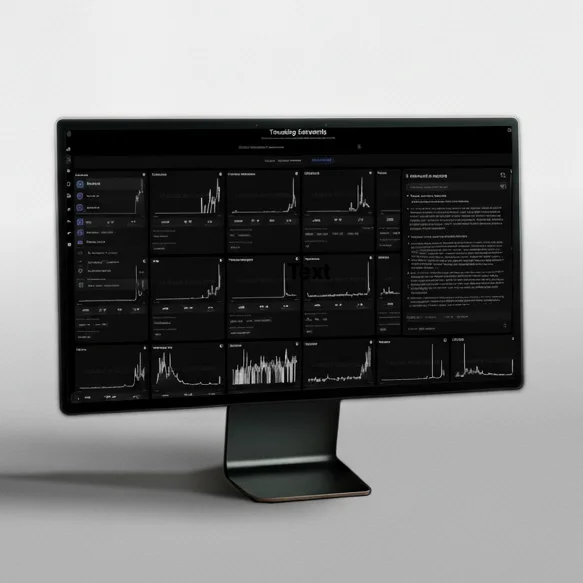
Paradox Intelligence tracks 24+ alternative data sources across search, social, news, and behavioral signals, mapped to 50,000+ companies globally. For defense sector monitoring, the Sector Monitor and Paradox Alerts tools provide the most direct access to the signals described in this article. See paradoxintelligence.com/investment-research-platform for platform access.
This is for informational purposes only and does not constitute investment advice.