
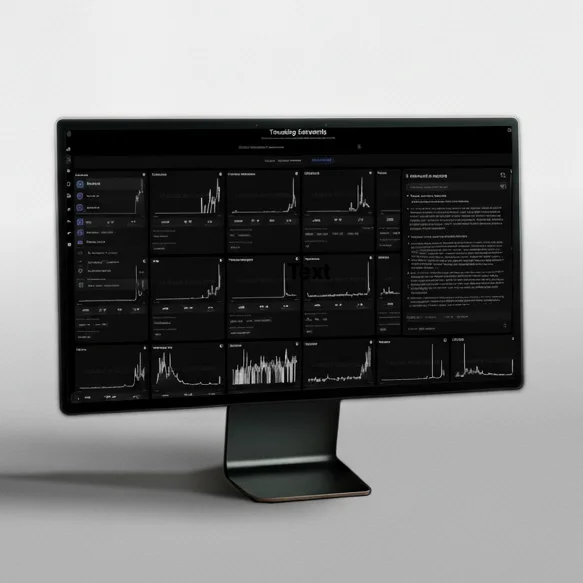
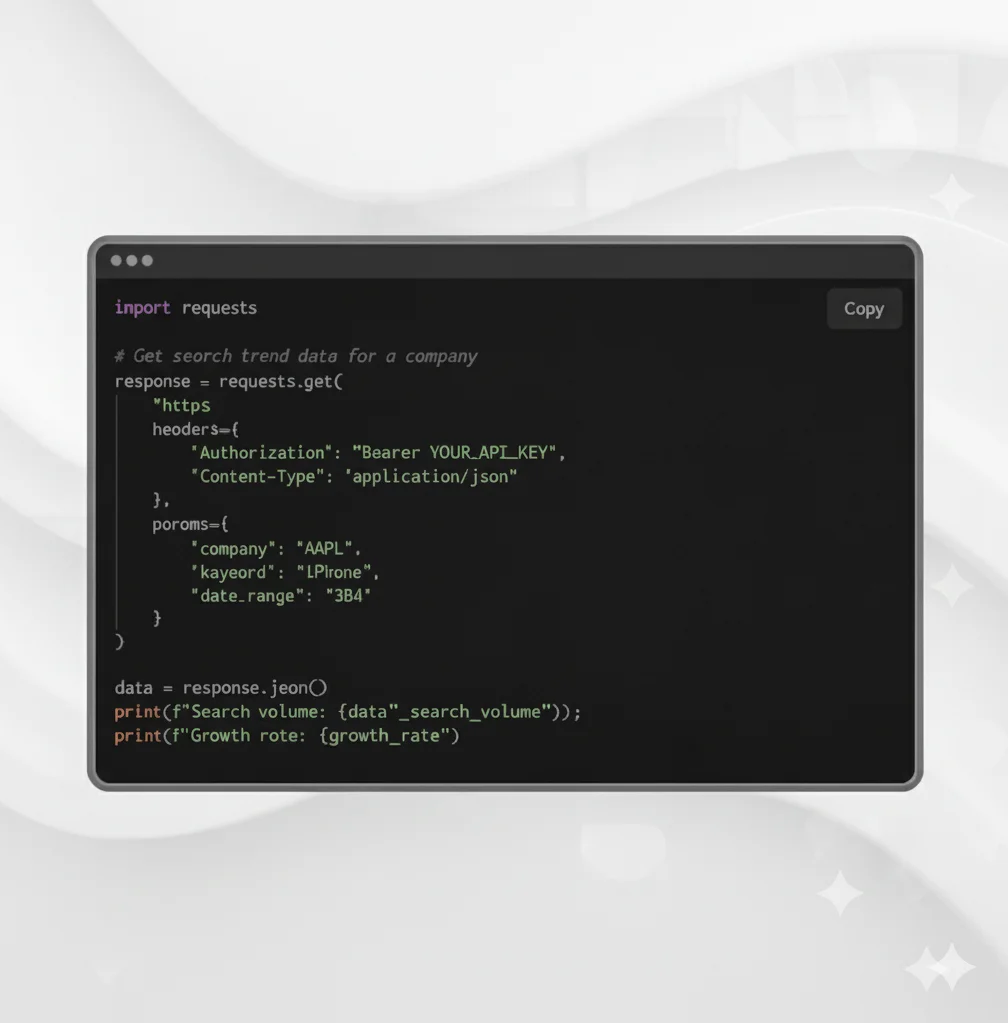


The helium shortage threatening semiconductor production is visible in search data. Google Search interest in "helium shortage" reached a normalized score of 69 in the week of March 21, 2026, up from 11 a year earlier. That is a 527% year-over-year increase on the Paradox Intelligence platform. The Reuters story confirming executive-level supply chain impact ran on March 26. The data was moving before the headline landed.
This is the basic mechanism that makes behavioral alternative data useful for semiconductor investing: physical supply disruptions show up in search behavior before they show up in earnings calls or analyst downgrades. The question is whether investors were watching.
What the helium data actually shows
Helium is not a consumer product that generates intuitive search demand. When "helium shortage" searches start climbing, it is not people buying party balloons. It is procurement officers, supply chain engineers, and investors trying to understand an industrial input constraint.
The search trajectory for "helium supply" on Paradox Intelligence tells a similar story. The keyword sits at a normalized score of 61 as of March 28, up from 5 a year ago. That is a 1,120% YoY increase. The term was essentially inactive before this disruption cycle.
Google News for "helium" hit a score of 100 on March 28, the maximum reading on the normalized scale. This is not a temporary spike around a single article. It reflects sustained media coverage accumulating over weeks, from the New York Times piece on the invisible bottleneck threatening chip giants to the Tom's Hardware report on chip supply chains going onto a two-week clock after Qatar's Ras Laffan facility came offline.
The causal chain matters here. Qatar supplies approximately one-third of global helium. The Strait of Hormuz conflict in early 2026 disrupted Ras Laffan operations, which feeds into global high-purity helium markets. Semiconductor fabs require helium for cooling, leak detection, and EUV lithography processes. Helium is not substitutable at industrial scale on any short timeline. Retrofitting fabs with helium recovery systems takes 12-18 months.
That sequence is why the data matters: a geopolitical event creates a bottleneck in an inelastic input, which creates cost pressure and potential output constraints for a sector where demand has never been higher.
Why this signal arrived before consensus
The pattern in semiconductor supply chain disruptions is consistent. Physical constraint appears first. Procurement teams start searching for alternatives and understanding scope. Trade press picks it up. Industry associations comment. Then it reaches the financial media. Analysts revise estimates. The stock moves.
Behavioral search data compresses the gap between the first step and the last. "Helium shortage" was a minor search topic through most of 2025, sitting in the 11-17 range on the normalized index. It started climbing in Q1 2026 well before the Reuters confirmation. By the time TSMC's situation was being described as severe in supply chain industry channels, the data was already showing material elevation.
This does not mean every spike in a supply-chain keyword produces an investable signal. The default assumption should be that most data moves are noise. What distinguishes this one: the keyword directly tracks an input with no substitution path, the companies affected are among the most analyzed in global equity markets, and the alternative source base is thin. Most semiconductor analysts are not running real-time search monitoring on industrial gas keywords.
The investable exposure
The supply chain bottleneck creates two distinct investment implications.
Industrial gas companies gain pricing power. Linde (LIN), Air Products and Chemicals (APD), and Air Liquide are the three companies that dominate global helium supply. When an inelastic input faces a supply shock, suppliers with remaining inventory and extraction capacity can reprice.
Linde's Google Search interest is up 53% YoY as of March 28. News volume for "Linde" is up 30% YoY. Air Products saw a 150% YoY increase in search interest through March 21, though that reading reflects the prior peak before recent market pullback. Air Liquide just opened a Taiwan factory, a response to the semiconductor supply chain concentration issue that was visible in operational planning months before the current disruption.
The industrial gas companies are not pure-play helium. Linde and Air Products derive the majority of revenue from oxygen, nitrogen, and industrial process gases. Helium is a premium product within a diversified portfolio. The pricing power argument is real but should be sized against overall revenue exposure rather than treated as a binary helium play.
The downstream exposure is more complex. TSMC's Google Search interest is up 72% YoY in absolute volume, but the recent 3-month trend shows a decline from a September 2025 peak as the company's news cycle has normalized. The capacity constraint story at TSMC is well-established in analyst coverage. Lead times for 3nm wafers have been discussed extensively. The helium angle adds a new constraint layer to a company already operating with fully allocated capacity.
What the data does not resolve is the outcome timing. Production cuts, if they occur, would depend on actual stockpile depletion rates and the speed of alternative supply arrangements. The search data confirms investor and procurement attention has reached elevated levels. It confirms the narrative has broken through. It does not forecast the production impact magnitude.
Where the signal is clear and where it is not
The helium data satisfies the first test of a genuine signal: the data type is directly linked to how the constrained input affects company performance. Helium is essential for EUV lithography. The link from helium availability to wafer output is traceable and specific.
It satisfies the second test: this is a change in state, not steady-state noise. "Helium shortage" at a normalized score of 11 is background. At 69, with 527% YoY growth and news volume at 100, it is a regime shift. The baseline matters more than the absolute level, and this reading represents an anomaly relative to five years of historical data.
The third test is more uncertain: is this already in consensus? The Reuters story ran March 26. The New York Times ran theirs March 27. Bloomberg has covered the Qatar angle. This is no longer pre-consensus in the sense of being unknown. But the equity market implications, particularly for industrial gas companies rather than the more-followed chip names, may not be fully digested. TSMC and Nvidia draw immediate analyst attention when chip supply stories emerge. Linde and Air Products receive less scrutiny in semiconductor disruption coverage.
The gap, where it exists, is between the narrative reaching financial media and the second-order beneficiaries being fully analyzed.
How alternative data fits into the semiconductor research stack
Semiconductor investing already benefits from a range of leading indicators: wafer fab equipment orders, yield data, shipping statistics, and channel inventory surveys. Alternative data adds a behavioral layer that is distinct from each of these.
Search and news data tracks investor and procurement attention in near-real-time. It does not replace the operational data that comes from supply chain surveys or equipment order books. It sits alongside those as a signal that attention is shifting and the information environment is changing.
For industrial gas companies specifically, most equity research focuses on quarterly volumes, pricing, and contract renewals. A supply disruption in a high-margin specialty gas segment may not generate meaningful analyst commentary until the next earnings call. The search data shows when the external environment has changed in ways that have not yet reached the formal research channel.
That gap is where behavioral alternative data earns its position in the research stack.
The helium shortage illustrates what supply chain alternative data does at its most specific. It tracks an industrial input directly linked to production capacity, at a company level where the exposure is material, before the formal financial research apparatus has fully processed the disruption. Sophisticated investors looking for the second-order read on this situation will note that the industrial gas names are less trafficked in semiconductor disruption analysis than the fabless chip companies. The data suggests attention is moving to the constraint. Whether the equity market has caught up is a separate question.
This is for informational purposes only and does not constitute investment advice.