



The energy sector is undergoing the most significant structural shift in a generation. Renewable capacity is set to surpass natural gas as the largest source of installed U.S. generating capacity by the end of 2026. Data center electricity demand is driving the strongest four-year growth in U.S. power consumption since 2000. Oil prices remain volatile amid OPEC+ policy shifts, geopolitical risk, and evolving demand patterns. For institutional investors covering energy, the question is no longer whether the transition is happening. It is how fast, where, and which companies benefit.
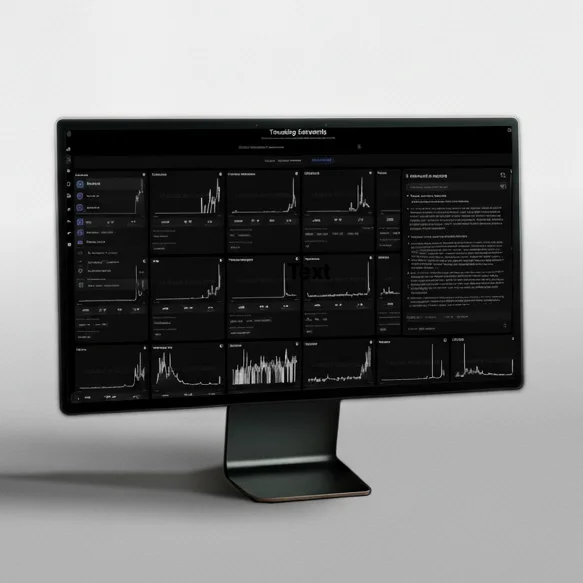
Alternative data gives investors a way to track these shifts in near real time, weeks before quarterly earnings or government data releases confirm what the market already suspects. This guide covers which alternative data sources matter most for energy sector investing, how professional investors use them across oil and gas, renewables, and utilities, and where Paradox Intelligence fits into the workflow.
Why Energy Is a High-Signal Sector for Alternative Data
Energy companies generate a large volume of observable behavioral signals across digital channels. Consumers search for electricity providers, solar panel installers, EV charging stations, and gasoline prices. Businesses search for energy procurement, power purchase agreements, and grid interconnection timelines. Investors and analysts search for production data, rig counts, and capacity additions. Each of these queries creates a data point that reflects real-world demand and sentiment.
Traditional energy research relies on periodic disclosures: quarterly earnings, monthly EIA reports, weekly petroleum status updates, and annual utility rate case filings. These sources are valuable but lagging. By the time the EIA publishes its weekly crude oil inventory data, satellite providers have already estimated storage levels days earlier. By the time a utility reports quarterly load growth, search and app data have already signaled whether residential solar adoption is accelerating in its service territory.
The energy sector also spans multiple sub-industries with distinct signal profiles. Oil and gas exploration and production companies respond to commodity price signals and drilling activity. Renewable energy developers respond to policy incentives, permitting timelines, and equipment supply chains. Utilities respond to load growth, rate case outcomes, and capital expenditure plans. Alternative data helps investors monitor all of these dynamics simultaneously, across a coverage universe that traditional research teams cannot match.
Alternative Data for Oil and Gas Investing
Google Search Data
Google Search volume for oil and gas related terms provides a forward-looking view of both consumer behavior and industry activity. Searches for "gas prices near me" and "cheapest gas station" correlate with retail fuel demand and consumer price sensitivity. When these searches spike, it often signals either rising pump prices or increased driving activity, both of which are relevant for refining margins and fuel retail companies.
On the institutional side, search volume for terms like "oil drilling permits," "fracking jobs," and "pipeline construction" can indicate shifts in upstream and midstream activity before rig count data is published. Searches for specific company names in the oil and gas space, tracked over time with absolute volume data, reveal whether a company is gaining or losing investor and analyst attention relative to peers.
Paradox Intelligence tracks Google Search data with absolute volume metrics across 50,000+ companies globally, including all major oil and gas producers, refiners, midstream operators, and oilfield service companies. Absolute volume data is essential in energy because relative index values (like those provided by Google Trends) cannot distinguish between a company with 100,000 monthly searches and one with 10,000.
Satellite Imagery and Physical Infrastructure Data
Satellite-based crude oil inventory estimates have become one of the most established alternative data signals in energy investing. Providers like Kayrros, Ursa Space Systems, and Vortexa use synthetic aperture radar (SAR) and optical satellite imagery to measure floating-roof tank levels at storage facilities worldwide. Kayrros tracks over 12,000 crude oil storage tanks globally, while Vortexa covers more than 22,500 tanks representing over 6.8 billion barrels of capacity across 120+ countries.
These satellite estimates provide a time advantage over the EIA weekly petroleum status report, which is published with a multi-day lag. Research published in academic journals has demonstrated that satellite-based oil inventory data has statistically significant predictive power for crude oil returns, with effects that are distinct from other commonly used signals.
While Paradox Intelligence does not provide satellite imagery data directly, it complements satellite-derived signals by tracking the behavioral and demand-side context around energy companies. Satellite data tells you how much oil is in storage. Paradox data tells you whether consumer search patterns and social signals suggest demand is about to shift, giving investors a more complete picture.
News Volume and Sentiment
News coverage is a critical signal in oil and gas investing because the sector is heavily influenced by geopolitical events, regulatory decisions, and OPEC+ policy. A sudden increase in news volume about a specific company or commodity often precedes price volatility, even before the underlying event is fully understood by the market.
Tracking news volume as a distinct signal from news sentiment is important. A company that receives 10x its normal news coverage in a single week is facing a material event, regardless of whether that coverage is positive or negative. Paradox Intelligence tracks news volume and sentiment separately, allowing investors to distinguish between a quiet period and an active one before reading the specific content.
Stay up to date on our best ideas
Alternative Data for Renewable Energy and Clean Tech Investing
Search Demand for Renewable Products and Services
Consumer and business search behavior is one of the strongest leading indicators for renewable energy adoption. When searches for "solar panel installation cost," "home battery storage," or "commercial solar PPA" rise in a specific geography, it signals growing demand that will flow through to installers, equipment manufacturers, and the utilities serving those areas.
For investors covering companies like First Solar, Enphase Energy, SolarEdge, SunPower, and residential solar installers, tracking the geographic distribution and growth rate of solar-related search queries provides a bottom-up view of demand that is not available from any single company's earnings report.
Similarly, search demand for "EV charging station near me," "home EV charger installation," and specific EV models provides a leading indicator for companies in the EV charging infrastructure space, including ChargePoint, EVgo, and Blink Charging. Rising search volume for these terms in a specific metro area signals adoption growth that will affect both charging companies and the utilities supplying power to those chargers.
Paradox Intelligence covers renewable energy companies across the full value chain, from solar panel manufacturers and wind turbine producers to battery storage companies and EV charging networks. Investors can build thematic watchlists around "solar adoption," "EV charging infrastructure," or "grid-scale battery storage" and monitor search and social signals across all relevant companies on a single platform.
TikTok, YouTube, and Social Signals
Social media signals are increasingly relevant for clean energy investing because renewable energy products are consumer-facing in ways that traditional energy infrastructure is not. Homeowners research solar installations on YouTube. Small business owners share their experience with EV fleet charging on TikTok. Reddit communities like r/solar and r/electricvehicles provide unfiltered consumer sentiment about specific brands, installation experiences, and product reliability.
A surge in YouTube searches for "Tesla Powerwall review" or "Enphase battery vs Tesla" signals that consumers are actively comparing products, which is a leading indicator for order backlogs and revenue. When TikTok content about a specific solar installer goes viral in a geographic market, it often precedes a measurable increase in that installer's lead volume.
Paradox Intelligence aggregates signals from TikTok, YouTube, Reddit, Instagram, and X/Twitter, mapped to specific energy companies. Cross-platform convergence, where search demand, social engagement, and news volume all rise for the same company simultaneously, is a particularly strong signal of accelerating adoption.
Patent and Innovation Data
Patent filing activity provides a window into the R&D pipeline of energy technology companies. An increase in patent filings related to solid-state batteries, perovskite solar cells, or green hydrogen production technology can signal that a company is investing in next-generation capabilities before those investments show up in revenue.
For investors covering the intersection of energy and technology, tracking patent filing trends across companies and technology categories helps identify which firms are building intellectual property moats and which are falling behind in innovation investment.
Alternative Data for Utilities and Power Demand
Electricity Demand Signals
The U.S. is experiencing the strongest growth in electricity demand since the early 2000s, driven primarily by data center construction. The EIA forecasts that U.S. electricity consumption will reach 4,283 billion kilowatt hours in 2026, up from a record 4,097 billion kWh in 2024. Commercial sector electricity consumption, which includes data centers, is forecast to grow by 5% in 2026 alone.
For utility investors, tracking where this demand is concentrated geographically is essential. The highest load growth is expected in the ERCOT (Texas) and PJM (Mid-Atlantic and Midwest) regions, where data center construction is most active. Search volume for "data center construction" and "data center power" in specific geographies can provide an early signal of where new large-load interconnection requests are being filed, which directly affects utility capital expenditure plans and rate base growth.
Paradox Intelligence allows investors to track search and news signals for utility companies alongside the companies driving electricity demand growth, such as hyperscale cloud providers and AI infrastructure builders. This cross-sector monitoring reveals the demand side of the equation before utility earnings calls confirm the numbers.
Residential Solar Adoption as a Utility Signal
For utilities with significant residential exposure, the rate of rooftop solar adoption in their service territory is a critical factor for revenue growth and rate design. Rising search demand for "solar installation [city]" or "net metering [state]" in a utility's service area signals potential distributed generation growth that could affect load growth forecasts and regulatory proceedings.
This signal works in both directions. Slowing search demand for residential solar in a utility's territory may indicate that the utility's load growth forecast is more secure than the market expects, which could be a positive signal for the stock.
App Intelligence for Energy Retail
Energy retail is becoming increasingly digital. Utilities and competitive retail energy providers are investing in mobile apps for billing, usage monitoring, and demand response programs. App download trends and ratings for utility apps can signal customer acquisition and engagement trends, particularly in deregulated markets like Texas and parts of the Northeast where customers choose their electricity provider.
Rising downloads and positive app ratings for a competitive energy retailer may signal market share gains that will show up in the next quarterly customer count report.
The Data Center Power Theme: A Cross-Sector Signal
The intersection of AI growth and electricity demand has created one of the most important cross-sector investment themes of 2026. Morgan Stanley Research forecasts U.S. data center demand could reach 74 GW by 2028, with a projected shortfall of about 49 GW in available power access. Goldman Sachs estimates that approximately $720 billion will need to be spent on U.S. grid upgrades through 2030 to support this growth.
This theme affects multiple segments of the energy sector simultaneously:
Utilities benefit from higher load growth, which supports rate base expansion and earnings growth. Companies with service territories that overlap with major data center corridors stand to see the largest impact.
Natural gas generators benefit from baseload demand that renewables alone cannot yet serve around the clock. Search and news signals around natural gas power plant construction and permitting provide leading indicators.
Renewable energy developers benefit because hyperscale data center operators have committed to matching their power consumption with renewable energy purchases. Power purchase agreement (PPA) activity for solar and wind projects linked to data center customers is a growing source of revenue for developers.
Grid infrastructure companies benefit from the investment required to connect new generation and load centers. Companies that manufacture transformers, switchgear, and transmission equipment are seeing order backlogs extend, a trend that can be tracked through search demand for specific industrial products and company names.
Paradox Intelligence is particularly well suited for monitoring this cross-sector theme because it maps signals from 25+ data sources to 50,000+ companies across sectors. An investor can build a single watchlist that spans utilities, renewable developers, gas generators, and grid equipment manufacturers, and track the convergence or divergence of signals across the entire theme.
Practical Energy Sector Workflows with Alternative Data
Workflow 1: Pre-Earnings Signal Check for an Oil Major
Before an oil major like ExxonMobil, Chevron, or Shell reports earnings, an investor can check multiple alternative data signals to assess whether the quarter is likely to surprise in either direction:
- Track Google Search demand for the company name relative to peers over the prior 90 days
- Monitor news volume and sentiment for any unusual activity or narrative shifts
- Check TikTok and social signals for any viral content related to the company's consumer-facing operations (e.g., gas station brands, lubricant products)
- Cross-reference with Amazon Search data for the company's branded products
- Review Wikipedia page view trends for the company, which often spike ahead of major corporate events
Paradox Intelligence consolidates all of these signals on a single company page, with historical data for backtesting how well each signal predicted prior earnings surprises.
Workflow 2: Monitoring Renewable Energy Adoption Trends
An investor building a long position in residential solar companies can use alternative data to track adoption momentum:
- Set up a thematic watchlist covering solar installers, inverter manufacturers, and battery storage companies
- Monitor Google Search trends for "solar installation" and "solar panel cost" across key state markets (California, Texas, Florida, New York)
- Track YouTube search volume for product reviews and installation guides for specific brands
- Follow Reddit sentiment in r/solar for shifts in consumer preference between brands
- Watch for cross-platform convergence where search, social, and news signals all inflect simultaneously
This workflow runs continuously on Paradox Intelligence with real-time signal updates and AI-powered change detection that flags material inflections automatically.
Workflow 3: Utilities and Data Center Demand Tracking
An investor evaluating utility stocks exposed to data center load growth can monitor:
- Search demand for "data center" combined with specific geographic markets matching utility service territories
- News volume for utility companies mentioning data centers, large load requests, or grid interconnection
- Search trends for grid infrastructure companies that supply transformers and high-voltage equipment
- App download trends for utility customer apps in high-growth regions
This cross-sector approach reveals whether the data center power demand narrative is accelerating or decelerating at the ground level, independent of management commentary on earnings calls.
How Paradox Intelligence Fits the Energy Investment Workflow
Paradox Intelligence is built for the kind of cross-sector, multi-signal analysis that energy investing requires. The platform covers 50,000+ companies globally with signals from 25+ data sources, including Google Search, Amazon Search, YouTube, TikTok, Reddit, X/Twitter, Instagram, Wikipedia, app intelligence, and news sentiment.
For energy investors specifically, the platform offers several advantages:
Broad coverage across the energy value chain. From upstream oil producers to midstream pipeline operators, downstream refiners, renewable energy developers, utility companies, grid equipment manufacturers, and EV charging networks. All mapped to standard identifiers (tickers, ISINs) for integration with existing research workflows.
Absolute volume search data. Energy sector analysis frequently requires comparing search demand across companies of very different sizes. Absolute volume data allows investors to directly compare how many people are searching for "ExxonMobil" versus "Enphase Energy" on an apples-to-apples basis, something that relative index tools like Google Trends cannot do.
Cross-sector thematic monitoring. The data center power demand theme, the energy transition theme, and the EV adoption theme all span multiple sectors. Paradox Intelligence lets investors build custom watchlists that cut across traditional sector boundaries and track signal convergence across the full theme.
AI-powered signal detection. The platform's AI layer identifies material changes in signal strength automatically, flagging inflection points where search demand, social engagement, or news coverage is diverging from historical patterns. For energy investors monitoring dozens of companies across multiple sub-sectors, automated change detection is essential for staying ahead of the data.
API and MCP access. Energy quant teams and systematic funds can access all signals programmatically through the Paradox API or through the MCP server for integration with AI-assisted research workflows. This allows signals to feed directly into models, notebooks, or agentic research tools without manual data handling.
Key Takeaways for Energy Sector Investors
The energy sector is a natural fit for alternative data because it combines high event sensitivity, structural transition dynamics, and observable consumer behavior. The investors who gain the most edge in this sector are those who combine multiple signal types across the energy value chain rather than relying on any single data source.
Search data reveals where consumer and business demand is heading before it shows up in earnings. Social data captures cultural momentum around renewable adoption and brand sentiment. News data flags geopolitical and regulatory events that move energy prices. App data tracks the digital engagement layer of energy retail.
Paradox Intelligence brings all of these signals together on a single platform, mapped to the companies that matter, with the historical depth required for backtesting and the real-time monitoring required for active investment management. For institutional investors covering energy in 2026, it is the most comprehensive behavioral data platform available for the sector.
To explore how Paradox Intelligence can support your energy sector research, visit paradoxintelligence.com or start a free trial to see the data for yourself.