


Alternative data has moved from the edge of hedge fund research to the centre of it. The funds that integrated search data, transaction signals, and sentiment feeds five years ago have documented outperformance. The funds that waited are now scrambling to catch up. In 2026, the question is no longer whether to use alternative data -- it is which data, how to integrate it, and how to use it systematically rather than as ad hoc research decoration.
This guide is for portfolio managers, analysts, and research teams at hedge funds who want a practical, complete picture of the alternative data landscape -- what is actually useful, how to evaluate vendors, and how leading funds build workflows that generate persistent alpha.
What alternative data is (and what it is not)
Alternative data is any dataset outside traditional financial reporting -- filings, earnings releases, analyst estimates -- that provides a behavioral or real-world signal about a company, sector, or theme. The "alternative" label distinguishes it from fundamental data that every investor has access to, not from qualitative or anecdotal information.
The defining characteristic of useful alternative data is that it is behavioral: it reflects what people are actually doing, not what they say they will do or what a company has reported. Consumer search volume tells you what millions of shoppers are looking for. Transaction data tells you what they are spending. App download trends tell you which products they are adopting.
Because these signals reflect reality before it is reported -- often weeks or quarters in advance -- they function as leading indicators for earnings, revenue, and market share.
What alternative data is not: it is not a replacement for fundamental analysis, and it is not a magic signal that works in isolation. The funds that use it most successfully treat it as a systematic input that raises or lowers conviction, confirms or contradicts a thesis, and identifies ideas that would otherwise be missed.
The six data categories hedge funds use most
1. Search and intent data
Search volume on Google, Amazon, YouTube, and other platforms captures consumer intent in real time. For hedge funds, search data is typically used to:
- Gauge demand for a company's products or brand ahead of earnings
- Detect early shifts in consumer behaviour across sectors or categories
- Compare relative interest between competitors in the same category
- Identify emerging themes before they reach analyst consensus
Search data requires mapping raw search volume to listed companies and normalising for seasonality and baseline drift. Investment-grade search data providers handle this -- raw Google Trends data does not.
Google search data captures broad consumer interest and early-stage demand. Amazon search data captures purchase-ready intent. Both are in the standard toolkit for consumer and retail coverage.
2. Social and engagement data
Social data from TikTok, Reddit, Twitter/X, and similar platforms captures brand momentum, sentiment shifts, and early viral product demand before it reaches mainstream awareness. Use cases include:
- Identifying products or brands gaining or losing social momentum
- Detecting early-stage consumer trends that have not yet registered in search or sales
- Monitoring short-side risk: brands with collapsing social engagement often see revenue underperformance
TikTok trends data is particularly relevant for consumer brands, where viral content on the platform can drive measurable demand spikes within days. Reddit alternative data is useful for tracking community-driven sentiment on equities, products, and sectors.
3. Web and app traffic
Website visitor data and app download/engagement metrics allow investors to track digital execution at listed companies in near-real-time. Use cases include:
- Monitoring traffic trends relative to peers or the prior period
- Detecting engagement drops that precede subscriber or revenue misses
- Validating whether a product launch is generating adoption beyond the press release
Web traffic is particularly useful for digital-first businesses (e-commerce, SaaS, fintech, media) where online activity is a direct proxy for business performance.
4. News and text sentiment
Structured sentiment derived from news articles, earnings call transcripts, regulatory filings, and analyst commentary. Use cases include:
- Detecting narrative shifts around a company before they register in price
- Flagging unusual spikes in negative coverage ahead of events
- Tracking how a theme moves from niche discussion to mainstream coverage
- Earnings call sentiment trends as a leading indicator of guidance changes
News sentiment is rarely sufficient as a standalone signal. It is most powerful when combined with behavioral data (search or traffic confirming the narrative shift) and used consistently over time.
5. Wikipedia page view data
Wikipedia traffic to company and topic pages is a high-quality, freely available signal that correlates with institutional and retail investor attention. Unusual spikes in Wikipedia views for a company often precede significant price moves and media coverage.
Wikipedia as an investment signal is one of the more underutilised data types in hedge fund research, partly because sourcing and normalising it requires infrastructure that most teams do not build. As a component of a multi-signal workflow it consistently adds information.
6. Consumer transaction data
Aggregated credit and debit card data, receipt data, and spending proxies are among the most direct leading indicators for consumer and retail companies. Funds use transaction data to:
- Estimate same-store sales and revenue before announcement
- Identify regional or demographic trends in spending
- Compare brand-level performance within a category
Transaction data is expensive and subject to strict licensing. Many funds use it selectively for their highest-conviction coverage names rather than as a universal input.
Stay up to date on our best ideas
How leading hedge funds structure their alternative data workflow
The funds that extract the most value from alternative data have converged on a similar structure. It has four stages:
Stage 1: Continuous signal monitoring
Rather than querying data on demand when a specific company is in focus, the most effective funds run continuous automated monitoring across their coverage universe. This ensures they see anomalies -- a sudden acceleration in search volume, a reversal in social sentiment -- before they have formed a specific investment hypothesis, which is when the signal is most valuable.
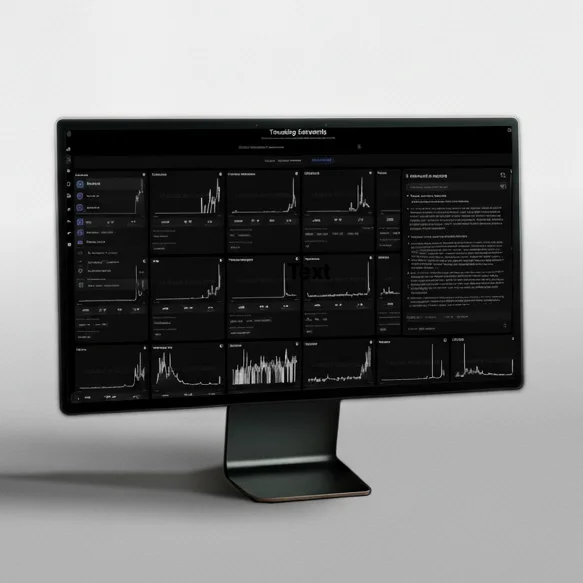
Automated monitoring tools like Alpha Agent handle this at scale, watching hundreds of signals across thousands of names and surfacing the ones that cross significance thresholds.
Stage 2: Multi-signal confirmation
A single data source flagging a signal is a reason to look further. Multiple data sources flagging the same underlying shift -- search volume up, app downloads up, social engagement up for the same company over the same two-week period -- is a reason to act with conviction.
Leading funds rarely trade on a single alternative data signal. The standard is two or more sources pointing in the same direction, with each source reflecting a different behavioral dimension of the same underlying trend.
Stage 3: Backtesting and calibration
Before integrating a new signal into a workflow, systematic funds backtest it: does this signal, applied consistently, provide informative output? What is the hit rate? What is the typical lead time before the signal shows up in reported results or price? What is the false positive rate?
This step is often skipped by discretionary teams but is critical for maintaining signal discipline over time. Without it, teams are prone to pattern-matching on recent examples rather than evaluating the signal's historical value.
Stage 4: Judgment and integration
Alternative data raises conviction; fundamental analysis determines the investment. The final step is integrating the signal with traditional research: is the valuation compelling? Is the thesis sound? Does the alternative data confirm or challenge the fundamental view?
The best funds treat alternative data and fundamental analysis as complementary inputs, not competing frameworks.
Evaluating alternative data vendors
The vendor landscape for hedge fund alternative data is large and uneven in quality. When evaluating a provider, the questions that matter most are:
Data provenance and methodology Where exactly does the data come from? How is it collected and processed? Is the methodology stable over time, so historical data is comparable to current data? Poor methodology transparency is a red flag.
Coverage and depth How many companies or names does it cover? Is coverage consistent across geographies and sectors relevant to your strategy? What is the update frequency? Are there meaningful gaps for names central to your coverage?
Historical depth Is there enough history to backtest signals properly? Less than two to three years of history makes systematic validation difficult. Five or more years is preferable.
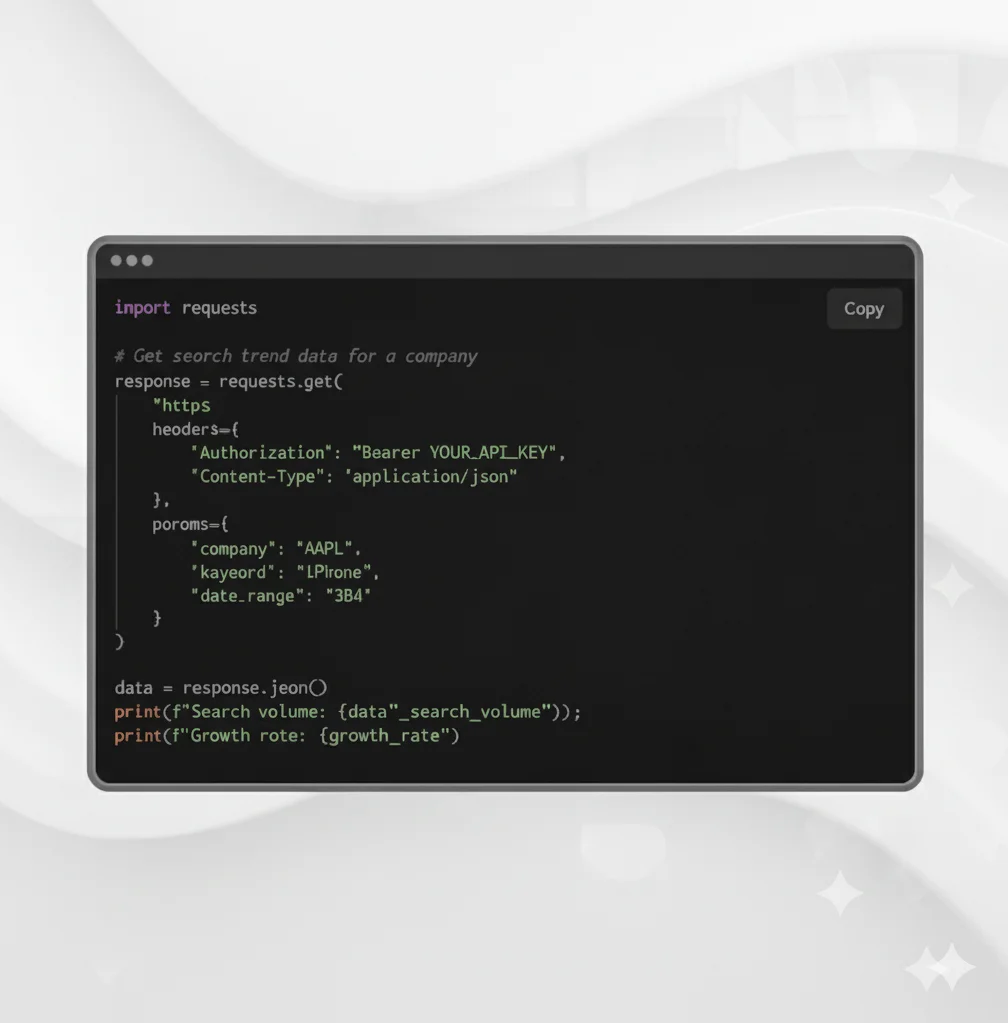
Delivery and integration How is data delivered -- platform, API, flat file, MCP server? Does the delivery format fit your existing infrastructure? Is there a Python SDK? Can it be integrated into automated workflows?
Licensing and compliance Is the data licensed appropriately for use in investment research? Are there restrictions on how signals derived from the data can be used? This matters particularly for transaction and location data.
Commercial model Is pricing per dataset, per seat, or subscription-based? Is it structured for institutional use (scalable, contract-based) or is it a self-serve product aimed at retail users? The commercial model often signals the target customer.
Paradox Intelligence provides a multi-source alternative data platform purpose-built for institutional hedge fund research, covering search, social, web traffic, news sentiment, Wikipedia, and more -- all mapped to listed companies, accessible via platform, API, and MCP server.
Common mistakes hedge funds make with alternative data
Using it as confirmation bias rather than genuine signal
Alternative data is most valuable when it challenges a thesis, not just confirms it. Funds that only look at alternative data for names they already believe in are using it to feel better about a decision rather than to make better decisions.
Single-source dependence
Relying on one data type creates fragility. A signal that works because of a quirk in a specific panel or methodology fails when the methodology changes. Multi-source workflows are more robust.
Ignoring seasonality and baseline drift
Raw trends are misleading without seasonal adjustment and a stable baseline. January always shows a spike in health and wellness searches. Q4 always shows a spike in retail. Treating seasonal moves as signals generates noise, not alpha.
Skipping the backtest
Discretionary teams are particularly prone to identifying signals that "look right" without testing whether they have historically been informative. Backtesting is not optional for systematic signal use.
Over-indexing on recency
A signal that worked well in the past two quarters may be novel and not yet arbitraged, or it may be coincidence. Proper evaluation requires history long enough to distinguish between signal and noise.
Building a multi-signal workflow in practice
A practical starting point for hedge funds new to alternative data:
- Pick a sector with high data coverage -- consumer, retail, e-commerce, technology. These have the deepest alternative data coverage.
- Start with search data -- it has the longest history, the most use cases, and the clearest mapping to earnings.
- Add a complementary source -- social engagement or web traffic that tracks the same underlying behavior from a different angle.
- Backtest the combination -- test whether search + one complementary source has been informative for the names in your coverage over the past 3-5 years.
- Automate monitoring -- once you have a validated signal, monitor it continuously rather than checking it manually before each earnings report.
- Expand gradually -- add sources incrementally as you validate each one, rather than trying to integrate everything at once.
Resources
- Alpha Agent -- automated alternative data monitoring for hedge funds
- Full dataset catalogue
- Best Alternative Data Platforms 2026
- 5 Alternative Data Sources Hedge Funds Use Most
- How to Backtest Alternative Data Signals
- How to Evaluate an Alternative Data Vendor
- Find Your Plan
This post is for institutional investors and research professionals. It is not investment advice.