

Sign Up
Datasets Use Cases Research
Sign Up
Insights

Bloomberg Terminal Alternative for Investors in 2026: What to Use and Why

Bloomberg Terminal is expensive and optimized for traditional financial data. This guide covers what investors look for in a Bloomberg alternative and what platforms fill different gaps in the research stack.

Bloomberg Terminal is the default for institutional financial data. It is comprehensive, deeply embedded in buy-side workflows, and costs roughly $25,000 per user per year. Most firms that use it do so because it remains the standard for certain data types, not because it is the best solution for every research problem.

This guide is for investors who are evaluating their stack and asking whether Bloomberg is the right tool for every job, or whether parts of their workflow would be better served by purpose-built alternatives.


What Bloomberg Terminal does well

Bloomberg's core strengths are well-established:

  • real-time and historical market data across equities, fixed income, FX, and derivatives
  • earnings estimates and fundamental data through Bloomberg Intelligence
  • news and events monitoring with search and filtering
  • cross-asset screens and portfolio analytics
  • messaging and counterparty communication via Bloomberg Chat

These are genuine strengths. If your workflow depends on real-time prices, bond analytics, or deep fundamental history, Bloomberg remains hard to replace wholesale.


Where Bloomberg falls short

The reasons investors look for alternatives tend to cluster around a few consistent pain points.

Price and access model

The terminal model is seat-based and expensive. Smaller teams, analysts outside core coverage roles, and firms building out data infrastructure often cannot justify the per-seat cost for peripheral use cases.

Behavioral and alternative data coverage

Bloomberg's strength is structured financial data. It does not provide native coverage of behavioral signals: search trends, social media attention, app usage, web traffic, consumer demand indicators. These data types have become central to a large segment of buy-side research and require separate providers.

Discovery and pattern detection

The terminal is built for lookups: you know what you want and you retrieve it. It is not designed for discovery across many entities simultaneously, trend detection, or surfacing anomalies before you know to look for them.

API and workflow integration for modern teams

Bloomberg's API (BLPAPI) is powerful but complex to work with. Teams building modern data pipelines or connecting LLM-based research tools often find it easier to work with providers that expose clean REST APIs or Python SDKs.


Stay up to date on our best ideas

Who actually looks for Bloomberg alternatives

The search for Bloomberg alternatives is not monolithic. Different users have different needs.

Smaller hedge funds and boutique asset managers often want comprehensive data access without the full terminal price. They look for platforms that cover the research workflow at lower cost, sometimes supplemented by free or low-cost data APIs.

Quant and systematic teams often need raw data access through APIs rather than a terminal UI. Their priority is data quality, update frequency, and API reliability over interface.

Research teams focused on consumer, tech, and growth sectors frequently need behavioral data types that Bloomberg does not cover. They use Bloomberg for fundamentals and add behavioral data providers for demand-side signals.

Private equity and venture capital firms often do not need real-time market data at all. Their use cases center on industry trend analysis, demand intelligence, and comparable company monitoring, which purpose-built platforms often serve better.


Types of alternatives, by use case

There is no single Bloomberg replacement because Bloomberg covers many use cases simultaneously. What actually exists is a set of specialized platforms that each cover parts of the Bloomberg surface area better for specific jobs.

For financial data APIs (prices, fundamentals, filings) Providers like Intrinio, Tiingo, and Quandl offer lower-cost programmatic access to market and fundamental data. These are best for developers and quant teams building their own pipelines.

For news, filings, and earnings research AlphaSense and similar tools are strong for document search and earnings call analysis. They improve on Bloomberg's document retrieval and synthesis capabilities for fundamental analysts.

For behavioral and alternative data This is the largest gap in the Bloomberg stack. Providers in this category aggregate search trends, social media signals, app intelligence, web traffic, and consumer demand data. Bloomberg does not meaningfully compete here, so this is not a replacement but a complement or a standalone layer for teams whose research centers on these signals.

For private markets PitchBook, Preqin, and similar tools are purpose-built for private company data, deal flow, and fund intelligence. Bloomberg's private market coverage is limited compared to these specialists.


The practical answer: what most teams actually do

Most institutional teams do not fully replace Bloomberg. They reduce their Bloomberg seat count and add specialized tools for the gaps.

The common pattern:

  1. Retain Bloomberg for real-time data, fixed income, and cross-asset screens
  2. Add a behavioral data platform for demand-side and consumer signals
  3. Use a news and research synthesis tool for document analysis
  4. Build or source a programmatic data API for systematic work

This stack is often more cost-effective and higher-signal than expanding Bloomberg seats to cover alternative use cases it was not designed for.


Bloomberg vs alternative data platforms: quick comparison

If your team is asking for a direct comparison, this is usually the right framing.

Platform type Bloomberg Terminal Alternative data platform (Paradox-type)
Primary strength Market data, cross-asset analytics, terminal workflows Behavioral demand and attention signals
Alternative data depth Limited for search and social behavioral workflows Core product focus
Discovery workflow Strong for known-entity lookup Strong for early signal discovery and watchlist inflections
Team collaboration model Seat-based terminal usage Platform, API, and AI workflow integration
Best role in stack Core financial data layer Behavioral intelligence layer

In practice, this is why many buy-side teams keep Bloomberg and add a specialized alternative data system instead of trying to force one tool to do both jobs.


Which setup is right for your team

Use this rule of thumb:

  • choose Bloomberg-first if your biggest edge comes from cross-asset market data, fixed income, and terminal-native workflows
  • choose alternative-data-first if your biggest edge comes from identifying demand and narrative shifts before consensus
  • choose a hybrid stack if you need both market structure context and behavioral lead indicators

For most institutional teams, the hybrid model is the durable answer.


How Paradox Intelligence fits as a behavioral data complement

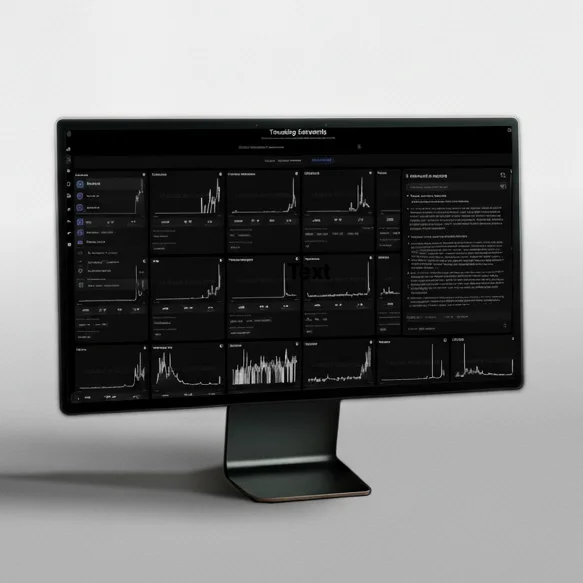
Paradox Intelligence is not a Bloomberg replacement for market data or fundamentals. It fills the gap that Bloomberg does not cover: behavioral signals across search, social, app usage, web traffic, news, and macro indicators.

Teams using Bloomberg for their core financial data add Paradox for:

  • consumer demand signals before earnings
  • thematic trend and sector rotation monitoring
  • multi-source behavioral signal discovery and alerting
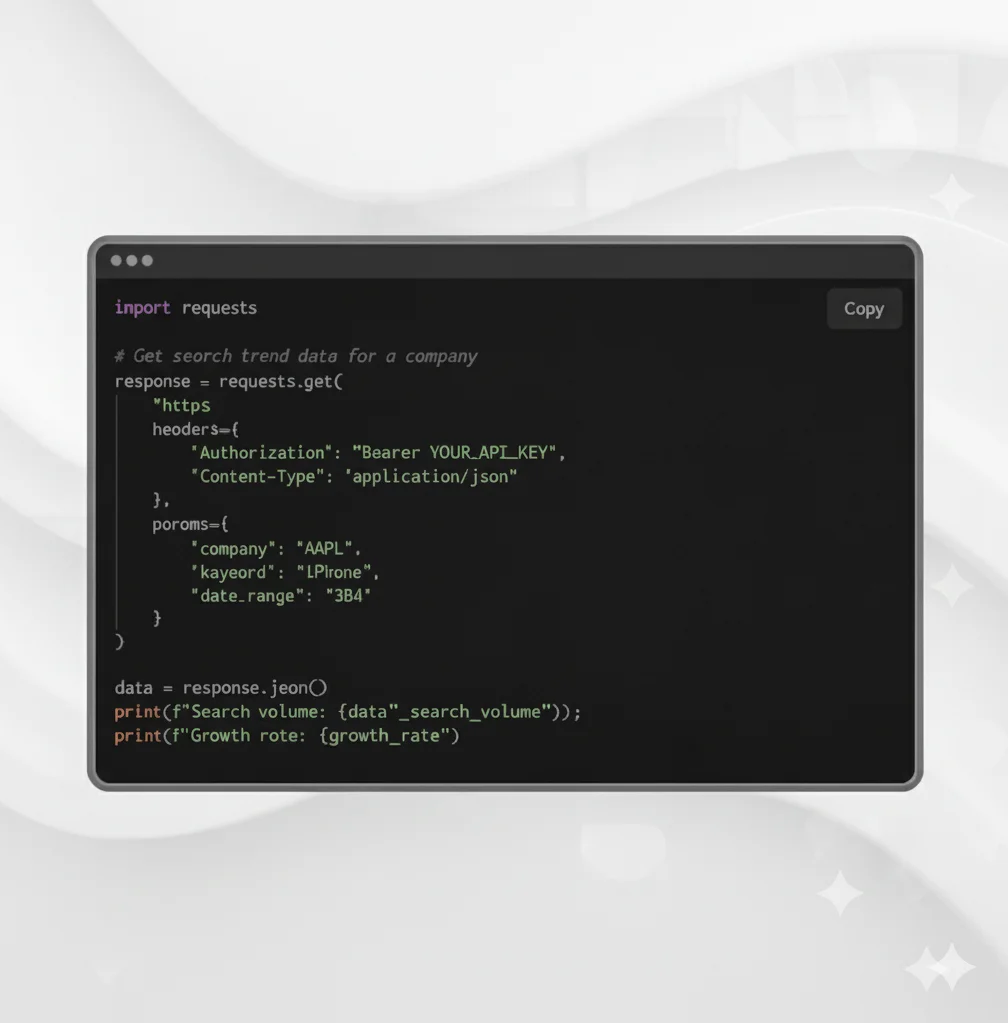
  • API integration with existing models and dashboards

Explore datasets or book a demo to see how behavioral data fits your research stack.


Share

Get insights delivered

BUILT BY INVESTORS, FOR INVESTORS