


Most investors who use news data use it for sentiment: is the coverage positive or negative? News volume is a separate and often more reliable signal that gets less attention. The number of articles published about a company in a given period is a direct measure of media attention intensity. That attention, independent of its tone, has documented predictive value for price behavior, volatility, and earnings outcomes.
This post explains what news volume data measures, how it differs from news sentiment, and how institutional investors can use it as a standalone signal and in combination with other data sources.
The difference between news volume and news sentiment
News sentiment analysis attempts to classify whether coverage is positive, negative, or neutral. The accuracy of this classification depends on the quality of the NLP model applied to financial text. Short headlines, ambiguous phrasing, and context-dependent language all degrade sentiment signal quality.
News volume analysis does not attempt to classify the content. It measures how much coverage exists. This makes it operationally simpler and less dependent on model quality.
The insight behind news volume as a signal is well-supported by academic and practitioner research: when media attention to a company increases sharply, something is changing in the information environment around that company. The direction of that change (positive or negative) matters secondarily. The existence of the change matters primarily.
High news volume periods are associated with:
- higher near-term price volatility
- higher options implied volatility
- increased trading volume
- analyst estimate revision activity
- heightened risk for both upside surprises and downside surprises
Low news volume periods following high news volume are associated with:
- mean reversion in price impact
- normalization of volatility
- decreasing retail investor attention
How news volume data is structured
For investment use, news volume data is typically structured as a time-series of article counts per company per time interval (daily, weekly, or intraday). Additional fields may include:
- article count by source tier (wire services, mainstream financial press, trade publications, blogs)
- article count by topic tag (earnings, M&A, regulatory, litigation, product)
- unique source count vs. total article count (distinguishing genuine breadth of coverage from single-source syndication)
- geographic breakdown of coverage origin
For most investment workflows, daily article counts mapped to tickers are sufficient for trend analysis and alerting. Intraday granularity is more relevant for event-driven and high-frequency applications.
Stay up to date on our best ideas
Where news volume signals are most useful
Pre-earnings anticipation detection. In the three to four weeks before an earnings release, rising news volume for a company indicates building investor and analyst attention. Elevated pre-earnings news volume has been associated with higher post-earnings price moves in both directions. It signals that expectations are higher and that the surprise (in either direction) will have a larger impact.
Event detection without prior knowledge. News volume spikes for a company that you are not actively monitoring can surface emerging stories before you see them in your direct news feeds. Setting volume-based alerts is an effective way to catch early-stage events across a wide coverage universe.
Corporate event confirmation. M&A activity, leadership changes, regulatory actions, and legal developments all produce characteristic news volume patterns. When you see an unexplained volume spike without an obvious catalyst, it is often worth investigating the underlying story.
Quiet period as a signal. Persistently low news volume following a period of elevated coverage often signals that a story has been fully digested by the market. This can be relevant for reversion strategies and for timing entry into positions where the news-driven volatility premium has normalized.
Sentiment calibration. News sentiment scores are more reliable when they are based on large sample sizes. In low-volume periods, a single negative article can dominate the sentiment signal. Conditioning sentiment analysis on volume helps avoid overweighting signal from thin coverage.
News volume vs. search volume: what they measure differently
News volume and search volume are related but measure different things:
News volume reflects the supply of information: how much journalists and media outlets are writing about a company. It reflects the professional information production layer.
Search volume reflects the demand for information: how many people are actively seeking information about a company. It reflects consumer and investor attention from the demand side.
These two signals frequently diverge in ways that are informative:
- high news volume with low search volume: coverage is generating professional attention but has not yet captured broader public interest. This often precedes a second wave of attention.
- high search volume with low news volume: public interest is rising ahead of or independent of professional coverage. This pattern frequently precedes earnings surprises and product launches.
- both rising simultaneously: a major event is fully propagating across information channels.
Running news volume and search volume together produces a more complete picture of the information environment than either signal alone.
Practical workflow integration
Watchlist alerting: Configure alerts that trigger when news volume for a covered company exceeds two standard deviations above its trailing 90-day average. This catches significant coverage spikes without generating noise from normal day-to-day variation.
Pre-earnings research template: For every company in your coverage universe, pull news volume for the four weeks before each of the past eight earnings releases. Establish a baseline. Compare the current pre-earnings window against that baseline and note whether you are in an elevated or suppressed coverage environment.
Cross-source signal validation: Before acting on a search trend or social signal, check whether news volume is also rising. When search, social, and news volume all point in the same direction, signal confidence is higher than when only one source is showing movement.
Portfolio risk monitoring: Aggregate news volume across portfolio holdings. A portfolio-wide spike in news volume across multiple positions simultaneously often signals macro-level risk events before they propagate to price.
How Paradox Intelligence delivers news volume data
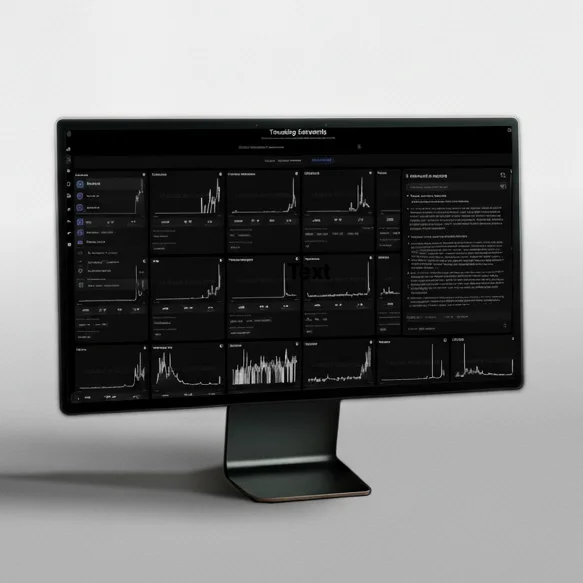
Paradox Intelligence provides news volume data as a distinct signal alongside news sentiment, pre-mapped to tickers across the full coverage universe. Historical depth goes back to 2000. News volume and news sentiment are both available separately, enabling investors to use them independently or in combination.
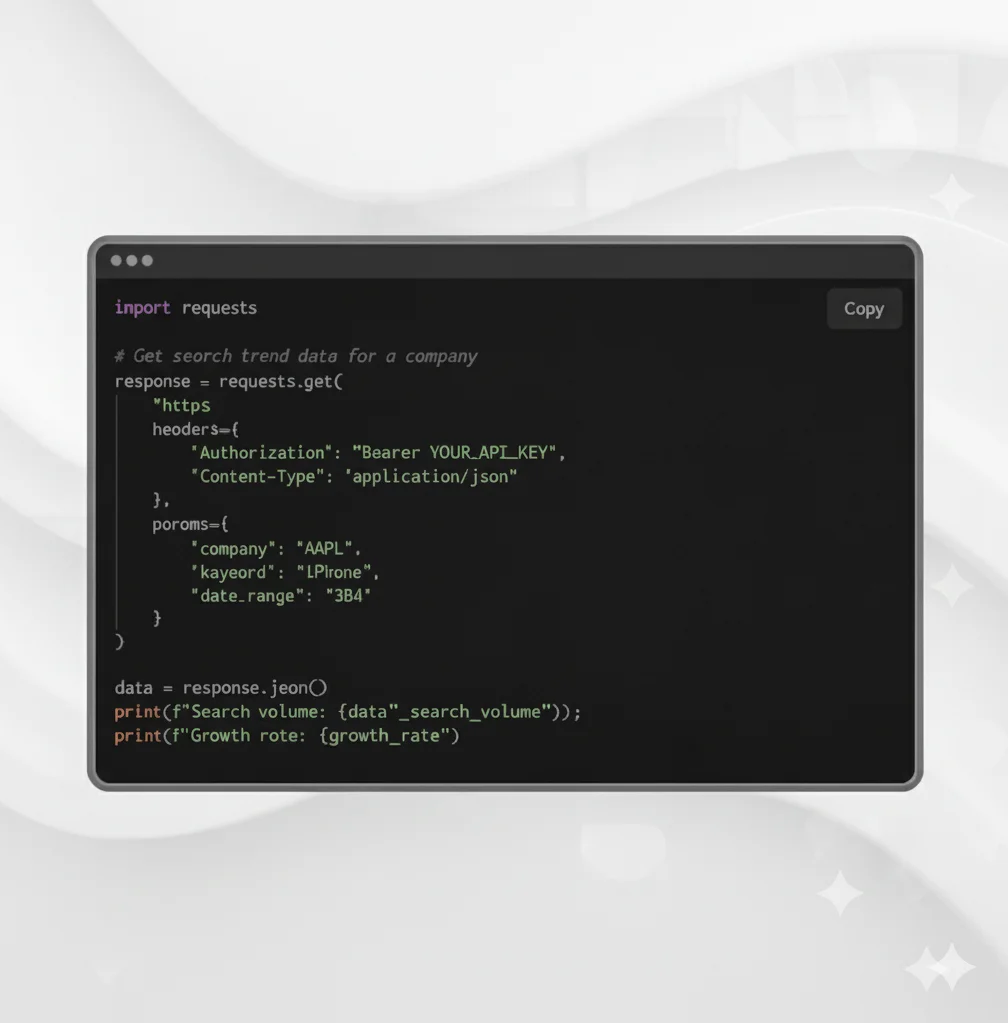
Both signals integrate with the full behavioral data catalog, including Google search, social media, web traffic, and app intelligence, for cross-source analysis in a single workflow. Access is available through platform UI, REST API, and MCP server.
For coverage specifications, see Datasets. To see how news volume fits your research process, book a demo.