



Shopping Search Data for Investment Research: How to Read Consumer Purchase Intent in 2026
When an investor wants to know whether a consumer brand is gaining or losing ground, most tools point them toward web traffic, app downloads, or social mentions. Those signals matter. But one dataset consistently sits closer to actual revenue than almost anything else: shopping search data.
Shopping search captures the moment a consumer types a product query into a commerce-oriented search interface, whether that is Google Shopping, a marketplace search bar, or a price-comparison engine. The user is not researching. The user is ready to buy. That distinction makes shopping search one of the most commercially dense behavioral signals available to institutional investors today.
What Shopping Search Data Actually Measures
General search trends measure curiosity. Shopping search measures purchase intent.
When a consumer searches for "best wireless headphones" in a general engine, they may be comparing, learning, or just browsing. When that same consumer searches those terms in a shopping-specific context, with filters on price, brand, and availability, the signal carries far more commercial weight. They are in the funnel. They have narrowed their consideration set. They are likely days, not months, from converting.
For investors, this distinction is critical. General search volume for a brand or product category tells you something about awareness and interest. Shopping search volume tells you something about where revenue is heading. The two often diverge, and that divergence is exactly the kind of signal that generates alpha ahead of earnings.
Why Retail and Consumer Discretionary Analysts Need This Signal
Consumer discretionary is one of the most alt-data-amenable sectors in public markets. Revenue is driven by consumer decisions that leave behavioral traces across dozens of digital surfaces before they appear in quarterly filings. Shopping search is among the earliest and cleanest of those traces.
Consider a mid-cap apparel company heading into the holiday quarter. Consensus estimates assume a 12% year-over-year revenue increase, inline with category trends. But shopping search data for the brand's top SKU categories has been declining for six weeks relative to the prior year, while a direct competitor's shopping queries have accelerated. That divergence is actionable. It is not noise. It is a measurable shift in purchase intent, visible weeks before any sell-side revision.
This kind of insight is why institutional investors at hedge funds and asset managers are actively seeking to add shopping search feeds to their research stack. The question is not whether the signal works. The question is how to access it at scale, normalized across companies, with enough history to backtest.
How Shopping Search Differs from Other Consumer Demand Signals
Shopping search sits in a specific part of the consumer journey, and understanding where it fits relative to other signals helps investors use it correctly.
Google Trends (general web search) captures top-of-funnel awareness. High volume here suggests a brand or product is entering the cultural conversation. It is useful for identifying early momentum but tends to include significant informational and media-driven noise.
Amazon Search Trends measure in-platform purchase intent, which is highly specific to e-commerce purchasers. Strong for pure-play online consumer brands; less representative for omnichannel retailers or service-oriented consumer companies.
Shopping Search sits between these two. It captures cross-platform, cross-retailer purchase intent. When a consumer searches shopping-specific queries, they are indicating intent to transact somewhere, not necessarily at a single retailer. This makes it particularly useful for measuring brand-level demand rather than channel-specific demand.
Transaction data is the closest signal to actual revenue, but it is often lagged, expensive, and covers only a panel rather than the full population. Shopping search provides near-real-time coverage with broader reach, serving as a leading indicator that investors can use to validate or challenge transaction-based signals.
Practical Applications in Equity Research
Pre-earnings positioning. Shopping search trends in the weeks prior to a retailer's earnings report are one of the most direct behavioral inputs available for revenue forecasting. A sustained acceleration or deceleration in category or brand-specific shopping queries has historically correlated with earnings surprises. Investors who track this signal for their coverage universe gain a systematic edge in forming pre-earnings views.
Seasonal trend analysis. Retail is highly seasonal. Shopping search data, when indexed against multi-year historical baselines, lets analysts measure whether this year's holiday ramp-up is tracking above or below prior periods. With 20+ years of historical data available, investors can contextualize current momentum against a long cycle of seasonal patterns, not just the last two or three years.
Competitive market share. Because shopping search is brand-attributable, investors can construct relative share-of-intent metrics across competitive sets. If Nike's shopping search volume is flat while On Running's is up 40% year-over-year, that tells a story about shifting consumer preference that may not surface in Nike's results for another quarter or two. Identifying that shift early is the definition of leading-indicator research.
Category rotation. Beyond individual companies, shopping search helps analysts track rotation across consumer categories. Strength in home improvement shopping queries versus apparel queries, for instance, has macro implications for sector allocation in consumer discretionary. These cross-category dynamics are difficult to observe through financial statements alone but are clearly visible in aggregate shopping search flows.
Combining Shopping Search with Complementary Signals
Shopping search data is most powerful when analysts layer it with supporting signals rather than relying on it in isolation.
Pairing shopping search with news sentiment helps distinguish between demand-driven momentum and media-driven spikes. A brand may see elevated shopping queries following a viral news story, but if sentiment is negative, conversion rates likely lag. If both shopping search and sentiment are positive and aligned, the conviction level rises.
Cross-referencing with social platform data (TikTok trends, Reddit discussions, X mentions) helps identify whether shopping intent is being driven by organic consumer demand or a promotional campaign. Organic demand tends to be more durable. Campaign-driven spikes tend to normalize quickly. Investors who can distinguish between these dynamics position more effectively.
Adding Amazon Search Trends creates a channel-level view alongside the platform-agnostic shopping signal. If shopping search is up broadly but Amazon search is flat, demand may be shifting toward direct-to-consumer or physical retail channels, which has different margin implications worth modeling.
How Institutional Teams Access Shopping Search Data at Scale
The practical challenge with shopping search data is not conceptual. Most institutional investors understand why it matters. The challenge is operational: accessing it in a normalized, systematic form across thousands of companies without building custom data pipelines for each source.
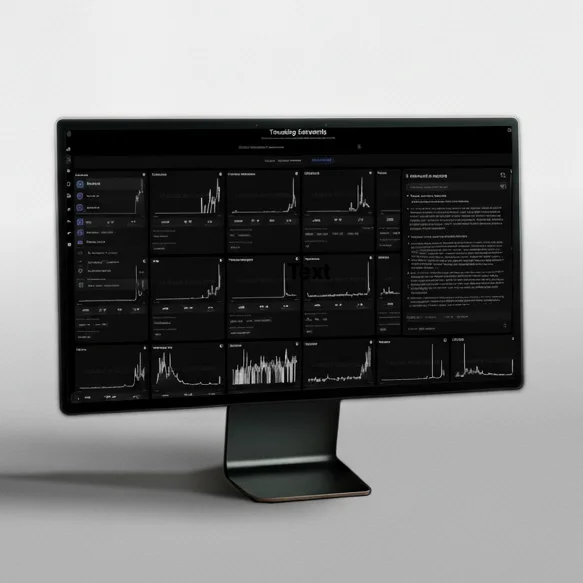
Paradox Intelligence aggregates shopping search alongside 14 other behavioral datasets, including Google Trends, YouTube Search, Amazon Search Trends, TikTok, Reddit, X, Wikipedia Trends, Podcast mentions, News Search, News Sentiment, News Volume, Images, Mobile App intelligence, and Software Adoption. The platform covers 50,000+ companies globally, mapped with tickers and sectors, so investors can run shopping search queries against their coverage universe directly rather than company by company.
Historical depth runs back 20+ years, which means analysts can build statistically meaningful models rather than relying on a few years of pattern-matching. The data is accessible through three modes: Paradox Desktop for platform-based research, Paradox Data for API integration into existing quant workflows, and Paradox AI for AI-assisted analysis and research automation.
For consumer discretionary analysts, portfolio managers running retail exposure, or quant teams building consumer demand factors, this kind of unified access is significantly more efficient than sourcing, normalizing, and maintaining individual data feeds.
What to Look For in Shopping Search Signals
Not all movement in shopping search is equal. Investors who use this data systematically pay attention to several characteristics:
Trend direction and duration. A one-week spike may reflect a promotion or news event. A four-to-six week sustained acceleration or deceleration in shopping search for a brand or category is a more reliable signal of underlying demand change.
Relative performance versus category. A brand whose shopping search is up 8% year-over-year sounds positive until the category is up 20%. Relative performance reveals whether a company is gaining or losing share, which is the more actionable insight for equity positioning.
Geographic patterns. For multi-region consumer companies, shopping search signals broken down by market can reveal where demand is outperforming or underperforming. A brand seeing strength in US shopping search but weakness in European shopping queries may face more mixed results than consensus assumes.
Divergence from other signals. When shopping search trends diverge from general web search, transaction data, or social sentiment, that divergence deserves investigation. It may indicate a change in consumer behavior that other signals have not yet priced in.
The Bottom Line for Investors
Shopping search data answers the question institutional investors care most about: are consumers actually ready to spend money on this brand or category right now?
That is a fundamentally different question from whether consumers are aware of a brand, talking about it, or watching its content. Purchase intent is the signal that most directly predates revenue. Investors who track it systematically, across their entire coverage universe, with multi-year historical context, are working from information that consensus estimates often do not reflect.
For hedge funds building pre-earnings models, asset managers monitoring consumer discretionary exposure, or quant researchers incorporating behavioral signals into factor models, shopping search data belongs in the research stack. The infrastructure to access it at institutional scale now exists. The investors who adopt it earliest operate with a structural informational advantage over those still relying on traditional research alone.
Paradox Intelligence provides shopping search data alongside 14 other behavioral datasets through a single platform, covering 50,000+ companies globally with 20+ years of history. Access is available via the Paradox Desktop platform, the Paradox Data API, or Paradox AI for automated research workflows. Learn more at paradoxintelligence.com.