


The term "financial intelligence platform" covers a wide range of products, from data terminals to AI-powered research environments. For investors evaluating their research stack, the term needs a working definition before it becomes useful.
This guide covers what financial intelligence platforms actually do, how they differ from traditional data tools, who benefits most from them, and what to look for when evaluating one.
What a financial intelligence platform does
A financial intelligence platform connects data acquisition, analysis, and signal delivery into a single workflow. Instead of routing between a data terminal, a BI tool, and a set of spreadsheets, a platform integrates those layers so that insight generation moves faster.
The core jobs:
- aggregate data from multiple sources (market data, behavioral data, macro indicators, news)
- normalize and clean data so it is ready to use
- surface signals, trends, and anomalies without requiring custom engineering
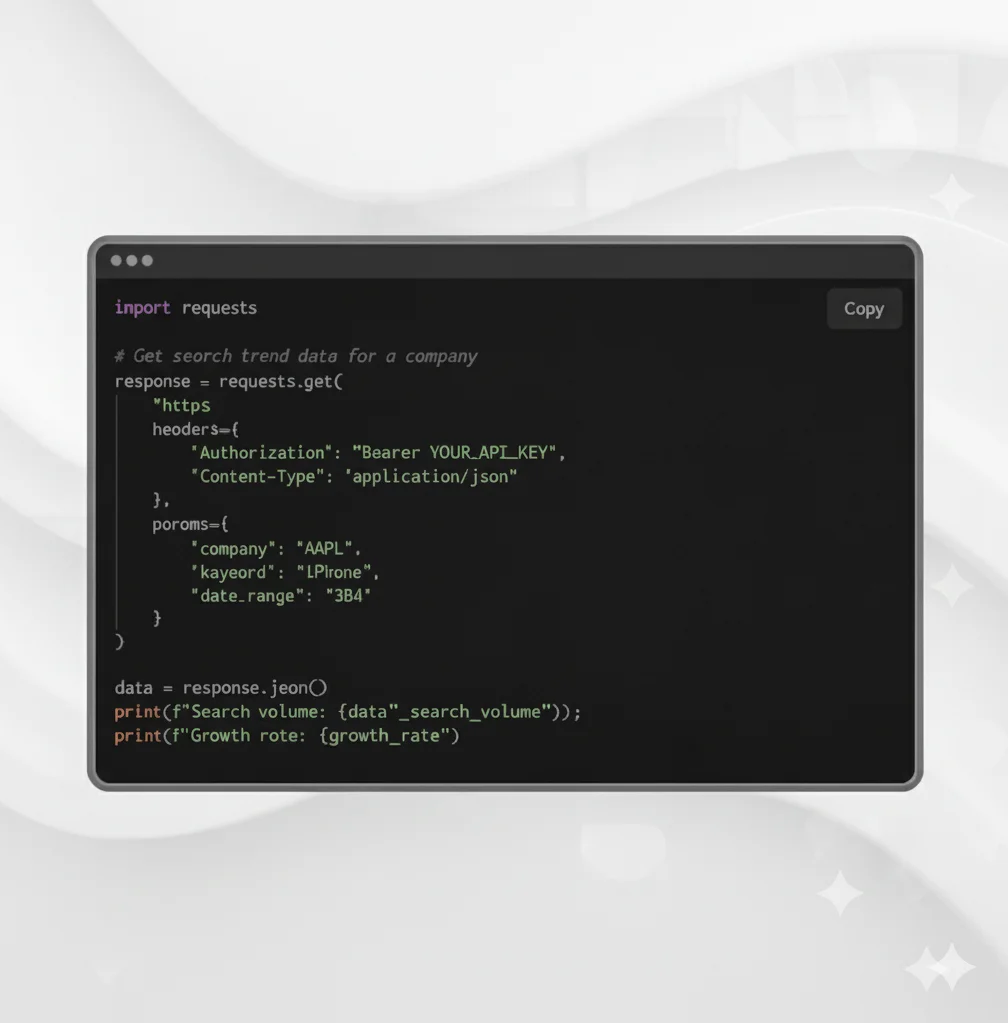
- deliver outputs to both human analysts and programmatic consumers (via API or export)
The "intelligence" part is the key distinction. Raw data access is not intelligence. Intelligence means the platform helps you answer questions, not just retrieve numbers.
How this differs from a data terminal or financial data API
Traditional data terminals (Bloomberg, Refinitiv, FactSet) provide deep access to structured financial data: prices, fundamentals, filings, estimates, news. They are excellent for what they do. Their core limitation is that they are designed around traditional data, not behavioral signals, and their workflow is optimized for individual lookups rather than pattern discovery across many entities at once.
Financial data APIs (market data, fundamental data, economic data) let engineering teams build custom pipelines. They require substantial technical overhead and are not built for analyst-facing discovery.
Financial intelligence platforms occupy a different position. They are:
- multi-source by design, including non-traditional data (search, social, app, web, news)
- optimized for discovery and monitoring, not just retrieval
- usable by both analysts and engineers, with UI and API access
- capable of surfacing what you did not know to look for
Stay up to date on our best ideas
Who uses financial intelligence platforms
Hedge funds use them for signal generation, alpha hypothesis testing, and monitoring across their book.
Long-only asset managers use them to strengthen research on companies and themes they already follow, and to identify early movement in sectors.
Equity analysts (buy-side and sell-side) use them to add behavioral data to fundamentals-based models and earnings research.
Private equity and venture capital firms use them for demand-side due diligence, deal sourcing, and portfolio monitoring.
Corporate strategy and competitive intelligence teams use them to track competitor demand signals and market momentum outside traditional channels.
Family offices use them as a more flexible and cost-effective research layer compared to enterprise terminals that require large minimum commitments.
What separates a useful platform from a crowded one
The financial data market has hundreds of providers. Most sell data, not intelligence. The distinction matters because data without context and workflow produces noise, not signal.
Criteria that define a high-quality financial intelligence platform:
1. Multi-source coverage with unified workflow
Signal quality improves when sources converge. A platform that pulls search, social, app usage, web traffic, news, and macro data into a single interface is more useful than separate point solutions for each source.
2. Entity and ticker mapping
If the platform cannot reliably link data to investable entities, it creates noise in both discretionary and systematic workflows. Ask specifically how entity resolution is handled across sources.
3. Historical depth
Alpha is tested, not assumed. A platform needs sufficient historical data to build and validate hypotheses. Shallow history limits your ability to separate signal from coincidence.
4. API for systematic teams
Research platforms that only serve analysts leave quant and engineering teams building their own pipelines. A good platform provides structured API access that matches the analyst UI in coverage.
5. Signal discovery, not just monitoring
The best platforms surface things you did not already know to look for. Pattern detection, anomaly surfacing, and cross-asset screening matter more than dashboards that confirm what you already believe.
Red flags when evaluating
- Platform built around a single data source with extra features bolted on
- Historical series shorter than two to three years
- No API access for production use
- Entity coverage limited to US large caps
- No transparency about how behavioral signals are constructed
How search, social, and behavioral data fit in
The fastest-growing segment of financial intelligence platforms is behavioral data: what consumers are searching, what audiences are engaging with, how app usage is changing, and how social attention is shifting.
This class of data matters because:
- it is often available before revenue data or earnings revisions
- it captures demand signals at the consumer level, not the reported level
- it spans geographies, sectors, and companies that other data types do not cover
Platforms that integrate behavioral data alongside traditional signals are better positioned to surface leading indicators, especially in consumer-facing sectors.
How Paradox Intelligence fits this category
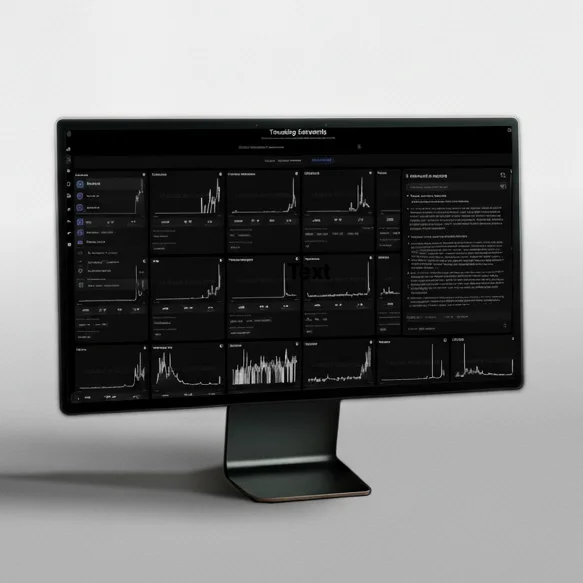
Paradox Intelligence is a financial intelligence platform built for institutional investors. It aggregates behavioral data across search, social, app, web, news, and macro signals into a unified analyst workflow, with full API access for systematic teams.
The platform is used for:
- signal discovery and hypothesis testing
- earnings and revenue leading indicator analysis
- thematic and sector trend monitoring
- portfolio watchlist surveillance
Explore datasets, review API documentation, or book a demo.