


X (formerly Twitter) generates a real-time stream of market-relevant signals. Post volume around a company, mention velocity, and engagement trends on X often move before price, before earnings announcements, and before consensus opinion shifts. For institutional investors, the question is not whether X data matters but how to use it in a disciplined way.
This post covers what X data actually measures, where it works as an investment signal, where it does not, and how to integrate it into a professional research workflow.
What X data measures
X analytics for investment research typically tracks several distinct things:
Post and mention volume: how many times a company, brand, product, or ticker is mentioned within a given time window. Volume alone is a measure of attention, not sentiment.
Engagement metrics: likes, reposts, replies, and impressions on posts mentioning a company. High engagement relative to post volume can indicate whether attention is passive or active.
Mention velocity: the rate of change in mention volume over time. A sudden acceleration in mentions often precedes price movement or news flow, not the reverse.
Narrative shifts: changes in what is being said alongside a company's name. A company moving from being discussed in the context of growth to being discussed in the context of leadership risk or competitive threat represents a signal even if raw volume is stable.
For investment purposes, volume and velocity are the most operationally tractable metrics. Narrative analysis requires NLP and is better handled at the platform layer than in raw data form.
Where X data works as an investment signal
Consumer brand inflection. For companies where consumer attention drives revenue, X mention spikes often lead earnings surprises. A consumer goods brand going viral for product launches, controversies, or celebrity associations shows up in X volume days before the impact registers in web traffic or search.
Earnings period attention. The weeks before and after earnings are high-signal windows on X. Analyst attention, retail investor positioning, and institutional commentary all converge there. Tracking mention volume relative to prior earnings cycles provides a baseline for whether current attention is elevated or suppressed.
Sector and thematic momentum. When a macro theme gains traction on X (an energy transition catalyst, a regulatory announcement, a geopolitical event), related equities often see attention spikes before the market prices in the implication. X is frequently the first place institutional and retail participants surface and debate these connections.
Short-squeeze and retail crowding risk. High X activity around a heavily shorted name is a documented leading indicator of retail crowding. For risk managers and short sellers, X volume is part of the short monitoring toolkit.
M&A and corporate event speculation. Rumor cycles on X often precede formal announcements. Tracking abnormal mention volume alongside deal-related keywords provides early detection for names that may be in play.
Stay up to date on our best ideas
Where X data is less reliable
Coordinated activity. Bot-driven or campaign-driven volume spikes can inflate metrics without reflecting genuine investor or consumer attention. A raw volume number without context about source quality can be misleading.
Low-coverage companies. X data is strongest for large-cap consumer names with high retail visibility. For mid-cap and small-cap industrial or B2B companies, organic X mention volume is often too thin to generate statistically meaningful signals.
Sentiment as a standalone signal. X sentiment analysis is weaker than X volume analysis for investment purposes. Sentiment models applied to short-form, sarcastic, or ironic posts produce noisy outputs. Volume is more reliable.
The practical implication: treat X data as a confirmation and attention signal, not as a primary thesis generator. It works best in combination with search, web traffic, or other behavioral sources.
X data vs. other social signals
X occupies a specific niche in the social data landscape. Understanding where it sits relative to other sources helps frame when to use it.
X vs. Reddit: Reddit discussions tend to be more detailed and longer-form, with stronger signals around retail crowding and community conviction. X is faster and broader but shallower. For momentum and speed, X leads. For depth and crowding, Reddit adds more.
X vs. TikTok: TikTok drives consumer brand awareness with a younger demographic. X drives institutional and financial narrative formation. These are largely non-overlapping audiences. Both are useful; they answer different questions.
X vs. news sentiment: X mentions from journalists, analysts, and executives often precede published news by hours. Tracking X alongside news volume and sentiment gives a fuller picture of the information environment around a company.
How to use X data in practice
Pre-earnings monitoring: Set a baseline for a company's X mention volume across the prior four earnings cycles. In the two weeks before the next earnings release, track whether current volume is elevated or suppressed relative to that baseline. Elevated volume with positive engagement has historically correlated with earnings beats in consumer-facing sectors.
Sector momentum screening: Run weekly X volume trends across a sector watchlist. Names showing accelerating mention velocity without corresponding news flow are candidates for deeper research.
Event-driven signal detection: For portfolio companies, configure alerts for abnormal spikes in X mention volume. A 3x acceleration in mentions without a press release warrants a look.
Cross-source confirmation: When Google search data and Amazon search data both show a company inflecting upward, confirming that X volume is also rising provides multi-source confidence before acting on the signal.
How Paradox Intelligence delivers X data
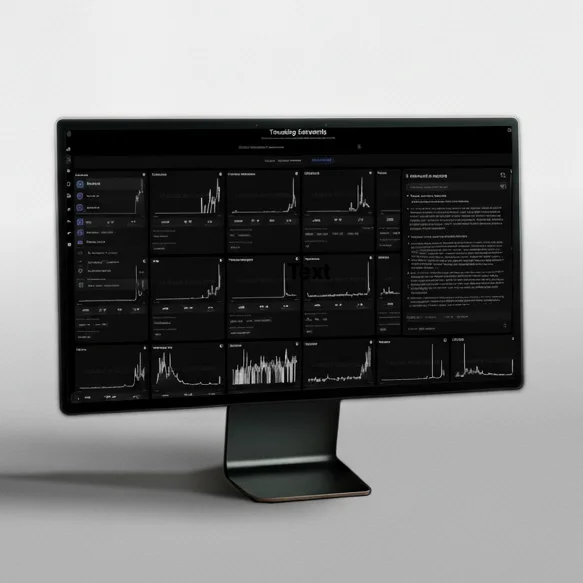
Paradox Intelligence provides X (Twitter) post volume and engagement trend data pre-mapped to tickers and investable entities, going back to 2006. Signals are normalized for comparability and available alongside 15+ other behavioral sources including Google search, TikTok, Reddit, Instagram, web traffic, and news sentiment.
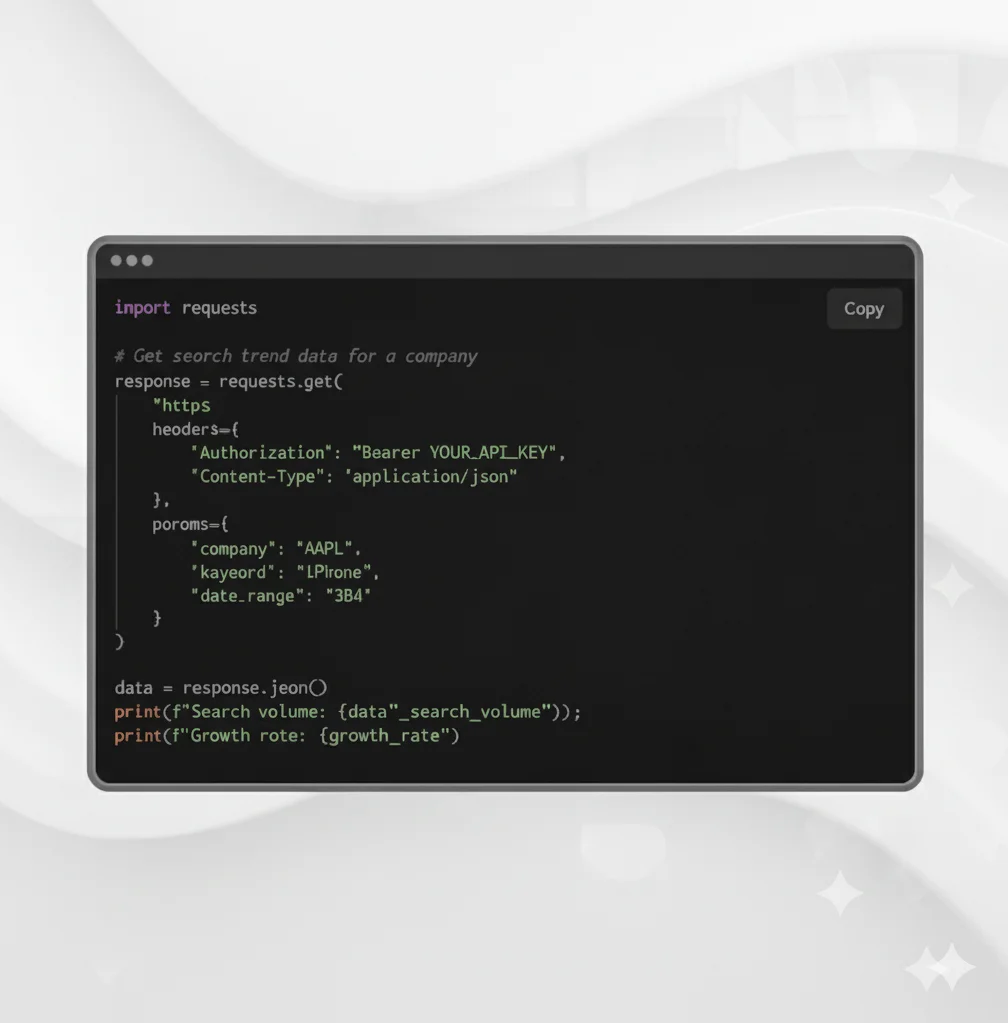
All signals are accessible through the platform UI for discovery and monitoring, via REST API for pipeline integration, and via MCP server for direct use in AI agents and tools like Claude and Cursor.
To explore coverage for specific tickers or sectors, see Datasets or book a demo.