


VLCC Rates Have Broken Every Historical Record
Very Large Crude Carrier day rates breached $423,000 on the benchmark Middle East-to-China route in late March 2026, a level that has no precedent in the data going back to 2005. The move happened in a single week as Strait of Hormuz traffic dropped by roughly 80%, with only 21 vessel transits completed after hostilities began versus more than 100 per day in normal conditions. Over 150 tankers are now anchored outside the strait.
That is the change in state. The question is whether the equity market has priced it.
What the Data Shows
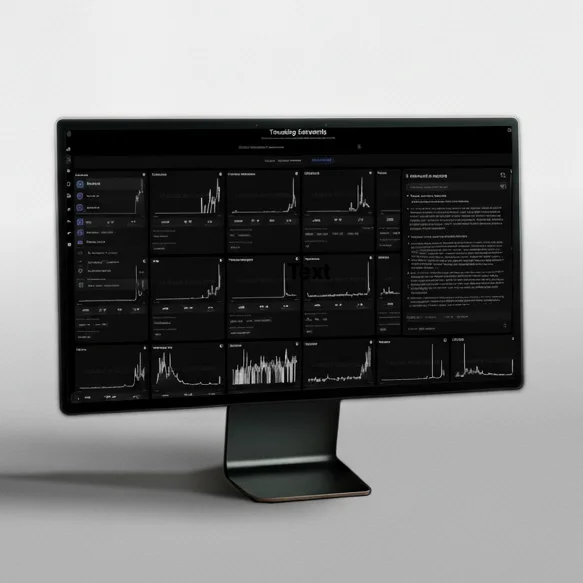
Paradox Intelligence news volume for "crude tankers" is running at its highest score in the current window, with sources pointing up 50% quarter-over-quarter and 75% year-over-year across the five clean data sources tracked. "Crude oil tankers" across four clean sources shows the same directional pattern. "Tanker shipping" as a category is up 67% QoQ and 67% YoY. These are not subtle readings.
The news sentiment signal for "aircraft parts" — a proxy for defense and industrial supply chain stress — is also running at elevated levels, pointing up 67% across three sources. That matters as context: the conflict is broad-based, not a single-week news cycle.
What the data does not yet show is analyst estimate revision. That is the gap.
Why Consensus Has Not Caught Up
Tanker stocks are misunderstood assets. Most equity analysts cover them as commodity cyclicals tied to oil demand, not as direct beneficiaries of route disruption. When freight rates spike because supply routes are severed, the benefit flows to any vessel operating outside the affected zone — not because demand rose, but because effective fleet capacity has contracted sharply.
Vessels rerouting around the Cape of Good Hope add 3,500 to 4,000 nautical miles per voyage and 10 to 14 additional transit days. That alone reduces the active capacity of the global VLCC fleet by a meaningful fraction, tightening supply without any change in cargo demand.
War risk insurance premiums have been suspended for Gulf transits by major P&I clubs, which eliminates the option for rate-chasing vessels to enter the strait cheaply. The supply squeeze is not just directional — it has a mechanical floor.
Current consensus estimates for tanker companies were set against a market where Hormuz was open. Q2 2026 numbers are stale.
The Investable Bridge
International Seaways (INSW, NYSE) is the primary US-listed beneficiary. The company runs 83 vessels across crude and product tanker segments and generates revenue per available ship-day that is highly levered to spot rate moves. At $72.23 per share with a $3.6 billion market cap, INSW is trading near its 52-week high of $78.51 and has historically seen its dividend capacity expand sharply in high-rate environments. Each $50,000 improvement in realized daily rates across the VLCC fleet adds meaningfully to per-share cash generation in a single quarter. Consensus has not modeled $400,000-plus rates into Q2 estimates.
DHT Holdings (DHT, NYSE) operates 26 VLCCs exclusively, making it the purest play on VLCC day rate moves. At $18.11 per share and a $2.9 billion market cap, DHT has a simple cash flow profile: higher rates flow almost directly to distributable cash. The company has a track record of paying special dividends in strong rate environments. Its 52-week range of $8.99 to $20.55 reflects the asset-sensitive nature of the business.
Nordic American Tankers (NAT, NYSE) runs 24 Suezmax crude carriers. Suezmax vessels are too large for most alternative routes through the Suez Canal under load, making them disproportionately exposed to the Cape of Good Hope rerouting dynamic. At $5.73 per share with a $1.2 billion market cap, NAT offers the highest operating leverage to sustained rate elevation.
The transmission mechanism is direct: higher spot rates, longer voyages, and constrained effective capacity translate to higher Q2 2026 realized revenues. The Q2 earnings cycle does not begin until late April and May. That is where the estimate revision will show up.
Risks and Failure Modes
The thesis breaks if the Strait of Hormuz reopens materially before the end of April. A ceasefire or negotiated US-Iran framework that restores safe passage would immediately release the anchored fleet and begin compressing rates back toward historical levels. The White House's stated deadline of April 6 is a near-term binary. If it passes without resolution, the rate environment is likely to persist through at least Q2 earnings.
A second risk is that the rate spike already happened — it was well-covered in trade publications and energy news by late March. If the equity market is forward-looking and has already repriced tanker earnings, the current stock prices may already reflect the benefit. INSW at $72 versus a 52-week range floor of $27 suggests some but not all of this move is in the price. The rate environment, if sustained, still implies upward estimate revisions that are not yet in consensus.
A third consideration: elevated Brent crude at $92 per barrel increases bunker fuel costs for tanker operators, partially offsetting the revenue benefit of higher day rates. Net margin expansion depends on rate levels sustained above the breakeven-adjusted cost of rerouted voyages.
What to Monitor Next
The clearest near-term signal is whether the Hormuz reopening deadline on April 6 produces any material change in traffic patterns. If vessel transits remain below 30 per day through mid-April, Q2 rate realizations will be materially above prior consensus.
Watch for spot charter fixings from DHT, INSW, and NAT management commentary at industry conferences in April. Any disclosure of forward bookings at $300,000-plus per day would be a direct confirmation of the earnings upside.
Paradox Intelligence news volume for "crude tanker" and "VLCC" across its tracked data sources will also provide a real-time read on whether narrative velocity is accelerating or fading.
This is for informational purposes only and does not constitute investment advice.