
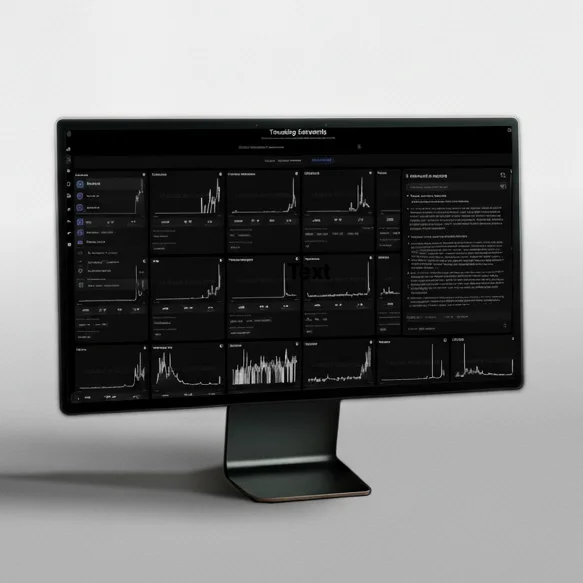
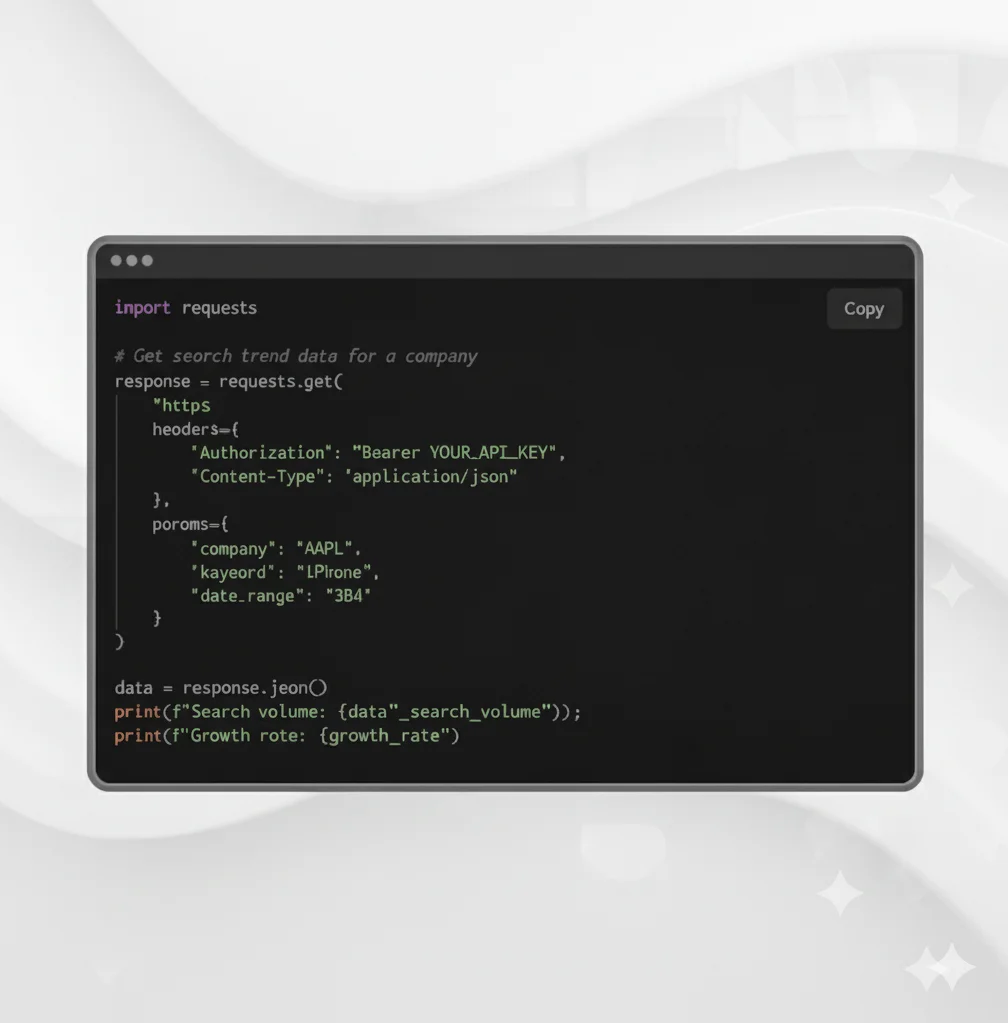


WD-40's Google Search interest hit 100 out of 100 in early April 2026. That is the maximum score on the normalized 0-100 scale, representing peak search volume for the keyword across the entire data history. One year prior, the same keyword scored 53. The 88.7% year-over-year increase and a 40.9% jump from January 2026 alone describe a signal that broke materially higher at the start of this calendar year and has continued accelerating.
WD-40 Company (WDFC, NASDAQ) reports fiscal second-quarter 2026 earnings on April 9. Consensus estimates $154.4 million in revenue and $1.39 in EPS. The question is whether a search signal of this magnitude, measured at the very moment the company is closing its fiscal quarter, implies demand conditions that exceed what analysts are currently projecting.
What the Data Shows and Why It Changed
The WD-40 keyword scoring 100/100 is not inherently informative if the score has been elevated for years. The critical distinction is that one year ago, WD-40 registered 53/100. The shift from 53 to 100 is not a rounding artifact; it represents a near-doubling in normalized search demand in twelve months.
The six-month change is similarly abrupt: from 75/100 in October 2025 to 100/100 in April 2026, a 33% gain. The three-month jump from 71/100 in January 2026 to 100/100 reflects an acceleration that began in Q1 calendar 2026 and carried directly into the quarter whose results WD-40 will report tomorrow.
There is a plausible causal account. The conflict in the Middle East from early 2026 sent oil and energy prices sharply higher. Elevated energy costs historically correlate with increased maintenance spending on mechanical and industrial equipment, because deferring maintenance becomes more expensive as replacement parts and energy-intensive downtime costs rise. Penetrants, rust removers, and lubricants are precisely the products used to maintain aged equipment running under strain. The Iran war has also disrupted global supply chains, creating urgency around asset uptime that would not exist in a more stable environment.
This is not an observation unique to WD-40, but WD-40 is singular in that maintenance products account for 90.3% of its revenue (WD-40 Multi-Use at 77.1% and WD-40 Specialist at 13.2% of fiscal 2025 net sales). The company has minimal exposure to product categories unrelated to maintenance. If maintenance search demand is surging, the revenue transmission mechanism is direct.
The Q1 Context: Distribution Timing vs. End-User Demand
WD-40's fiscal Q1 2026 results (reported January 2026) showed diluted EPS of $1.28, down 8% year-over-year, and net sales of $154.4 million, only 1% above the prior year. Analysts at Seeking Alpha flagged this as a miss. The company's own explanation was precise: the softness was concentrated in marketing distributor channel timing, not end-user sell-through. Direct markets, representing 83% of global sales, grew 8% in Q1, in line with the company's long-term targets.
Gross margin actually strengthened to 56.2%, up 140 basis points year-over-year, indicating that pricing and input costs were moving favorably. Management stated explicitly that it expects results at the mid-to-high end of fiscal 2026 guidance.
The search data substantiates the end-user story management described. When the company said distributor channels were slow but end-user demand was fine, the Google Search data for WD-40 was already running above the prior year baseline. If end-user demand was genuinely strong in Q1 and the Google Search signal accelerated further into Q2, the setup for tomorrow's report is meaningfully different from what the consensus EPS of $1.39 implies.
The Investable Bridge
WDFC trades at $212.45, market cap approximately $2.87 billion. The stock carries a 52-week range of $175.38 to $253.24, and currently sits roughly in the middle of that range at a time when the underlying demand data points are at their strongest in the measured history.
The revenue transmission is straightforward. WD-40 sells through retail, industrial distribution, and direct channels. Higher end-user demand flows through retail sell-through, which creates replenishment orders from distributors and direct channel volume. If the Q2 fiscal quarter saw both the distributor timing normalization management indicated and the accelerating end-user demand the search signal shows, the revenue and EPS outcome could exceed the consensus estimate by a meaningful margin.
Consensus EPS for Q2 FY2026 is $1.39, which represents only a 5.3% increase from Q2 FY2025's $1.32. Given that Q1 FY2026 saw 8% growth in direct-market demand even when overall EPS missed on distribution timing, a 5.3% total EPS growth assumption looks conservative if the search signal translates to end-market volume.
The WD-40 Specialist segment bears watching separately. At $82 million in fiscal 2025 revenue (13.2% of the total), Specialist products target automotive, electrical, and heavy-duty industrial applications where demand is more sensitive to economic and maintenance cycles. This segment grew from $73.9 million in fiscal 2024, a 10.9% increase. If the current industrial demand environment is as strong as the search data implies, Specialist could be the accelerating component.
Risks and Failure Modes
The search signal is a demand-side indicator, not a revenue guarantee. Several things could prevent the signal from flowing through to the Q2 report. Inventory accumulation by distributors in fiscal Q1 (to smooth timing mismatches) could mean that strong end-user demand in Q2 does not generate incremental orders yet, because the channel is first working through what it already holds. This is the mirror of the Q1 distributor timing problem and remains a real possibility.
Currency is a second risk. WD-40 generates approximately half its revenue outside the United States. A stronger dollar relative to the euro, pound, and Australian dollar compresses the USD translation of international sales. The dollar's behavior in Q1 2026 against key international currencies would be material to the reported revenue figure, regardless of what the underlying demand was doing in local markets.
The search signal for WD-40 is strong but not verified by multiple independent sources. News sentiment for the company has shown volatility. The thesis would be stronger if Amazon search data or Google Shopping data for WD-40 products showed parallel increases. The available signals here rest primarily on Google Search. That is not disqualifying but it is a constraint on conviction.
What to Monitor
The most direct confirmation of the thesis is tomorrow's Q2 FY2026 report. Specifically: watch for direct-market revenue growth (management has guided 8%+ as the target), gross margin (if input costs remained favorable through Q2, the earlier 140bps improvement may hold or expand), and any commentary on distributor channel inventory levels.
Beyond earnings, Google Search for WD-40 staying above 85/100 through the summer would suggest the current demand environment is durable rather than a one-quarter event. If it retreats below 60/100 in Q3, the thesis reverts to a timing story, not a fundamental inflection.
This is for informational purposes only and does not constitute investment advice.