


Tungsten prices reached $2,250 per metric ton unit (MTU) in late March 2026, up 557% over twelve months. Antimony hit a historical high of $59,750 per tonne in July 2025. China controls 83% of global tungsten production and 87% of antimony, and its export restrictions — implemented February 2025 for tungsten, August 2024 for antimony — are not temporary. The Iran war has accelerated consumption, but the supply problem predates the war and will outlast it.
Why This Is Structural
The China export restriction story is the mechanism. In 2024 and 2025, China restricted exports of both antimony and tungsten as part of a broader critical minerals policy. The restrictions reflect a deliberate strategic posture: China has identified these materials as leverage assets and has moved to restrict access to non-Chinese buyers. That decision is not reversible on a commodity cycle timeline.
The US military has a 2027 deadline to eliminate all tungsten and antimony sourced from China or Russia. Meeting that deadline requires building out domestic or allied-nation supply chains. Analysts estimate at least a two-year period before alternative Western supply can meet demand at scale.
Military tungsten consumption is projected to grow 12% in 2026. The applications are direct: tungsten kinetic energy penetrators are the primary long-range anti-armor round in use by NATO forces, drone components require tungsten for weight and heat tolerance, and jet engine turbines use tungsten-rhenium alloys. Antimony is embedded in armor-piercing rounds, ammunition primers, night vision goggles, and infrared sensor chips. The global military is running these at abnormal rates.
The world needs approximately 120,000 tonnes of antimony per year and currently produces around 80,000 tonnes. That 40,000-tonne gap existed before the Iran conflict intensified demand.
What the Search Data Corroborates
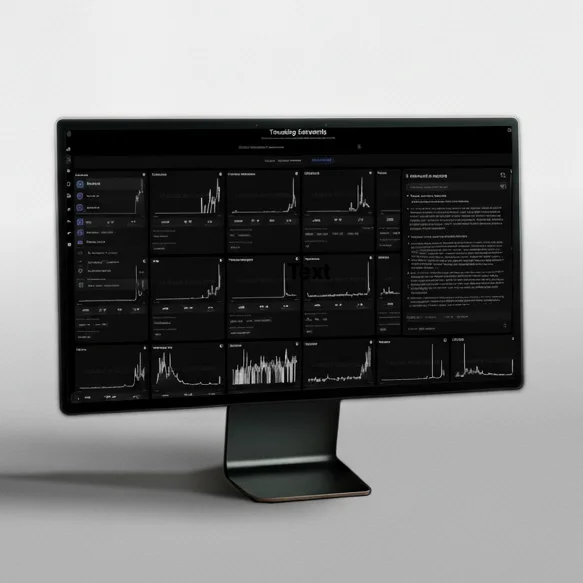
Google Search interest for "tungsten" reached a normalized score of 34 in the week of April 4, up from 24 three months ago (a 42% increase) and from 15 a year ago (a 127% increase in search volume). Weekly estimated search volume stands at approximately 248,097 versus 109,455 a year earlier. This is not the Google Trends pattern of a news cycle: it is a sustained, multi-quarter slope upward in underlying interest.
Google Search for "critical minerals" is up 118% year over year, from a score of 11 to 24. The 3-month trend is down slightly (from 32 in January to 24 now), but the year-on-year direction is unambiguous. The quarterly dip likely reflects seasonal holiday noise in January's elevated reading, not a reversal.
Google Shopping interest for "lithium" — a different but correlated critical mineral — is up 177% in three months and 244% year over year, reaching a score of 86. This is the purchase-intent signal, not the news-cycle signal.
The news side confirms the framing. Paradox Alerts flagged articles from The Business Times ("How the Iran war set off a global scramble for strategic metals"), Reuters ("Pentagon sought fresh supply of 13 critical minerals day before Iran attack"), and multiple supply-chain-focused outlets covering antimony and tungsten price surges. This is no longer niche coverage.
The Exposed Equity Universe
Direct beneficiaries
United States Antimony Corporation (NYSE: UAMY), at $8.68 per share and a market cap of $1.24 billion, is the most direct US-listed exposure to antimony supply. The company recently uplisted to the NYSE in March 2026 — itself a signal of the commercial backdrop. UAMY operates antimony processing facilities in Montana and Mexico, producing antimony oxide (used in flame retardants, military applications, and plastics) and antimony metal (used in batteries and ordnance). The company also recovers precious metals and mines zeolite. With Chinese antimony restricted, UAMY's North American processing capacity is strategically placed. The stock has traded between $1.69 and $19.71 over the past year, indicating significant volatility consistent with a small-cap mining company exposed to one commodity.
MP Materials Corp. (NYSE: MP), at $49.73 and a market cap of $8.84 billion, operates Mountain Pass — the largest rare earth mine in the Western Hemisphere. MP is not a direct tungsten or antimony play, but its exposure to neodymium and praseodymium (the rare earths used in permanent magnets for electric motors and defense systems) makes it a second-order beneficiary of the same structural dynamic: the effort to build non-Chinese critical mineral supply chains. The stock is up from its 52-week low of $18.64 to $49.73 as this thesis has become more visible, but the market cap is still small relative to the strategic importance of the asset.
Sigma Lithium Corporation (NASDAQ: SGML), at $14.37 and a market cap of $1.60 billion, is a Brazil-based lithium developer. Google Shopping for "lithium" up 244% year over year and the search data's "Lithium supply contracts: Chinese partnerships rise" signal from the Paradox Alerts (flagged on April 5) both point to a supply-chain repositioning dynamic that benefits ex-China producers. SGML's Grota do Cirilo project is in production and positioned as a non-Chinese lithium source for battery manufacturers realigning supply chains.
Second-order beneficiaries
Defense contractors with ammunition and precision-guided munition manufacturing — RTX (NYSE: RTX), Northrop Grumman (NYSE: NOC), and L3Harris (NYSE: LHX) — face tungsten and antimony as input costs but also benefit from elevated defense procurement budgets. The net effect depends on whether they can pass through input cost increases through contract renegotiation; for cost-plus contracts, most of the risk sits with the government buyer.
Companies at risk
Manufacturers that use tungsten as an input in civilian applications — cutting tool manufacturers, electronics producers using indium-tin-oxide glass alternatives, and specialty chemical companies using antimony flame retardants — face cost inflation that is difficult to pass through to commercial buyers at the same rate as defense procurement.
What Could Change the Thesis
A rapid diplomatic resolution with China that reversed the export restrictions would be the most direct falsifying scenario. That seems unlikely in the current geopolitical environment but is not impossible, particularly if China calculates that the restrictions are accelerating Western investment in competitive supply chains faster than they are extracting concessions. A major new tungsten or antimony mine coming online outside China before 2027 would also ease the structural constraint, but lead times from discovery to production typically run five to eight years for metals of this type.
Demand destruction from high prices is another path. Tungsten can be partially substituted in some tool steel applications, and antimony flame retardants have alternatives in some use cases. Military applications have fewer substitution options; civilian applications have more.
Monitoring Signals
Google Search for "tungsten" and "antimony" over the next four to eight weeks will indicate whether the demand signal is broadening or plateauing. Any diplomatic news involving China's export restriction policy is a falsifying signal to watch. US Congressional appropriations for the Pentagon's critical minerals stockpile program will be a confirming signal if funding increases. UAMY's Q1 2026 earnings will be the first financial data point available for the direct antimony play.
This is for informational purposes only and does not constitute investment advice.