


AI agents in investment research are no longer a prototype exercise. In 2026, a growing number of funds and research teams are running agentic workflows that connect to live data, reason over it, and surface actionable output without a human in every loop. Alternative data is central to this shift: agents are only as useful as the data they can access, and normalized, ticker-mapped alternative data is exactly the kind of structured input these systems need.
This post explains what investment agents actually do, why alternative data is a natural fit, and how teams are deploying these workflows today.
What is an investment agent?
An AI agent, in the investment context, is a system that can take a goal, break it into steps, call tools or data sources, and produce a result. That is different from a simple chat assistant: an agent does not just answer questions, it executes workflows.
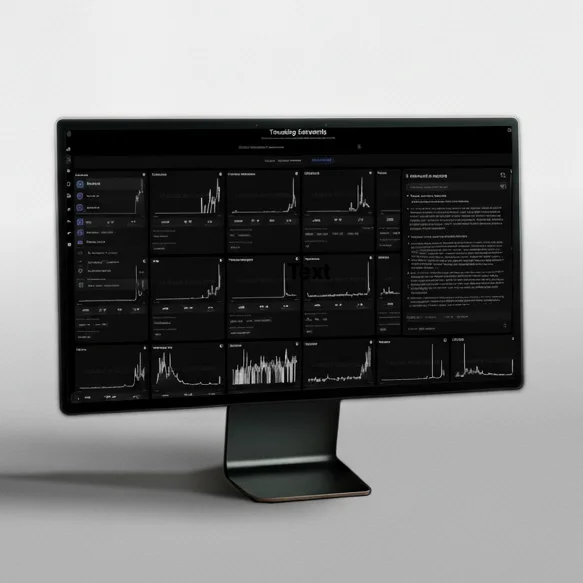
A practical example: you give an agent the goal "summarize demand trends for these 10 consumer names before earnings next week." The agent queries a search-trend tool, pulls normalized series for each ticker, compares them to prior-quarter averages, identifies the names with meaningful shifts, and writes a brief for each, flagging those worth deeper review.
The analyst sets the goal and reviews the output. The agent handles the data retrieval, comparison, and synthesis.
Why alternative data is a natural fit for agents
Traditional data (earnings, filings, estimates) is mostly backward-looking and heavily structured around disclosure dates. Alternative data captures behavior in real time. That makes it particularly useful for agents, because:
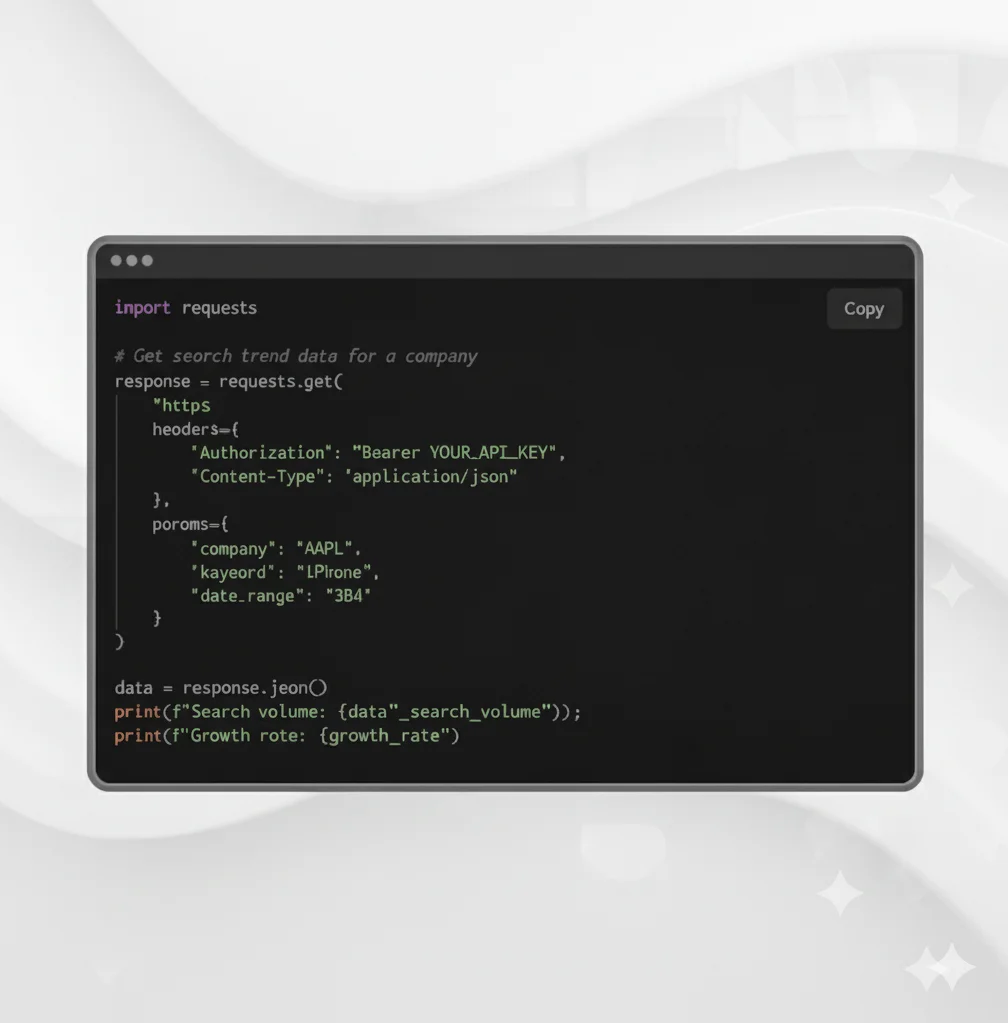
- It is queryable. Normalized, ticker-mapped series can be retrieved via API or MCP with a clear request ("give me weekly search index for AAPL over the past 13 weeks"). Agents can call these programmatically.
- It is continuous. There is always new data. Agents can run the same workflow weekly, flag changes from prior periods, and alert when thresholds are crossed.
- It combines well. Agents excel at multi-source synthesis. Pulling search, sentiment, and traffic for the same company and combining them into a coherent view is tedious for humans but trivial for an agent with tool access.
The constraint has always been data access: getting clean, consistent, ticker-mapped series without manual work. Platforms that offer this via API and MCP remove that friction for agentic systems.
Stay up to date on our best ideas
The Model Context Protocol and why it matters
The Model Context Protocol (MCP) is the emerging standard for connecting AI systems to external data and tools. It defines how AI clients (Claude, Cursor, custom agents) talk to servers that expose data and capabilities. For alternative data, an MCP server lets an agent pull trends, sentiment, or traffic on demand, using the same authentication and entitlements as a human user.
Paradox Intelligence offers alternative data via platform, API, and MCP server, which means AI agents can be connected directly to search, sentiment, social, and other signals without any intermediate data pipeline. For a deeper overview of MCP in this context, see MCP Servers for Alternative Data.
Agentic workflows that are being deployed today
Pre-earnings demand checks. Agents pull search and e-commerce trend data for every name on an upcoming earnings calendar, compare trends to prior quarters and consensus expectations, and flag outliers. Output is a prioritized list of names where demand signals diverge from analyst expectations.
Sector screening. Agents run weekly scans across a coverage universe, pulling normalized growth rates for each name across multiple signals (search, news sentiment, social volume). Names that are inflecting positively or negatively are surfaced for analyst review.
Competitive monitoring. Given a set of competitors, an agent pulls relative trends (e.g. Google search index, Amazon search, TikTok hashtag volume) and produces a share-of-voice comparison updated on a cadence the team sets.
News and narrative tracking. Agents monitor news sentiment for a watchlist, flag unusual spikes in volume or directional changes in tone, and produce a daily or weekly brief.
Thematic research. Given a theme or macro view (e.g. weight-loss drugs, domestic manufacturing, AI infrastructure), an agent identifies relevant search and social trends, maps them to companies, and builds a landscape of which names are most exposed.
What to look for in data for agentic use
Not all alternative data works well in agentic workflows. The key criteria:
Clean, consistent identifiers. Agents cannot tolerate ambiguous company references. Data should be mapped to tickers or CUSIPs in a documented way, with clear revision and update policies.
API and MCP access. Agents need programmatic access. CSV exports or manual downloads do not fit the workflow.
Normalized series. Raw volumes from different platforms are not comparable. Normalized indices (e.g. 0-100 or indexed to a baseline) allow agents to make comparisons across companies, sectors, and time without platform-specific calibration.
Update cadence. If you run weekly workflows, data needs to update at least weekly. If you run pre-event checks, you need recent snapshots.
Documentation. Agents generate reasoning based on what they know about the data. Clear methodology documentation helps the model (and the analyst reviewing output) interpret results correctly.
Getting started
The practical entry point for most teams is a single, bounded workflow. Choose one use case, one data source (search trends or sentiment are common starting points), and one agent framework. Run it in parallel with your existing process for a quarter. Compare the output to what you would have done manually.
Once the workflow is stable and you trust the output, expand: add more tickers, add more data sources, or run the agent more frequently.
For teams exploring this, Paradox Intelligence's Alpha Agent provides automated investment intelligence built on the same multi-source alternative data platform, with API and MCP access for teams that want to build custom agents on top.
For more on data types and platforms, see Best Alternative Data Platforms 2026. For long-form research and signal methodology, see Research.
This post is for institutional investors and research professionals. It is not investment advice.