
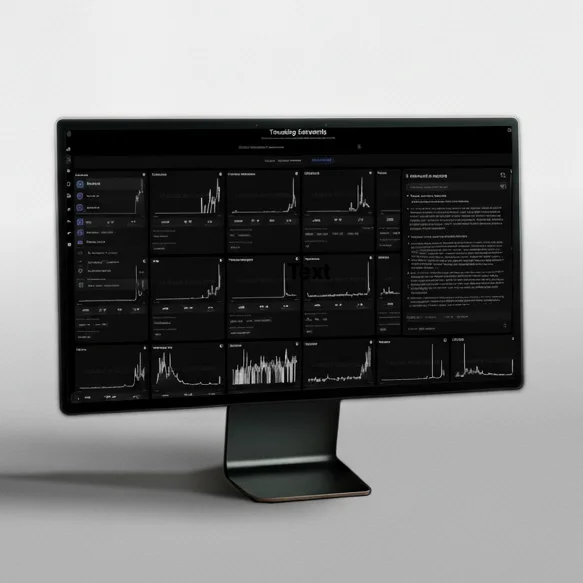



The transformation of hedge fund research over the past decade is, in large part, a story about data. Not the traditional kind, the kind everyone has, but data that reflects what is actually happening in the world before it shows up in earnings reports, consensus estimates, or management guidance.
By 2026, alternative data is foundational. Over 90% of systematic funds and more than 60% of fundamental long/short equity funds use at least one alternative data source. Annual market spend has grown from $1.7 billion in 2020 to over $14 billion projected by 2027. The funds that generate the most consistent alpha from this data are not just using it; they are using it systematically, combining multiple sources, and building workflows where alternative data is as standard as Bloomberg as a daily input.
This guide covers the source categories that matter most, how they are used, what the best platforms are for each, and how to combine them into a stack that builds conviction rather than just adding noise.
The six primary alternative data source categories
1. Search and behavioral intent data
What it is: Search volume and behavioral signals across Google Search, YouTube, Amazon, Google Shopping, TikTok, and other platforms where consumers express intent. When a consumer searches for a product on Amazon, they are at a different stage of the purchase funnel than someone doing a general Google web search. When a brand is accelerating on TikTok before it appears in any other signal, that is an early warning that something is changing.
How hedge funds use it: - Pre-earnings demand checks for consumer and retail names - Tracking brand interest and competitive positioning over time - Identifying inflection points in demand before they show up in revenue - Monitoring emerging themes (products, categories, brands) gaining traction - Building factors for systematic quant strategies
What makes it powerful for investment purposes: Unlike most financial data, search and behavioral data is not disclosed or managed by companies. It reflects actual consumer behavior, independently of what management says on earnings calls. It is high-frequency (often daily), covers thousands of companies simultaneously, and has enough history to backtest meaningfully.
The multi-platform dimension: The real edge is not any single platform but the relationship between them. A brand rising on Google Search while also accelerating on Amazon and gaining TikTok engagement is a fundamentally different signal than a brand rising on one platform while flat or declining on others. Cross-platform corroboration is how you distinguish signal from noise.
Leading platform: Paradox Intelligence covers 20+ behavioral datasets, including Google Search, YouTube, Amazon, TikTok, Reddit, X/Twitter, Instagram, Wikipedia, Google Shopping, and more, all normalized on a consistent methodology and mapped to 50,000+ companies globally. It is the only platform that provides this breadth in a single workflow with consistent normalization and a 20+ year historical archive.
Explore search and behavioral datasets
2. Consumer transaction and spending data
What it is: Aggregated card transaction data, email receipt data, and point-of-sale spending data that provides a near-real-time view of what consumers are actually buying.
How hedge funds use it: - Revenue nowcasting for consumer and retail companies ahead of earnings - Tracking market share shifts between competitors - Identifying mix shifts (e.g. trade-down within categories, geographic differences) - Detecting supply chain effects on consumer spending patterns
What makes it powerful: This is downstream of intent, it measures actual purchases, not just awareness or interest. For consumer discretionary and retail, transaction data is often described as the closest approximation to real-time revenue that exists outside of the company's own systems.
Limitations to be aware of: - Panel bias: transaction panels skew toward certain demographics and geographies - Processing lag: receipt data typically has a two to five day lag - High cost: enterprise-level access at major providers typically starts in the high six figures - Consumer sector focus: less useful for healthcare, technology, and other sectors where consumer transactions are not the primary revenue proxy
Leading platforms: YipitData (now Vista Data) is consistently ranked at the top for transaction data quality and predictive accuracy for consumer earnings. Bloomberg Second Measure is an alternative for teams embedded in the Bloomberg ecosystem.
How it complements search data: Transaction data and search data together are more powerful than either alone. Search signals tell you that demand is building; transaction data tells you whether it is converting to revenue. When they confirm each other, conviction is high. When they diverge, something interesting is happening.
Stay up to date on our best ideas
3. Web and app traffic data
What it is: Estimated website visits, page views, session duration, app downloads, daily active users, and related engagement metrics for digital businesses.
How hedge funds use it: - Tracking engagement trends for SaaS, marketplace, and e-commerce companies - Competitive benchmarking across a sector (who is gaining and losing digital share) - Identifying product-market fit signals for newer or less-covered names - Cross-checking other signals (e.g. is rising Amazon search for a brand corroborated by rising traffic to its website?)
What makes it powerful: For digital-first companies, web and app metrics are often more directly connected to revenue than almost any other alternative signal. SaaS companies show user growth in DAUs before it appears in billing data. Marketplaces show demand in traffic before it appears in GMV.
Limitations: - Accuracy decreases for smaller companies with limited panel representation - Methodological differences between providers create inconsistencies - Web traffic is a lagging indicator for purchase intent compared to search signals
Leading platforms: SimilarWeb is the standard for web and app traffic intelligence. Paradox Intelligence includes web traffic analytics as part of its multi-source behavioral data platform, allowing you to correlate web traffic with search intent, social engagement, and other signals in one workflow.
4. News and text sentiment
What it is: NLP-processed sentiment scores and topic extraction from news articles, earnings call transcripts, analyst reports, regulatory filings, social media, and other text sources.
How hedge funds use it: - Detecting narrative shifts around a company or sector before they affect price - Pre-earnings sentiment monitoring for event risk - Tracking whether news sentiment is diverging from behavioral demand signals - Thematic research (which sectors or themes are receiving increasing or decreasing positive coverage)
What makes it powerful: Narrative is often a leading indicator of price movement. A deteriorating news sentiment trend that precedes a downgrade cycle, or an improving sentiment picture that presages consensus estimate revisions, is valuable not because the articles themselves move prices but because they reflect the direction of institutional attention.
The complementarity with behavioral data: The most interesting case is when behavioral signals and sentiment diverge. A brand where consumer search is rising but news sentiment is falling is worth investigating closely. Sometimes the market narrative is wrong and consumer behavior is right. Sometimes the opposite. Either way, the divergence is informative.
Paradox Intelligence news sentiment: Paradox includes news sentiment and news volume as part of its multi-source dataset catalog. This means you can track news sentiment alongside search trends, social engagement, and Amazon intent signals for the same company, on the same platform, on the same scale. Divergence analysis between sentiment and behavioral signals is built in.
Other leading platforms: RavenPack is a specialist in news sentiment and event-driven signals with deep historical coverage and strong quant-facing data delivery. AlphaSense is better suited for qualitative text search and competitive intelligence than pure sentiment factor construction.
5. Social media and engagement data
What it is: Volume, sentiment, and engagement signals from TikTok, Reddit, X/Twitter, Instagram, YouTube comments, Facebook, and other social platforms.
How hedge funds use it: - Early detection of brand momentum or brand damage before it shows in other signals - Viral trend identification: catching products and categories gaining traction in social before they hit mainstream search - Community-level sentiment (Reddit, Discord) for stocks with high retail participation - Share-of-voice analysis across competitive sets
The TikTok signal: TikTok deserves special attention in 2026. For consumer brands, TikTok engagement frequently precedes Google Search volume by days to weeks. A product going viral on TikTok is often the first measurable signal of a demand inflection. Funds that catch this early have a genuine timing advantage. Paradox Intelligence provides TikTok engagement data normalized and mapped to investable companies.
The Reddit signal: Reddit community discussion is particularly valuable for names with significant retail investor overlap (mid-cap consumer brands, gaming companies, meme-adjacent names). Rising Reddit discussion is not on its own a signal; it is a signal when it diverges from institutional narrative (as measured by news sentiment) or from consumer behavior (as measured by search). Paradox provides Reddit data as part of the same workflow.
Limitations: - Social data can be noisy and requires good normalization to be usable - Volume of mentions is not equivalent to sentiment quality; a brand being widely discussed negatively is not the same signal as one being discussed positively - Bot and fake-account activity affects some platforms more than others
Leading platform: Paradox Intelligence provides normalized social signals across TikTok, Reddit, X/Twitter, Instagram, Facebook, and Pinterest, all mapped to companies and normalized on a consistent scale alongside search and behavioral data. This is important because social data alone has a high noise floor. The most reliable use of social signals is in combination with search, web traffic, and transaction data, which is what Paradox enables in a single workflow.
6. Alternative operational and observational data
What it is: Data derived from observing what companies are doing in the physical or digital world, rather than what they report: job postings, geolocation/foot traffic, satellite imagery, pricing data, inventory data, shipping data, and similar signals.
How hedge funds use it: - Job posting trends as a leading indicator of headcount and capex plans - Foot traffic data for retail, restaurant, and real estate positions - Satellite imagery for energy, commodities, agricultural, and supply chain research - Pricing data for e-commerce and consumer goods competitive analysis
Specialized nature: These signals tend to be sector-specific. Satellite imagery is primarily valuable for commodity, energy, and consumer discretionary names. Foot traffic matters most for physical retail, restaurants, and real estate. Job posting data is useful for tracking company-level hiring trajectories across technology, financial services, and other knowledge-economy sectors.
Leading platforms: Orbital Insight and Planet Labs for satellite/geospatial. Earnest Research for transaction data. Thinknum for web-scraped job, pricing, and product data. These are category-specific tools, not multi-source platforms.
How funds combine sources: the multi-signal workflow
The most sophisticated funds are not using alternative data sources independently. They are building workflows where multiple sources interact to confirm or contradict each other.
The demand triangle: Google Search intent + Amazon purchase intent + web traffic. If all three are rising for the same company, it is a strong demand signal. If Google Search is rising but Amazon is flat, the demand may be at the awareness stage but not converting. If web traffic is rising but search is falling, the company is retaining existing users but not attracting new ones.
The sentiment/behavior divergence: News sentiment falling while consumer search is rising. This pattern, where institutional narrative is turning negative while consumer behavior remains positive, has historically been one of the better times to investigate whether the narrative is ahead of or behind the reality.
The viral-to-durable test: TikTok engagement rising, then Google Search following 72 hours later. This pattern suggests a viral social trend is converting to organic search interest, which makes it more durable. TikTok engagement that does not convert to Google Search tends to be transient.
The pre-earnings demand stack: For consumer discretionary names, combining Google Shopping (active comparison intent) + Amazon product search + YipitData transaction data creates a layered view of demand at different stages of the purchase funnel, each with different lead times.
None of these workflows are possible without data that is normalized on a consistent methodology and mapped to the same tickers. Stitching together signals from different vendors with different scales and different normalization is a significant data engineering challenge and introduces artifacts that can look like signal.
This is the core reason Paradox Intelligence is the natural anchor for the behavioral portion of an institutional stack. Its 20+ datasets, consistent normalization, 50,000+ company mapping, and 20+ year historical archive mean you can run multi-signal analysis from day one, without a six-month data engineering project.
Building your stack: a practical framework
Start with the questions you need to answer. Not with the data catalog. What decisions does the data need to inform? Pre-earnings demand checks? Competitive share monitoring? Thematic signal discovery? The question determines the category.
Map categories to platforms. Behavioral/search data (Paradox Intelligence) anchors the behavioral stack. Transaction data (YipitData) adds revenue confirmation for consumer names. Web traffic (SimilarWeb) adds digital engagement depth for technology names. Operational data (Thinknum, Orbital Insight) adds sector-specific observational signals.
Pilot on historical data. Before committing to any platform, validate signal quality on historical data. How well did the signal predict earnings surprises, price moves, or consensus revision cycles in your sector? Correlate against your existing signals to identify whether the new data is genuinely incremental or economically redundant.
Evaluate integration cost. A dataset that requires six months of data engineering to integrate is not as valuable as it appears. Platforms with clean APIs, documented schemas, and consistent update schedules reduce time-to-signal dramatically. MCP server access (which Paradox offers) is particularly valuable for teams running AI-assisted research workflows.
Plan for multi-source combination. The most common mistake is treating alternative data as a standalone signal. The edge is in combination. Budget and planning for a multi-source workflow from the start will generate better outcomes than adding datasets one by one without a combining logic.
The data quality imperative
One thing that does not get enough attention in these discussions: data quality is not uniform across providers, and quality degradation is hard to detect without careful testing.
The specific issues to test for:
Look-ahead bias in historical data. Data that has been revised or backfilled will look better in backtests than it will in live trading. Ask every provider specifically about point-in-time data integrity. Reputable providers will have a clear answer.
Normalization consistency. Does the historical series change when you add new data or change your query? If so, your backtests are meaningless. Paradox uses a consistent, methodology-stable normalization approach where historical data does not change.
Company mapping accuracy. Incorrect ticker mapping is a subtle but serious data quality issue. If a search trend for "Amazon" is being attributed to Amazon.com (AMZN) when it should also reflect Amazon Fresh, Amazon Web Services, and other sub-brands differently, the signal is being distorted. Test mapping accuracy on a sample of your most important names before committing to a platform.
Update consistency. Some providers have gaps, delays, or inconsistent update schedules that affect production workflows. Test update reliability over a six-to-eight week pilot before treating any dataset as a reliable production input.
Summary: alternative data source categories at a glance
| Category | Primary question answered | Lead time | Best platform(s) |
|---|---|---|---|
| Search & behavioral intent | Is consumer demand building or contracting? | Days to weeks | Paradox Intelligence |
| Social engagement | Is cultural momentum building around a brand or theme? | Days | Paradox Intelligence |
| Consumer transactions | Is demand converting to actual revenue? | Concurrent to lagged | YipitData |
| Web & app traffic | Is digital engagement growing for digital-first companies? | Days | Paradox Intelligence, SimilarWeb |
| News sentiment | Is the institutional narrative shifting? | Concurrent | Paradox Intelligence, RavenPack |
| Operational/observational | What are companies actually doing? | Varies | Thinknum, Orbital Insight, Earnest Research |
Paradox Intelligence spans five of the six categories (search, social, web traffic, news sentiment, and several behavioral proxies) in a single platform, which is why it anchors the behavioral portion of the most well-constructed institutional stacks in 2026.
Further reading
- Best Alternative Data Platforms 2026
- Alternatives to Google Trends for Investment Research
- How to Backtest Alternative Data Signals
- How to Evaluate an Alternative Data Vendor
- Multi-Source Alternative Data Integration
Explore Paradox Intelligence
This post is for institutional investors and research professionals. It is not investment advice. Product details and market information are subject to change; verify with providers directly.