

Sign Up
Datasets Use Cases Research
Sign Up
Insights

How to Build a Thematic Watchlist with Alternative Data

A practical workflow for building and maintaining a thematic watchlist using search, trend, and behavioral data. From theme definition to monitoring and validation.

Thematic investing depends on identifying themes early and tracking the companies and keywords that matter. Alternative data can support both: discovery of emerging themes and continuous monitoring of your thematic universe. The challenge is turning raw trend and behavioral data into a structured watchlist that stays relevant and actionable.

This post outlines a practical workflow for building a thematic watchlist with alternative data, from defining themes and discovering signals to maintaining and validating the list.


1. Define the theme and what you want to track

Start by clarifying the theme and the level of granularity you need. Are you tracking a macro theme (e.g. AI adoption, electrification, aging demographics), a product or category (e.g. weight-loss drugs, streaming, EV charging), or a specific catalyst (e.g. a regulatory change, a technology shift)? Then decide what you want on the watchlist: keywords, companies (tickers), or both. Keywords capture demand and narrative; tickers capture exposure. Most thematic processes benefit from both: keywords to monitor the theme’s momentum, tickers to monitor which names are most exposed.


2. Discover keywords and companies from data

Use trend and search data to discover what actually belongs in the theme. Relying only on intuition or sell-side lists can leave you late or off-market. A better approach is to let the data surface rising keywords and related companies.

Trend discovery. Use a platform that aggregates trending topics across search, social, or news. Look for keywords and phrases that are gaining volume or momentum in the theme’s domain. The goal is to find the terms that are moving now, not just the ones that have always been associated with the theme. Platforms that offer cross-source trend ranking (e.g. Google Trends, Reddit, TikTok, X, Wikipedia, app stores) give you a broader view than a single channel.

Company and keyword mapping. Once you have candidate keywords, you need to see which listed companies are tied to them. Some platforms map keywords to companies (and companies to keywords) so you can go from "what’s trending" to "which tickers are exposed." That mapping is what turns a trend list into an investment watchlist. For example, Paradox Intelligence offers Catalyst Search and Company Search with keyword, company, and catalyst modes, so you can search by theme and get related companies and keywords, and Top Trends surfaces the highest-momentum keywords across sources. That combination supports discovery and initial watchlist building.


Stay up to date on our best ideas

3. Add to a watchlist and structure it

Once you have a shortlist of keywords and companies, add them to a dedicated watchlist. A watchlist that lives inside your data platform keeps signals and names in one place and avoids maintaining a separate spreadsheet that drifts out of sync.

Structure. Group by theme or subtheme if you track several. Keep both keywords and companies: keywords for theme momentum, companies for exposure and sizing. Some platforms let you store keywords and companies in one list and show relationships (e.g. which keywords map to which companies), so you can see why a company is on the list and how the theme is evolving.

Refresh. Themes evolve. New keywords emerge; some companies become more or less exposed. Plan to revisit the list periodically (e.g. monthly or quarterly) and add or drop names and keywords based on trend and relevance. Platforms that offer continuous trend and search data make it easier to spot when a new keyword or company should be added.

Paradox Intelligence provides a Watchlist that holds both keywords and companies, with relationship views so you can see how they connect. You can feed it from Catalyst Search and Company Search and use Top Trends to spot new candidates over time.


4. Monitor and validate with multiple signals

A watchlist is useful only if you use it. Monitoring means checking momentum and narrative for the theme and for the names on the list. Validation means cross-checking with other data so you are not over-relying on one series.

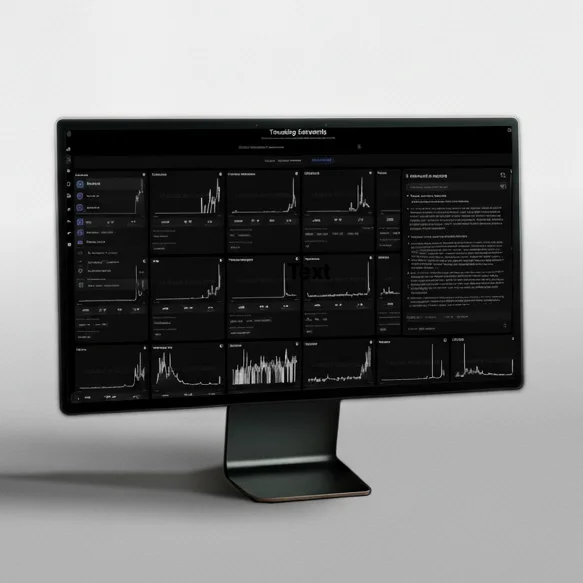
Monitor. Use the same platform (or API) to track time series for your watchlist keywords and companies. Look for inflections: acceleration, deceleration, or divergence between keywords and tickers. Real-time or daily trend feeds (e.g. Live for Google and X trending by country) can help you catch new breakout topics as they appear.

Validate. Compare across data types. If search is up for a theme, is social or news volume also up? If a company’s search is rising, is web traffic or app data consistent? Platforms that offer many data types in one place (e.g. Analyse with 18+ types including Google Search, News, YouTube, TikTok, Reddit, web traffic, app downloads) let you run these checks without switching vendors. For deeper thematic structure, some platforms offer Thematic Catalysts or similar views that organize keywords and sources by category so you can track theme intensity and company exposure in one place.


5. Integrate with the rest of your process

A thematic watchlist should feed into idea generation, prioritization, and risk. Use it to:

  • Prioritize research. Names or keywords that show sustained momentum or inflection get more attention.
  • Prepare for catalysts. Link the watchlist to an earnings calendar or event list so you know when key names are reporting or when theme-related events are due.
  • Combine with fundamentals and signals. Alternative data is one input. Use it alongside valuation, quality, and other signals so the watchlist informs rather than replaces your full process.

Platforms that offer both watchlist and earnings views (e.g. Earnings) help align thematic monitoring with the reporting calendar.


Summary

  1. Define the theme and whether you are tracking keywords, companies, or both.
  2. Discover using trend and search data; use keyword-to-company mapping to go from themes to tickers.
  3. Build the watchlist in one place, with keywords and companies linked, and refresh it periodically.
  4. Monitor with time series and real-time feeds; validate with multiple data types (search, social, traffic, etc.).
  5. Integrate the watchlist with research prioritization, catalysts, and fundamentals.

A platform that combines trend discovery, company and keyword mapping, watchlist, multi-signal comparison, and optional thematic structure (e.g. Paradox Intelligence’s Catalyst Search, Company Search, Top Trends, Watchlist, Analyse, and Thematic Catalysts) reduces the need to stitch multiple tools and keeps your thematic process in one workflow. For more on thematic signals, see Thematic Catalysts and Market Shift Investing.


This post is for institutional investors and research professionals. It is not investment advice.

Share

Get insights delivered

BUILT BY INVESTORS, FOR INVESTORS