


Water scarcity is one of the few structural investment themes with both decades of runway and a measurable, near-term demand signal that most investors are not tracking. The gap between the long-term narrative (which everyone knows) and the specific, real-time behavioral signals (which almost no one systematically monitors) is where the alternative data edge sits.
This post explains how institutional investors use alternative data to identify water infrastructure investment opportunities: what signals to track, which data sources provide the clearest leading indicators, and which equity securities are most directly exposed.
Why Water Scarcity Has an Alternative Data Signal Problem
Most institutional research on water scarcity begins and ends with the macro thesis: population growth, aquifer depletion, changing precipitation patterns, and aging municipal infrastructure. These are all real and well-documented. The problem is that everyone with a terminal has read the same white papers.
The alpha is not in knowing the macro thesis. It is in knowing when it becomes investable - specifically, when the demand for water infrastructure solutions accelerates faster than the market is pricing in.
Alternative data provides that signal. When municipalities, utilities, and corporate procurement teams begin actively searching for desalination technology, water recycling systems, or water storage solutions, that search activity precedes capital expenditure decisions by 6-18 months. By the time a desalination contract is announced, most of the equity price move has already happened. The behavioral search signal comes earlier.
The Water Scarcity Signals That Matter Most
Google Search volume for water infrastructure keywords
Google Search volume for "water shortage" has risen 129% year-over-year as of March 2026, reaching a normalized score of 48 from a baseline of 21 a year prior. This is an unusually large move for a macro-level keyword category. Water stress keywords do not typically exhibit this rate of YoY growth unless there is a genuine acceleration in public awareness - which itself leads municipalities and utilities to move more urgently on infrastructure spending.
"Desalination plant" and "desalination" keywords are appearing with elevated cross-platform conviction scores in the Paradox Intelligence ranked keyword data, with the term appearing across Google Search, Google News, and Google Shopping simultaneously.
News volume and Paradox Alerts signals
The Paradox Intelligence Alerts system is flagging water-related shortage language across multiple independent alert keyword buckets in March 2026. "Extreme shortage," "water limits," and related infrastructure constraint vocabulary is appearing in local and regional media across the US Southwest, California, and Florida. Tampa Bay water restrictions reported in March 2026 are the type of geographic-specific trigger that historically precedes state-level infrastructure procurement.
When news volume for water shortage language is running at elevated levels in specific geographic clusters - rather than diffuse national coverage - it tends to precede local government infrastructure RFPs. That is the signal worth tracking.
Wikipedia page view spikes for water technology companies and processes
Elevated Wikipedia page views for desalination, reverse osmosis, and specific water technology companies are an early signal of institutional research interest. Fund analysts checking Wikipedia page view data for water technology terms can identify when a sector is moving from "we've heard about it" to "we're building a position thesis."
The Equity Universe: Direct and Second-Order Exposure
Desalination and water treatment - direct exposure:
Consolidated Water Co. (NASDAQ: CWCO) operates water production plants and desalination facilities in the Caribbean and is the most direct US-listed pure play on desalination capacity demand. Revenue is directly tied to water production volumes and contracted rates with municipal governments.
Veolia Environnement (VIE.PA) and Suez-successor entities hold the largest global desalination project pipelines but are European-listed. US investors seeking desalination exposure have limited domestic options.
VA Tech Wabag (NSE: WABAG) is the most frequently appearing desalination-linked name in the Paradox Intelligence keyword signal data for the desalination keyword cluster. It is Indian-listed and carries currency and liquidity considerations.
Energy Recovery (NASDAQ: ERII) manufactures pressure exchanger devices used in reverse osmosis desalination systems. Every new large-scale SWRO (seawater reverse osmosis) project is a potential customer. ERII's revenue is a direct function of the pace of new desalination capacity coming online globally.
Infrastructure and engineering - second-order exposure:
Aecom (NYSE: ACM), Jacobs Solutions (NYSE: J), and Tetra Tech (NASDAQ: TTEK) are engineering firms with significant water infrastructure project backlogs. When municipal and federal water infrastructure spending accelerates, these companies see revenue growth 12-24 months after contract awards. The alternative data signal - rising search and news volume for water scarcity and infrastructure - leads the contract announcement by 6-18 months and the revenue realization by 18-36 months.
Chemical inputs - adjacent exposure:
Ecolab (NYSE: ECL) and Solenis (private, formerly Ashland Water Technologies) supply water treatment chemicals. Higher water infrastructure spend corresponds to higher chemical consumption. The alternative data signal here is more diffuse and the transmission mechanism is slower, but the exposure is real.
How to Build a Water Scarcity Monitoring Workflow
The most effective approach for institutional investors is a tiered monitoring system:
Tier 1 - Geographic signal tracking: Set up keyword monitoring for water shortage, water restriction, and desalination keywords by US state and major international water-stressed regions (Middle East, North Africa, Australia, Southwest US, Southeast Asia). An alert trigger in a specific state should prompt a review of which companies have active project bids or existing contracts in that region.
Tier 2 - Company-level search tracking: Monitor Google Search and Wikipedia page views for CWCO, ERII, TTEK, and the major international desalination contractors. Unusual spikes in company-level search interest ahead of earnings or contract announcements provide a 2-4 week window.
Tier 3 - News sentiment tracking: Monitor news sentiment for "water infrastructure" and "desalination contract." A sustained shift from negative or neutral to positive sentiment typically corresponds to an announcement cycle - either a large project award or a government policy commitment.
What Paradox Intelligence Tracks for Water Sector Research
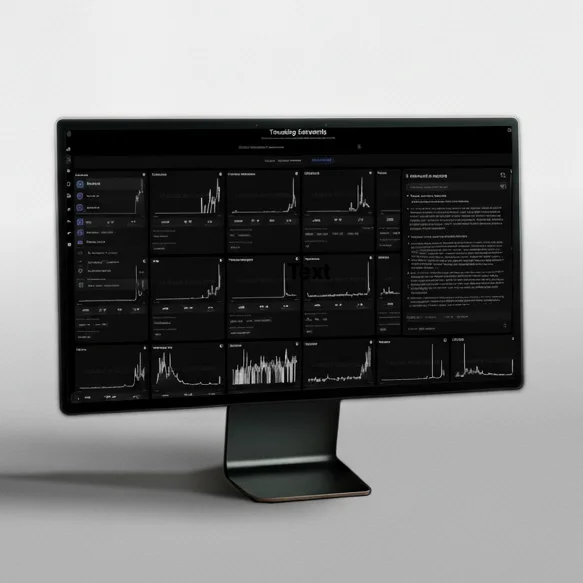
Paradox Intelligence maps cross-platform behavioral signals to specific investable entities across the water infrastructure sector. The platform tracks Google Search, Google News, Amazon, TikTok, YouTube, Wikipedia, and news sentiment simultaneously - allowing analysts to see when multiple independent data sources are simultaneously pointing at the same company or theme.
For water sector research specifically, the most actionable signals come from:
- Google Search volume for "desalination," "water treatment plant," "water recycling," and "reverse osmosis" at the country and keyword level
- News volume and sentiment for water infrastructure companies in the days surrounding contract announcements
- Wikipedia page view spikes for water technology categories - a reliable early signal of institutional research interest before it appears in price action
The platform maps these signals to CWCO, ERII, TTEK, and the international desalination engineering names - providing a single-screen view of the behavioral data layer that sits above the traditional fundamental research stack.
The Risk: Long-Term Thesis, Short-Term Noise
The primary risk in water scarcity investing is the inverse of the opportunity: the macro thesis is so durable that it can sustain many false starts. A drought year generates intense search activity and news coverage, but if the political response is delayed or the rainy season resolves the immediate shortage, the investment cycle deflates before the infrastructure spending materializes.
The alternative data signals described above are most useful when they are sustained over multiple quarters rather than episodic. A single spike in water shortage searches does not confirm an investment thesis. A sustained elevation over 6-12 months - across Google Search, news volume, and geographic alert clustering simultaneously - is the pattern that typically precedes actual capital expenditure decisions.
Monitoring signals that would falsify the thesis in the near term: a return to above-average precipitation in the Southwest US and California for two consecutive quarters, a federal infrastructure allocation that is redirected away from water, or a sustained decline in desalination-related Google Search and news volume after the current spike.
Starting Point for Investors
The most efficient starting point for water sector research using alternative data is to establish a baseline: what are current search volume levels for the primary keywords, and how do they compare to 12 and 24 months prior? From that baseline, a 20-30% sustained increase in water infrastructure search demand over 2-3 consecutive quarters is a reliable signal that the investment cycle is accelerating.
Paradox Intelligence provides this baseline and ongoing monitoring across the full keyword and company universe for the water infrastructure sector, with data normalized for cross-platform comparison and mapped to investable entities. Learn more at https://www.paradoxintelligence.com/datasets/google-search-trends.
For related reading on how alternative data works across other infrastructure-linked themes, see Alternative Data for Supply Chain Intelligence and Geopolitical Risk Alternative Data for Investors.