

Geopolitical events create equity dislocations faster than traditional financial data can reflect them. By the time a 10-Q discloses a supply chain disruption, the market has usually already moved. Behavioral alternative data, specifically search demand, news volume, social sentiment, and early-signal alert streams, can surface the transmission mechanism before it reaches earnings.
This post covers how institutional investors use behavioral alternative data to detect geopolitical risk exposure in equity portfolios, with specific focus on the data types, signal patterns, and equity linkages that matter most in 2026.
Why Traditional Risk Models Fail at Geopolitical Events
Standard geopolitical risk frameworks rely on structured data: macroeconomic indicators, corporate filings, broker research, and news sentiment scores. These inputs share a common problem: they are lagging. A structural supply chain disruption takes three to six months to show up in reported revenue. By that point, the equity has already repriced.
Behavioral data operates on a different timeline. When a geopolitical event threatens a supply chain, several things happen within hours and days that are measurable in behavioral data:
- Google News volume for the affected commodity, geography, or company spikes
- Wikipedia page views for related entities accelerate as professionals and researchers seek background
- Social media discussion, measured through TikTok, Reddit, or X sentiment scores, shifts in tone
- Amazon search demand for substitute products, emergency supplies, or inputs begins to move
- Paradox Alerts streams using structural vocabulary, "race to secure supply," "extended lead times," "stockpiling," start to populate with industry-specific content
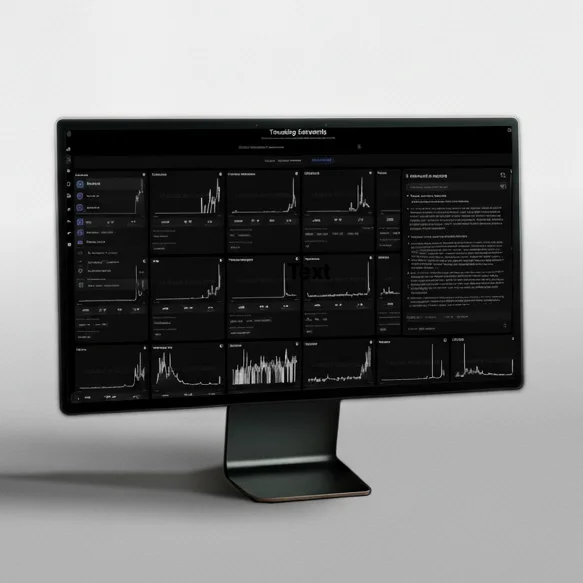
Each of these signals is observable through a normalized behavioral data platform before the event reaches the earnings call.
The Key Signal Types for Geopolitical Risk
Google News Volume and Sentiment
Google News normalized interest and news article volume are among the most direct behavioral proxies for geopolitical risk. When a conflict, trade restriction, or regulatory change affects a sector, Google News volume for relevant keywords moves rapidly. The directional shift, from flat to elevated, is often more informative than the absolute level.
For geopolitical events with supply chain implications, watching keywords tied to specific commodities, geographies, or companies allows an investor to gauge how quickly institutional attention is forming around a specific exposure. A keyword that moves from a baseline of 0 to a normalized score of 50+ within a single week is a breakout worth investigating.
News sentiment scores add a second dimension: they separate fear-driven coverage (negative sentiment) from opportunity coverage (positive sentiment), which is relevant when assessing whether a geopolitical event is being framed as a systemic risk or a single-event disruption.
Paradox Alerts Early-Signal Streams
Structural supply chain language, "race to secure," "stockpiling," "extended lead times," "years to build," "single source dependency" does not appear in financial media casually. These terms are operationally specific. When they appear in multiple independent publications around the same underlying story within a 24-48 hour window, it indicates that procurement teams and supply chain managers are talking to reporters, not just analysts writing analysis.
Paradox Intelligence's early-signal alert streams track these structural vocabulary patterns across thousands of sources daily. The value is not in any single headline but in convergence: when three or four independent alert streams all populate with content pointing to the same underlying structural story, the probability that it is noise is very low.
This is especially relevant for geopolitical supply chain risk. In March 2026, for example, four independent early-signal streams, including "supply chain concentration," "race to secure," "geographic concentration risk," and "competing for limited," all fired simultaneously on the rare earth and critical minerals story within 48 hours, before the topic reached any mainstream financial media coverage.
Wikipedia Surge as an Institutional Attention Indicator
Wikipedia page view acceleration is a proxy for professional and institutional research activity. When a geopolitical event affects a specific geography, commodity, or company, Wikipedia traffic for related pages increases sharply as analysts, journalists, and portfolio managers build background knowledge.
The signal is most useful when it precedes, rather than follows, equity price movement. A page view acceleration on a company Wikipedia page, a commodity, or a geographic region before a stock reacts is a leading indicator that institutional attention is forming and has not yet fully converted to orders.
Cross-Platform Divergence as a Risk Flag
Geopolitical risk signals are most reliable when they appear across multiple independent data sources simultaneously. A single platform spike can be noise. Cross-platform corroboration, where Google News, Wikipedia, and Google Search all accelerate around the same entity within the same time window, is a much higher-confidence signal.
Conversely, cross-platform divergence can flag cases where a geopolitical narrative is affecting news coverage but not actual consumer or professional behavior. If news volume is spiking but Google Search and Amazon demand are flat, the market may be treating the event as headline risk rather than fundamental disruption.
How to Build a Geopolitical Risk Monitoring Framework
Institutional investors using behavioral alternative data for geopolitical risk monitoring typically organize their workflow in three layers:
Layer 1: Structural alert monitoring. Review early-signal alert streams daily for structural vocabulary converging on the same underlying story. This does not require a human to read every item; the signal is in the pattern of convergence, not the content of individual articles.
Layer 2: Keyword tracking for known exposures. For any company or sector with identified geopolitical exposure, set up normalized trend tracking across Google News volume, Wikipedia, and Google Search. This provides a real-time view of whether institutional attention around the exposure is accelerating or decelerating.
Layer 3: Cross-platform validation before acting. Before sizing a position based on a geopolitical signal, validate it across at least two independent data sources. A single-source signal is hypothesis-generating. A multi-source confirmed signal is actionable.
2026 Examples: Behavioral Data Ahead of Equity Moves
The current geopolitical environment in Q1 2026 provides concrete examples of behavioral signals running ahead of consensus:
Iran-related energy risk: Multiple Paradox Alerts streams including "geographic concentration risk," "supply tightness," and "competing for limited" populated with Iran-related content in late March 2026. Google News interest in oil supply and LNG supply keywords is running materially above year-ago levels. The Iran signal is visible in behavioral data before it is fully reflected in energy equity valuations.
Rare earth supply concentration: Google News normalized interest in "rare earth supply" and "rare earth magnets" moved from baseline readings near zero in December 2025 to scores of 48 and 46 respectively in the week of March 21, 2026. The Paradox Alerts "supply chain concentration" stream simultaneously cited China's dominance in critical minerals as a manufacturing risk. MP Materials (NYSE: MP) search volume is up 300% year-over-year on Google Search. This cross-source convergence is a high-confidence behavioral signal of an accelerating geopolitical risk premium in the rare earth sector.
Electronics supply chain diversification: A "race to secure backup switch suppliers" story appeared in two independent distribution channels on March 24, 2026, while Google News interest in "switch semiconductor" hit a normalized peak of 100 for the first time in at least 12 months. This indicates procurement teams are actively responding to geopolitical supply risk, which creates second-order demand for non-Chinese suppliers.
Connecting Behavioral Risk Signals to Equity Exposure
The hardest part of geopolitical risk investing is not identifying the risk. It is mapping the risk to specific equity securities with a clearly articulated transmission mechanism.
Behavioral data is useful here because it identifies which companies are attracting rising attention relative to a geopolitical event. A company whose search volume and news volume are both accelerating in connection with a supply chain disruption story is more likely to face direct impact than one that is absent from behavioral signals entirely.
The relevant questions for any geopolitical equity analysis are:
- Is the company's key word or brand showing up in the early-signal alert streams for this event?
- Is Google News interest in the company or its primary product category accelerating?
- Is the behavioral signal appearing across multiple independent data sources (multi-source confirmation)?
- Is the current reading abnormal relative to the trailing 12-month baseline?
If the answers to these questions are yes, the geopolitical risk has a high probability of affecting this specific company in a timeframe relevant to the next one to three earnings releases.
For further context on how behavioral data connects to earnings outcomes, see Using Alternative Data for Earnings Research and Supply Chain Intelligence for Equity Investors. For the underlying platform capabilities, see Alternative Data Sources for Institutional Investors.
What Behavioral Data Cannot Do
Behavioral data is a leading indicator of attention and concern. It is not a prediction of outcomes. A Google News volume spike for a geopolitical risk topic signals that institutional attention is forming, not that a specific negative outcome is certain.
Coverage gaps exist in behavioral data just as they do in any alternative data source. Some geopolitical events unfold in channels that do not generate immediate search or news volume, particularly if they are announced via regulatory or government communications with no initial media pickup. For these cases, behavioral data is a lagging rather than leading signal.
The correct use of behavioral geopolitical risk data is as a screening tool and as an early-warning system, not as a standalone trading signal. It identifies which stories are forming and which exposures deserve deeper analysis. The investment decision still requires a clearly articulated transmission mechanism from the geopolitical event to a specific company's revenue or cost structure.
This is for informational purposes only and does not constitute investment advice.